We Are Seeds

By Ric Hudgens

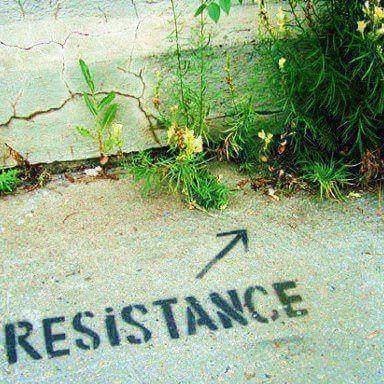
I am thinking about people who live their lives as if they were seed.

The Greek poet Dinos Christianopoulos (1931-2020) wrote in 1978: “what didn’t you do to bury me / but you forgot that I was a seed.” (translated by Nicholas Kostis).

Young Mexican activists started a movement using a similar phrase in 2013 after 43 students disappeared in Iguala, Mexico: “They tried to bury us, they didn’t know we were seeds.” (see the blog entry with the same title, An Xio, Hyperallergic, July 3, 2018).

Even Jesus of Nazareth had said something similar 2,000 years ago: “unless a grain of wheat falls into the earth and dies, it remains alone; but if it dies, it bears much fruit.” (John 12:24).

We often think in metaphors about human life and the living of our own lives. Kirstie Pursie offers seven that are common: climbing a mountain, taking a journey, tending a garden, building a house, a race, a battle, a prison. (Kirstie Pursie, “7 Metaphors for Life: Which One Better Describes You and What Does It Mean”, Learning Mind, March 20, 2019). All of these are illuminating. There is probably a metaphor (or several) hidden in your life.

Continue reading “We Are Seeds” →
A Dual Project

An excerpt from a recent DemocracyNow interview with Mariam Kaba. #LentenAbolition

I always tell people that when we talk about prison-industrial complex abolition, we’re talking about a dual project. We’re talking about, on the one hand, a project that is about dismantling death-making institutions, like policing and prisons and surveillance, and creating life-affirming ones, putting resources and investing in the things we know do keep people safe — housing, healthcare, schooling, all kinds of other things, you know, living wages…

In terms of the people on the ground, I do want to point out — you had a conversation earlier with Congressman Jones about the George Floyd Justice Act. And I think if you talk to people who have been on the streets all last year, basically, half the year, and continue to be struggling now in their communities, they would tell you that that bill, which is really just a set of procedural reforms, is woefully, woefully insufficient. And I also keep thinking about the cruel irony of naming a bill after — a police reform, supposedly, bill, after someone who was killed by the police, and then to include a whole set of so-called procedural reforms that would not have prevented that person’s death. So, you know, this particular offering that they’re making, supposedly, in Congress wouldn’t have kept George Floyd alive. And I think that’s just cruel irony. And I really recommend that people take a look at Derecka Purnell’s yesterday great column that she wrote about this very issue.

Continue reading “A Dual Project” →

Depression as Political Resistance

Dr. Bruce Rogers-Vaughn speaks at Mental Health Counseling Conference at Belmont University campus in Nashville, Tennessee, September 21, 2018.

By Dr. Bruce Rogers-Vaughn, an excerpt from his article “Blessed are those Who Mourn: Depression as Political Resistance” (2013). You can find more of Bruce’s work here.

What can it mean to proclaim “those who mourn,” the gathering of the depressed, to be “blessed” (Matt. 5:4)? In normative New Testament scholarship, and certainly within Christian popular piety, this text is usually employed to address the private sufferings of individuals. According to Carter (2005), such an emphasis “says much about . . . contemporary individualism that conceives of religion as a private matter isolated from sociopolitical matters” (p. 150). Postcolonial readings, however, take a different turn. This approach focuses on “retrieving silenced voices” and “foregrounding the political” in biblical texts. Particular attention is given to “challenging dominant scholarship by foregrounding empire and related issues in texts and interpretations” (Segovia 2009, p. 207). In this spirit, Carter contends that Roman imperialism provides the context for interpreting the gospel of Matthew. According to Carter (2005), Matthew’s audience suffered under the conditions of imperial Rome, a world marked by: (a) “vast societal inequalities, economic exploitation, and political oppression,” (b) “tensions between the rich . . . and poor,” (c) “pervasive displays of Roman power and control, including military presence,” (d) “no separation of religious institutions and personnel from socioeconomic and political commitments,” (e) “imperial theology or propaganda,” and (f) “obvious signs, sounds and smells of the destructive impact of the imperial sociopolitical order structured for the elite’s benefit: poverty, poor sanitation, disease, malnutrition, overwork . . . and social instability” (pp. 150–151).

Continue reading “Depression as Political Resistance” →

Dreaming of Worlds to Come: A Letter to Young Activists

From the National Council of Elders (NCOE), founded by iconic civil right leaders, Rev. James Lawson, Dr. Dolores Huerta, Dr. Vincent Harding, Rev. Phil Lawson and Dr. Grace Lee Boggs, to bring together leaders of the 20th century movements for peace, freedom and justice to share their experiences with young activists in the 21st century. A re-post from roarmag.org.

The escalation of all forms of violence in our country over the last four years, the rise of anti-democratic forces demonstrated at the US Congress building on January 6 and the occupation of Washington, D.C. for President Biden’s inauguration add up to what may be among the most dangerous times in US history.

We elders, members of the National Council of Elders, invite you to pause and contextualize these events within a culture of violence that shapes America.

We know the US began with violence against Indigenous and African peoples. Through the centuries, the triple evils of racism, materialism and militarism have marked our country. At the same time, people have resisted these forces, organizing for freedom and justice.

Continue reading “Dreaming of Worlds to Come: A Letter to Young Activists” →

The Only Option Left

A Letter from Joshua Weresch to the Corporate Services Department, Tax Division, of the City of Hamilton, Ontario (February 26, 2021). #LentenAbolition

Good day. I hope this finds you well. My name is Joshua Weresch. My family and I live in Ward 8, non-Indigenous people on Indigenous Anishinaabeg land, and I write as a Christian, a socialist, and as a parent to my wife and I’s four children. I write particularly in regards to the payment of property taxes and use of those taxes for the support of the Hamilton Policing Services. I have carbon-copied my ward councillor’s office as well as the city clerk so that my letter to your department can be included as public correspondence on the agenda of the next city council meeting.

Continue reading “The Only Option Left” →

Common Sense

By Tommy Airey

*Trigger warning: this post includes content, straight out of Rush Limbaugh’s mouth, that some readers may find offensive and/or traumatizing.  

“I take no pleasure in the death of the wicked man, says the Lord,
but rather in his conversion, that he may live.”—Ezekiel 33:11

Rush Limbaugh died last week. When I heard the news, it took me back thirty years. During the Fall of my senior year in high school, I went on a weekend road trip from Orange County to Berkeley to surprise one of my best friends at college. I drove up with his dad. We parked a block from the hippies and unhoused on Telegraph Avenue. When my friend came down from his dorm room, I was hiding in the trunk of the car. His dad handed him the keys to open the trunk. I scared the living tar out of him.

I will never forget the look on his face.

I will also never forget stopping at In-n-Out Burger three times during our drive up.

And I will never forget listening to Rush Limbaugh for three straight hours through the most boring stretch of the 5, plowing past towns like Buttonwillow, Lost Hills and Los Banos. Spanish for “the bathrooms.” Plural and Providential. What we needed for all that bullshit blaring through the speakers.

Continue reading “Common Sense” →

The State of Black America

A Message from The Movement for Black Lives.

Hello Community,

With the State of Black America coming up soon, we want to preview one of many important topics we’ll address: education and organizing in the pandemic.

You will hear from Black organizers and educators with the Chicago community organization Equity and Transformation (EAT). In a field report from Chicago, we will hear how Black organizers and educators came together to pass the Illinois BREATHE Act that will free up much-needed resources for schools and communities by redirecting funds away from racist, ineffective policing and mass incarceration. We’ll also hear from Dr. Armen Henderson with Dream Defenders and their efforts to expand COVID-19 health access to Black people who are unhoused and other communities in Florida.

RSVP for the State of Black America taking place before the State of the Union on Tuesday, Feb. 23rd at 6-8pm ET. Hear from Black movement leaders across the country. Organizers will discuss education and organizing in the pandemic, as well as climate, jobs, healthcare, public safety, and Black community self-determination.

Continue reading “The State of Black America” →

Nerve Us Up

By Ken Sehested

This past Sunday one of our members, Stan Wilson, offered the “call to the table” in our congregation’s zoom worship screen-gathering. He led with a suggestion that was equivalent, in my hearing, to a thunderclap.

“How about for Lent this year we give up Donald Trump?”

It was a table invitation (we celebrate the Eucharist every week) and an altar call rolled into one. And it certainly had my name on it.

The last four years in the US have been a national demolition derby, a Three-Stooge-esque comedy of incompetence and disrepute, a racketeer’s paradise and grifter’s playpen—only with real-world torment, particularly for those here and abroad with little shelter from the abuse.

Continue reading “Nerve Us Up” →

THE CROSS OF CHRIST: A JUSTIFICATION FOR REDEMPTIVE VIOLENCE OR A CALL TO GOSPEL NONVIOLENCE?

A timely Lenten offering from the Alternative Seminary in Philly. An online gathering on Saturday morning.

The cross can heal and hurt; it can be empowering and liberating but also enslaving and oppressive … I believe that the cross placed alongside the lynching tree can help us to see Jesus in America in a new light, and thereby empower people who claim to follow him to take a stand against white supremacy and every kind of injustice.” 
― 
James H. Cone, The Cross and the Lynching Tree

 We are witnessing how the Christian faith has been contorted to almost unrecognizable shape and put at the service of empire – even though the founder of the faith was executed by empire. The cross of Christ, perhaps the central image of Christian life and thought, has been frequently been used to promote the idea of “redemptive violence,” and has been directly or indirectly used to vindicate and even bless human violence.

Continue reading “THE CROSS OF CHRIST: A JUSTIFICATION FOR REDEMPTIVE VIOLENCE OR A CALL TO GOSPEL NONVIOLENCE?” →