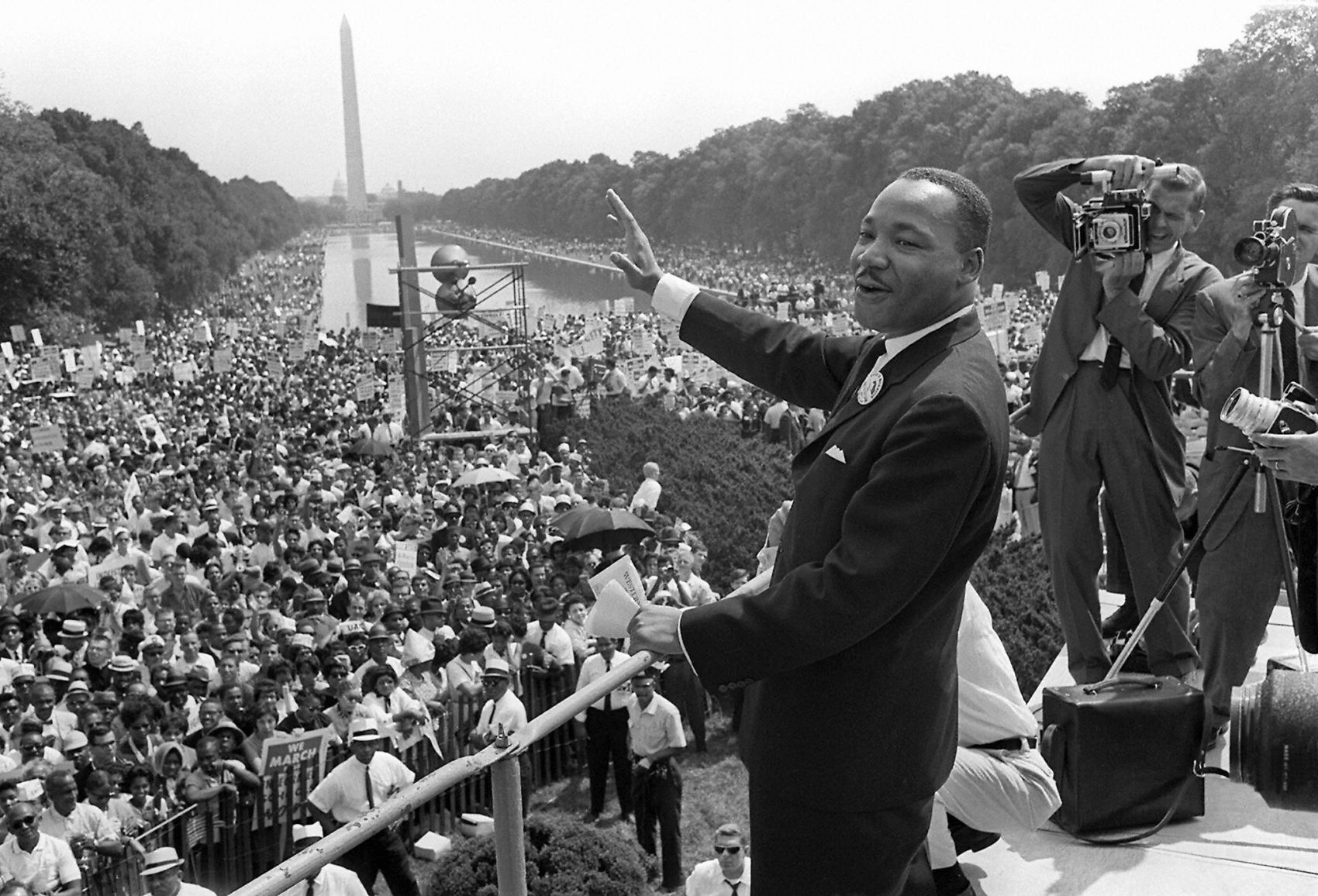
This is Repentance

By Tommy Airey

I believe that a higher Power sews everything into a fabric of belovedness. As a result, we belong to everyone else. I also believe that it was this divine love and belonging that beckoned Jesus to break rank from well-worn supremacy ideologies that use race, ethnicity, religion, socio-economic status or national citizenship as a litmus test for greatness. Jesus knew that supremacy destroys belovedness and belongingness—and that supremacy can only be broken when people break rank together. He called this transformative process “repentance.”

Continue reading “This is Repentance”

Time for a Retreat?

On offering from our dear comrade Marcia Lee (right) dialing in from eastside Detroit.

As Grace Lee Boggs reminds us, in the Chinese word for chaos, there is both opportunity and danger.  These times can be especially difficult to navigate when you are in leadership.  To support you in your leadership and to grow a community of leaders, we invite you to join us for a series of retreats for your soul and role and to have a community with which to grow and learn together for a year. 

Continue reading “Time for a Retreat?”

This is Where You Start: Letter to a White Child on Choices, Ancestors, and the Future

By Rev. Margaret Anne Ernst

PC: Kelly Sikkema

October 2020 

I started writing this letter to you four years ago on the kitchen table, the winter after a man had been elected to the highest office in our land who represents such meanness, such smallness of imagination, and such hostility towards humanity that I had to start writing to someone. Best, I thought, to someone not fully grown, or even here yet. If I write to you, I must believe in you.  I must believe in something past this moment, this nightmare, as many people behind me have imagined past the terrifying circumstances of their times. 

Your world is, to me, barely glimpsed, like the moon showing itself from behind the clouds. And yet I will hang on to that moonbeam like I would clutch a breadcrumb after having not eaten for days. I choose to believe in the future.

Continue reading “This is Where You Start: Letter to a White Child on Choices, Ancestors, and the Future”

10 Ways to Stop a Coup

From Daniel Hunter, re-posted from Waging Nonviolence. Go to Choose Democracy to sign the pledge and take action.

We have a president who has openly said he might not respect the outcome of our election. We have to be ready if he claims victory before votes are counted, tries to stop counting, or refuses to accept a loss.

Some days I feel confident it will happen. A poll showed over 75 percent of Democrats think this is possible — and a shocking 30 percent of Republicans do too!

Other days I feel confident this is tough talk from a president not good at planning ahead. Still, he is good at the kind of misdirection that can keep us complacent and reactionary — which could lead us to stop doing the important groundwork of getting out the vote, protecting the post office and fighting voter suppression. KEEP READING…

Hope as an Intervention upon America’s Antiblackness

Note: This is part of a series of short posts, in the lead-up to the election, from leaders reflecting on hope and/or resistance.

By Rev. Nick Peterson

Hope, for me, owes nothing to politics. The extent to which we think hope alongside and within the American political apparatus is discouraging at best and soul-killing at worst. At present, the religious right imagines American politics as the right site to enact a near-theocratic rule of law. Holding fast to an American exceptionalism established by the puritans, the right’s religious imagination appeals to a moral yesteryear that never was. Meanwhile, the left opts for a liberal humanism that, on the one hand, narrates inclusion and acceptance as an American God-given birthright. While on the other, liberals insist that the unceasing acts of anti-black violence are not reflections of who we are. On both sides, hope is a means to America.

Continue reading “Hope as an Intervention upon America’s Antiblackness”

Hope is a Verb, a Song Called “Anyhow”

Note: This is part of a series of short posts, in the lead-up to the election, from leaders reflecting on hope and/or resistance.

By Johari Jabir (right)

Hope is a verb, a form of action not based on feelings or what is seen in ordinary time. To hope is to advance a stubborn, aggressive optimism.  

On January 1, 1863, a large gathering of Black and white people assembled beneath a sprawling oak tree in Beaufort, South Carolina, to hear the reading of the Emancipation Proclamation. Standing on a platform behind military officers, dignitaries, and abolitionists was the nation’s first Black regiment, the 1st South Carolina Volunteers. After the proclamation was read, the regiment was presented with an American flag donated by a New York congregation. All of the ceremony and pageantry had gone along as planned, until one speaker’s comments were interrupted by an elderly Black man who stood to sing,  

Continue reading “Hope is a Verb, a Song Called “Anyhow””

Anchored in a Reality Different from Our Own

Note: This is part of a series of short posts, in the lead-up to the election, from leaders reflecting on hope and/or resistance.

By Rev. Tiffany Ashworth

A few months ago, I preached a sermon on Psalm 1. During my preparation, I kept stumbling over the phrase their delight is in the law. Delight and law? From where I’m standing, those are contradictory. Images of law conjure drudgery, burden, and weight. Law all too often represses rather than restores, closes in rather than opens up, belittles rather than inspires. It can be anxiety-making, self-preserving, and power-seeking rather than peace-imparting, generous, and life-giving. How can anyone delight in a law? Law, to me, often belongs on the path of dried up chaff not well-watered trees.

Continue reading “Anchored in a Reality Different from Our Own”

True Solidarity

From Ashley Bohrer, professor, author and activist, in a May 2020 interview with George Souvlis on the Salvage site. Bohrer was asked about “solidarity” as both an analytical concept and a political reality.

True solidarity is life. There’s no other way, I don’t think, to orient ourselves to the struggle and to each other. There’s something really beautiful about solidarity, about the ways that millions of people work together and for each other, not on the basis of personal connection or individual acquaintance, but out of clarity and conviction that we all deserve a better world. We’re doing this interview in the midst of the Covid crisis and the mutual aid work I and so many other have been participating in, I think, has brought a whole new group of folks into understanding that feeling.

Continue reading “True Solidarity”

Other Fields to Open Up

By Bayo Akomolafe, re-posted from social media (October 10, 2020)

I come from the largest black nation on earth, Nigeria. You would suppose that having almost uniformly black skins means we live in a de-racialized territory of mutual wellbeing and abundance – like the fantastical world of Wakanda. You might think that such a country wouldn’t have problems with their police force, for instance. But racialization transcends our phenotypic fixations with, say, skin colour. Even within our corporeal homogeneity lies troubling cuts, lingering imperial legacies, haunted bodies, toxic institutions, and incarcerated imaginations. We are frozen in a colonial moment. We are not free.

Continue reading “Other Fields to Open Up”

Possibly Even Magic

Note: In the lead-up to the election, RD.net is prodding leaders to submit creative and concise pieces (500 words or less) on both hope and resistance.

Bree Newsome, June 27, 2015.

By Ric Hudgens

In the early 1980s, not long after the death of Steven Biko, I registered for an independent study on the nonviolent struggle in South Africa. I knew little of nonviolence or South Africa and wanted to learn more. Based on my semester-long research, I concluded that there wasn’t much chance without bloodshed for a peaceful outcome in South Africa. Of course, I was wrong. Academic research is linear, but real life isn’t. There were things below the surface and things about to surface in South Africa that I couldn’t predict.

Continue reading “Possibly Even Magic”