Luxury Communist Jesus

communistAn excerpt from Michael J. Sandford’s “Luxury Communist Jesus: Ideology, the Work Ethic, and the Antiwork Politics of Jesus” (2012).

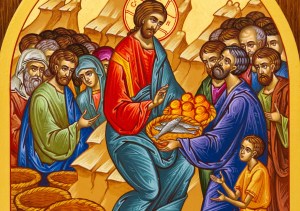
Jesus discourages his followers from working and encourages them not to worry about the provision of material needs. The gospels give a strong impression, however, that such behaviour will not lead to impoverishment, but rather to abundance. The Jesus of the gospels does not endorse the “worldly asceticism” (Weber) of the Protestant ethic. Rather, Jesus appears to live lavishly, when the opportunity for such indulgence arises, as the comparisons that are drawn between Jesus and his disciples and the ascetic John the Baptist suggest. In Luke’s Gospel the Pharisees and scribes state, “The disciples of John fast often and offer prayers, and so
do the disciples of the Pharisees, but yours eat and drink” (5: 33). Jesus
himself seems to agree that “John the Baptist has come eating no bread
and drinking no wine” (7: 33). On the other hand, Jesus states that people call him “a glutton and a drunkard” (7: 34). In stark contrast to John,
Jesus is accused of living indulgently; an accusation which neither he nor
the narrator rejects. Continue reading “Luxury Communist Jesus”

Soul Talk in a Neoliberal Age, Part IV

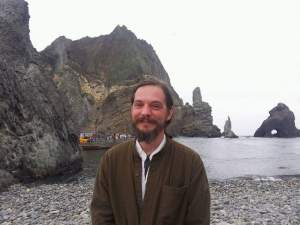
On Fridays, we are posing questions to Dr. Bruce Rogers-Vaughn (right), an ordained Baptist minister, pastoral psychotherapist and Associate Professor of the Practice of Pastoral Theology and Counseling at Vanderbilt Divinity School, and the author of Caring for Souls in a Neoliberal Age (Palgrave, 2019).

*This is our fourth Friday with Bruce. See this for Part I, this for Part II and this for Part III.

Tommy Airey: Last week, you described neoliberalism as a “neo-coloniality”—that it is about class, but about race and gender too. In your book, you write that “progressive narratives concerning inclusivity and diversity that separate gender and race from class are vulnerable to being co-opted by neoliberal agendas.” Please explain! 

Continue reading “Soul Talk in a Neoliberal Age, Part IV”

The Rich Young Ruler as Privileged Liberal

SethBy Seth Mountain, originally posted to Facebook on August 23, 2020.
In Biblical language, I think the story of the Rich Young Ruler offers an excellent case study of a privileged Liberal–someone who excelled at performative actions and who had studied deeply all the woke texts of the time, and who was profoundly attracted to the vision of a just and righteous world. Someone upset about the system and initially eager to join in the new community and way of life Jesus was describing. But when faced with what justice (and, ultimately, salvation) demanded, the figure was tragically unwilling (or unable?) to “Go, sell all that you have, and give the money to the poor.” Continue reading “The Rich Young Ruler as Privileged Liberal”

Soul Talk in a Neoliberal Age, Part III

Mental Health Counseling Conference

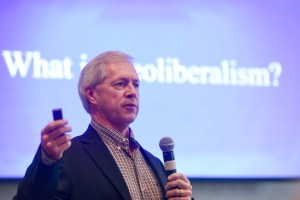
On Fridays, we are posing questions to Dr. Bruce Rogers-Vaughn (right), an ordained Baptist minister, pastoral psychotherapist and Associate Professor of the Practice of Pastoral Theology and Counseling at Vanderbilt Divinity School, and the author of Caring for Souls in a Neoliberal Age (Palgrave, 2019). Bruce presses for a “post-capitalist pastoral theology” that empowers people to resist the system (instead of adapt to it), to embrace communion and wholeness in relation to others and the earth (instead of functioning in accord with the values of production and consumption) and to pursue interdependent reliance within the web of human relationships (instead of accepting shame-based personal responsibility narratives).

*This is our third Friday with Bruce. See this for Part I and this for Part II.

RD.net: You say that neoliberalism is not only about economics. That it is a full-fledged religion that encompasses everything! How does neoliberalism affect politics and culture too?

BRV: The political is implicated in the economic. When I say “political,” I’m not simply talking about that media-driven horse race we call “politics.” Under neoliberal governance, politics has become a house of mirrors. Again, George Carlin: “Politicians are put there to give you the idea that you have freedom of choice. You don’t. You have no choice. You have owners.” When I use the word “political,” I’m talking about the way power flows through society. In neoliberal times, the dramatic increase in economic inequality is matched by an increase in political inequality. Right-wing neoliberal intellectuals and politicians pontificate about wanting “smaller government.” This is another lie. It actually takes a monstrously large and intrusive government for economic elites to maintain control over the masses. Thus, both political parties, in the USA, support large government. Growing inequality is not due to technology or globalization, as even progressives often claim, but to the seizure of state power by class elites. Monopoly corporations, and individuals whose wealth is equal to the GDP of small countries, are able and willing to impose their will on legislation, as well as the courts and penal systems. Continue reading “Soul Talk in a Neoliberal Age, Part III”

One of the Active Ingredients in a Meal Served by Many Hands

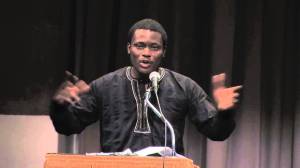
BayoA timely message from our comrade Bayo Akomolafe.

I am very excited to share that my course, We Will Dance with Mountains: Let us Make Sanctuary, is now open for registration…

You can learn almost everything about the course by heading over to the course website now. Before you do, I thought I’d sit again with the nagging question (as I did when this year of shocking upheavals and seismic shifts began): “Why do a course now?” What is it for? What do you stand to gain?

In yet another curious instance of receiving answers long before their questions have been articulated, I heard the call to do this course when I spoke with an African American man late last year. He had written to me, wanting to speak. He felt he needed to share something with me. I honoured his invitation and got on a Zoom conference call with him. Continue reading “One of the Active Ingredients in a Meal Served by Many Hands”

Kindred, The News is Bleak

California Wildfires
AP Photo/Noah Berger

By Ken Sehested

Kindred, the news is bleak. For we live in the valley of the shadow, when:

  • the stock market reaches record-breaking levels in the midst of near-record-breaking rates of unemployment;
  • when 1% of US citizens control $30 trillion of assets while the bottom half is saddled with more debts than assets;
  • when the median wealth of Black households is a tenth of that of whites;
  • when yet another unarmed Black man is shot—in the back, seven times, while getting in his car where his children are sitting—by police;
  • when polls show 57% of Republicans (along with 33% of Independents and 10% of Democrats) believe our nation’s COVID-19 death toll (many times greater than any other nation) is “acceptable”—despite ours being the wealthiest nation in recorded history, purportedly with the world’s most advanced health care system;
  • when wildfires in California set yet another record in size and destructive infernos, and similar flames in the Amazon are on track to eclipse 2019’s record;
  • when 30 million families lacked sufficient nutrition last week, yet the suicide rate among farmers—who provide our food—is five times greater than the national average;
  • when the federal hourly minimum wage is $7.25 (lowest it’s been since the 1960s when adjusted for inflation), yet Amazon CEO Jeff Bezos earns approximately $8,961,187 per hour;
  • not to mention a monarch aspirant in high office; and our oldest living president, Jimmy Carter, having
    described our political economy as “moving toward an oligarchy.”

Continue reading “Kindred, The News is Bleak”

Soul Talk in a Neoliberal Age, Part II

Mental Health Counseling Conference
 PC: Sam Simpkins

On Fridays, we are posing questions to Dr. Bruce Rogers-Vaughn (right), an ordained Baptist minister, pastoral psychotherapist and Associate Professor of the Practice of Pastoral Theology and Counseling at Vanderbilt Divinity School, and the author of Caring for Souls in a Neoliberal Age (Palgrave, 2019). Bruce presses for a “post-capitalist pastoral theology” that empowers people to resist the system (instead of adapt to it), to embrace communion and wholeness in relation to others and the earth (instead of functioning in accord with the values of production and consumption) and to pursue interdependent reliance within the web of human relationships (instead of accepting shame-based personal responsibility narratives).

*This is our second Friday with Bruce. See this for Part 1.

Tommy Airey: You described how neoliberalism is a system that “turns control of the economy over to a handful of wealthy rentiers.” What is a rentier? Continue reading “Soul Talk in a Neoliberal Age, Part II”

A Culture of Belonging

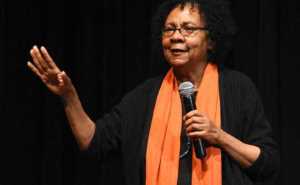
bell hooksAn excerpt from Belonging: A Culture of Place (2009) by bell hooks (right).

In her book Rebalancing the World, Carol Lee Flinders defines a culture of belonging as one in which there is “intimate connection with the land to which one belongs, empathic relationship to animals, self-restraint, custodial conservation, deliberateness, balance, expressiveness, generosity, egalitarianism, mutuality, affinity for alternative modes of knowing, playfulness, inclusiveness, nonviolent conflict resolution, and openness to spirit.” All of these ways of belonging were taught to me in my early childhood but these imprints were covered over by the received biased knowledge that served to fuel my adult radicalism.

The Poor Among You

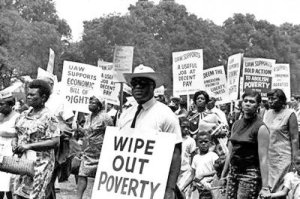
Poor Peoples CampaignBy Tommy Airey

Over the decades, I’ve consistently heard conservative pastors quote their Lord and Savior to dismiss policies and provisions that attempt to systematically help low-income residents. You’ll always have the poor among you (Mark 14:3-9). “See,” they say, referencing the Scripture, “Jesus, is telling us it’s a waste of time to try to alleviate poverty. He promises that the poor will always be with us no matter what we try to do.”

In this episode, Jesus is actually quoting Deuteronomy 15, one of the most crucial junctures in the history of Israel. God is preparing the former slaves of Egypt to live in a new kind of way in the Promised Land. As the old African-American proverb illuminates, it is easier to get the enslaved out of Egypt than it is to get Egypt out of the enslaved. The exodus wilderness was a school, a 12-step-program for recovery from the colonial script. Continue reading “The Poor Among You”

Soul Talk in a Neoliberal Age, Part 1

Mental Health Counseling Conference
PC: Sam Simpkins

For the next five Fridays, we will pose questions to Dr. Bruce Rogers-Vaughn (right), an ordained Baptist minister, pastoral psychotherapist and Associate Professor of the Practice of Pastoral Theology and Counseling at Vanderbilt Divinity School, and the author of Caring for Souls in a Neoliberal Age (Palgrave, 2019). “Neoliberalism,” he writes, “has become so encompassing and powerful that it is now the most significant factor in shaping how, why, and to what degree human beings suffer.”

This is why Bruce presses for a “post-capitalist pastoral theology” that empowers people to resist the system (instead of adapt to it), to embrace communion and wholeness in relation to others and the earth (instead of functioning in accord with the values of production and consumption) and to pursue interdependent reliance within the web of human relationships (instead of accepting shame-based personal responsibility narratives). Continue reading “Soul Talk in a Neoliberal Age, Part 1”