The Cross: A Call to Gospel Nonviolence

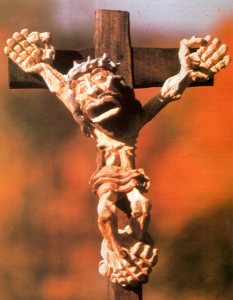
crucifixion_edilberto-meridaEast Coast Friends!! An announcement from The Alternative Seminary in Philly!

THE CROSS OF CHRIST: A JUSTIFICATION FOR REDEMPTIVE VIOLENCE OR A
CALL TO GOSPEL NONVIOLENCE?

The cross can heal and hurt; it can be empowering and liberating but also enslaving and oppressive … I believe that the cross placed alongside the lynching tree can help us to see Jesus in America in a new light, and thereby empower people who claim to follow him to take a stand against white supremacy and every kind of injustice.” ― James H. Cone, The Cross and the Lynching Tree

Continue reading “The Cross: A Call to Gospel Nonviolence”

Where We Put Down Our Roots

By Mark Van SteenwykMVS

*This is the 11th installation of a year-long series of posts from contributors all over North America each answering the question, “How would you define radical discipleship?” We will be posting responses regularly on Mondays during 2019.

What is Radical Discipleship? This used to be a fairly simple question to me. Now? Not so much.

Fifteen years ago, with the confidence of a late 20’s white seminarian, I “planted” a church whose only real mission was to take Jesus seriously. Soon, that new church experiment mutated into a full on intentional community, a sort of hybrid between a catholic worker house and a hippy Mennonite Church. We called ourselves the Mennonite Worker. Continue reading “Where We Put Down Our Roots”

Are You Willing to Follow Dr. King Today?

BarberSome highlights from Rev. William Barber’s 50-minute speech delivered on Martin Luther King, Jr. Day in Tennessee.

We do not celebrate martyrs. You join them.

MLK Jr. preached, but we make a dangerous mistake that his words were just soaring oratory. He preached civil disobedience and he preached a movement to challenge the demons of Jim Crow.

Not only in sanctuary…but he preached and acted in the streets of the nation.

If … it doesn’t lead to the liberation of the sick, poor and oppressed — then preaching is just words with no action,

People love dead prophets, but the question is, “Are you willing to follow Dr. King today?”

A Moral Compass That Was Unbreakable

Albert Woodfox, Herman Wallace
Herman Wallace and Albert Woodfox in the early 70’s (PC: In The Land of the Free)

An excerpt from Albert Woodfox’s recent autobiographical article in The Guardian. He was a Black Panther who spent more than 40 years in solitary confinement.

I made my bed every morning. I cleaned the cell. I had my own cleanup rag I used to wipe down the walls. When they passed out a broom and mop I swept and mopped the floor of my cell. I worked out at least an hour every morning in my cell.

By the time I was 40 I saw how I had transformed my cell, which was supposed to be a confined space of destruction and punishment, into something positive. I used that space to educate myself, I used that space to build strong moral character, I used that space to develop principles and a code of conduct, I used that space for everything other than what my captors intended it to be. Continue reading “A Moral Compass That Was Unbreakable”

A Wild, Ragged Figure

Ric HudgensBy Ric Hudgens

*This is the tenth installation of a year-long series of posts from contributors all over North America each answering the question, “How would you define radical discipleship?” We will be posting responses regularly on Mondays during 2019.

What is radical discipleship?

I’m in bed recovering from a stroke. I have dramatic weakness on the right side of my body. I can only walk with assistance. I talk slowly and softly. It is difficult for me to write. I am poor in physical strength, but rich in friends and strong in faith. Maybe I’ll be back to normal some day; or maybe it’s time for me to find a new normal. Continue reading “A Wild, Ragged Figure”

This is Why I Speak of “Postactivism”

BayoFrom Bayo Akomolafe, originally posted to social media on February 26, 2019:

A sticky myth of modern activism is that we are human observers looking out upon a world of troubling events from a distance that allows us to think up solutions to, or ask poignant questions about, those critical occurrences. Our popular equations of social change seemingly take for granted the constancy of human subjectivity and agency. We are pillars in the sandy storm: the world outside our skins may roar and thrash and turn, but we are the calm interruptions in the wind – and it is our impenetrable inner world and free-willed consciousness that will bring order to the chaos around us – if only we get our act together. What we do not see, however, is how fluid, incoherent and unstable we really are. For instance, with the problem of environmental degradation, we do not usually notice how we are co-produced in the leaching of dangerous toxins from aquatic bodies in plastic oceans, how these secretions not only penetrate our own bodies but modify them, and how these modifications imply that we are not pure referees of the situation. We are “in deep”, and we must account for the fact that how we even see the problem is part of the problem. Continue reading “This is Why I Speak of “Postactivism””

A Logical Outgrowth

RubyAnother throw down from the front porch of Ruby Sales (originally https://www.facebook.com/plugins/post.php?href=https%3A%2F%2Fwww.facebook.com%2Fruby.sales.1%2Fposts%2F2390576024310162&width=500“>posted February 23, 2019):
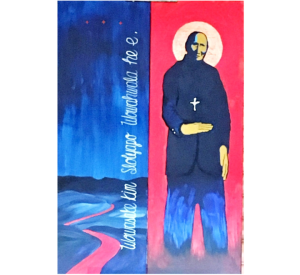
What does it say about White Americans that they see Donald Trump as a viable candidate despite all of the spiritual decay and social rot gut that surround him. He degrades the office of the presidency with degrading, threatening and dehumanizing speech, conspires with Putin against his country to erode the pillars of democracy, upholds sexual and racial crimes and policies, film flams ordinary people and sells America to the highest bidders.

For White Americans to see Trump as a viable President and candidate is a problem in White culture that speaks volumes about the social death and spiritual nihilism that grip them. Moreover Trump is a logical outgrowth of hundreds of years of a culture of Whiteness where its guardians and beneficiaries have feasted and waxed fat not on only these malformations but on the lives, labor and bodies of Black and Brown peoples always and women sometimes.

We Talk, You Listen

Black Elk
Icon of Black Elk by Rev. Bob Two Bulls

By Tommy Airey, co-editor of RadicalDiscipleship.Net

“Our arms are tired of troubling the waters for you. Do us a favor and trouble your own waters and receive healing.”–Jim Bear Jacobs, Thursday morning at the Bartimaeus Kinsler Institute

Yesterday, on my flight back to Detroit, I had a front row seat for a rather disturbing dialogue. A young man whose family owns a limo company in the suburbs was aghast at Rep. Rashida Tlaib (D-MI) who called out the director of Green Book for publicly praising the watch-and-bicycle-company Shinola for their role in “saving Detroit.” Then the young man proclaimed, “In my opinion, gentrification is really helping.” His passionate conversation partner, a white woman about my age, gasped, “Why can’t people just be happy?” Continue reading “We Talk, You Listen”

Like a Radish

Screen Shot 2019-02-06 at 9.39.24 AMBy Kyle Mitchell

*This is the ninth installation of a year-long series of posts from contributors all over North America each answering the question, “How would you define radical discipleship?” We will be posting responses regularly on Mondays during 2019.

The word discipleship reminds me that the way of the Jewish rabbi named Jesus is grounded in a posture of discipline and learning. For those of us whose native religious tongue is Jesus language, discipleship is the main way that we express our faith in the world. We never “arrive”, but are always growing, maturing, discerning, listening, and learning. We make the road by walking. Continue reading “Like a Radish”

Until They Became Landless Non-Citizens

MadleyFrom Benjamin Madley’s An American Genocide: The United States and the California Indian Catastrophe, 1846-1873, quoted early and often at last week’s Bartimaeus Kinsler Institute in Southern California.

…federal lawmakers expelled California Indians from mainstream colonial California society and relegated them to a shadowy legal and social status between man and beast. This was not preordained. In each phase of legislation, anti-Indian views prevailed over more sympathetic voices, each time pushing Indians farther beyond the bounds of citizenship and community. Through a succession of laws, legislators slowly denied California Indians membership in the body politic until they became landless non-citizens, with few legal rights and almost no legal control over their own bodies. Indians became, for many Anglo-Americans, nonhumans. This legal exclusion of California Indians from California society was a crucial enabler of mass murder.