
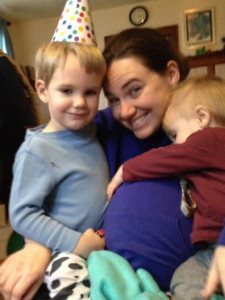
 By Lydia Wylie-Kellermann, co-editor of RadicalDiscipleship.Net
*This is the sixth installation of a year-long series of posts from contributors all over North America each answering the question, “How would you define radical discipleship?” We will be posting responses regularly on Mondays during 2019.
Radical Discipleship
Summons stories-
Communal ones of laughter and longings,
Ancestral ones with pain and truth and roots,
Ancient ones with context that can change the course of our lives.
Radical Discipleship
Plants seeds, saves seeds, shares seeds.
Puts them in the soil as sacred wonder,
as food for the mouths of our family and neighbors,
And as part of begging forgiveness for what we have done to seed and soil.
Plants seeds of our lives rooting in place,
falling in love with the ground where we stand,
Learning her history, and tending its future.
Shares seeds of hope in a time when the world feels barren and ready to ignite,
Yet here come the seeds of resistance, imagination, and hope.
It echoes of Dorothy Day saying that love is the only solution.
It heeds Dan Berrigan’s call to stand somewhere.
It joins what Martin Luther King calls for by nurturing Beloved Community.
Radical Discipleship
Is the tradition that calls upon
the courage of Shiprah and Puah, Miriam, Ruth, Mary Magdalene,
the writings from jail cells of Paul and Silas and John,
and calls us towards the risks of birthing in the face of a dragon.
Radical Discipleship
Depends on people gathering
But needs no institution, no building, no marble.
It needs just 2 or 3 to gather
To open the good book and the newspaper
And to ask the questions and share our lives.
Radical Discipleship
Claims the cultural and historical roots of a tradition
that it is a piece of our ancestral line,
And part of that, means confessing, reparations, listening, and sorrow
For Constantine’s sword, for slave owner theology, for the Doctrine of Discovery,
For ongoing appropriation, hegemony, and for the rise of empires that carry the cross.
Radical Discipleship
Knows that those of us who carry the cross
Are meant to walk the underbelly of empire
To love from the margins.
We know that the cross was (and is) used as a violent threat of suppression by empire,
Yet it is also a sign that neither empire nor death shall have the final word.
Radical Discipleship
encourages experiments of going home by another way
Calls to us to slow down and be where we are,
To be steeped in love for one another,
Gratitude for the cloud of witnesses,
And steadfast work for the generations to come.
Radical Discipleship
Leads us to unexpected places
So before we sign on the dotted line, we all should know,
We might end up with your hands covered in dirt,
Or spending nights in jail,
Or turning a guest room into hospitality space,
Or giving up all your money
And joining a Catholic Worker.
We might stop to admire the lilies,
Or start writing poetry,
Or falling in-love.
We might turn off your TV,
Or begin asking forgiveness,
And turning our lives upside down and forever.
So, be careful.
Radical Discipleship
Is love,
Joy,
Beauty,
Sorrow,
Community,
Hope,
Resistance,
And a loving embrace
Of history
And all that is to come.
In gratitude
That I get to do all of that
With you.
 Happy Birthday, Ched Myers!!!
 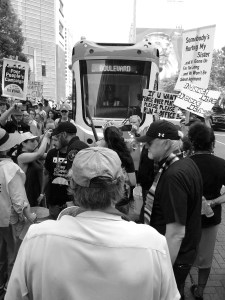 On June 18 2019 as part of the “40 Days of Action,” the Michigan Poor Peoples Campaign: of a National Call for Moral Renewal, undertook a series of direct actions in and around Campus Martius, center for the development priorities of Dan Gilbert and the administration of Detroit Mayor, Mike Duggan. Gilbert owns some 100 buildings downtown, is constructing a $billion skyscraper (over 60% in taxpayer expense, including school funding), is currently under indictment for predatory loans, is responsible for 1800 mortgage foreclosures (half of which are abandoned or demolished), co-led the Blight Task force selecting building (and neighborhoods) for demolition, and for some is the darling of the city’s comeback narrative – Making Detroit Great Again. The cities footprint is being concentrated and downsized at the expense of poor and Back people who are literally being expelled foreclosures, water shut-offs, school closures, and transit infrastructure withdrawal. Seven people, of the 23 arrested that day, are currently on trial for blocking the QLine (a three-mile streetcar name for Gilbert’s Quiken Loans and built at a cost of $146 million). The “Gilbert 7” did not deny their actions but testified to their reasons and justification for the action, naming the price of racism and poverty. At this printing, the jury has been out three days and is currently deadlocked with half the group committed to innocence by moral necessity. Dan Gilbert has plans to demolish the room in which the jury is deliberating, along with Circuit Court and Wayne Co. Jail, all of which will be rebuilt far from the now largely white downtown. What follows is the closing argument of Rev. Bill Wylie-Kellermann who defended himself in the case.
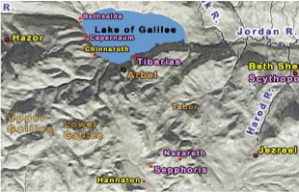 By Ched Myers, on Luke 4:14-21, for the 3rd Sunday of Epiphany (originally posted Jan 24, 2016)
 By Mary Oliver (September 10, 1935 to January 17, 2019)
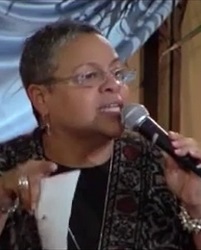 A Friday classic. An excerpt from The Sun Magazine
 A classic from theologian Obery Hendricks, re-posted from
  Another brilliant epistle from the front porch of
 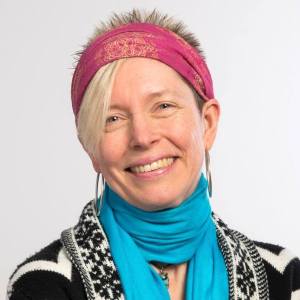 By Rev. Solveig Nilsen-Goodin (right), a pastor, parent, author and organizer in Portland, OR
 Radical Discipleship