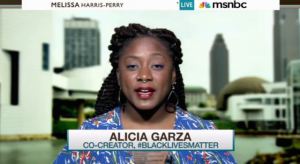
A social media [re]post from Oakland-based organizer and Black Lives Matter co-founder Alicia Garza (Dec 27, 2017):
I’ve been traveling the last two weeks, meeting people from many different places in the world. The number one question I’ve been asked—besides the questions about my hair, which we will definitely talk about later—is this:
What is your country doing about Trump?
And I have to be honest and say:
We have a resistance movement but it is very divided, and lacks a path to power.
And then I sit with the shame of that. I live in a country that does terrible things around the world. And those of us who know that lack a path to power.
So in 2018, my simple resolution is this: to work to contribute to building a movement that takes its work seriously and is clear about what the work is and what it is not. The work isn’t to like each other and be besties. The work is to do something about our country—for and with the oppressed people inside of it and for and with the people oppressed around the world—and that requires building a movement in the millions with people who may or may not have your same approach or even the same political line but certainly share the same interests.
That means the Left needs to learn from its errors and become a different Left that does the work of organizing. Shaming or shading is not organizing. In a nation with more than 323 million people, our movement cannot be comprised of a few thousand people who think the same way and feel good with each other. A path to power means taking power and building power. We can’t build power if we aren’t taking power, and power isn’t just about our feelings or what is in our minds.
So I’m making a resolution to take that mandate much more seriously. I hope others will join me, and I’m gonna work to make it so.
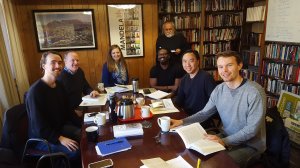
By Laura Newby of Twin-Cities-based Underground Seminary
*NOTE: Underground Seminary is now accepting applications for their 3rd cohort starting Fall 2018.
Christian leadership requires radical revisioning in the twenty-first century. The patriarchal, white, Western, capitalist framework that has dominated the globe the last few hundred years has lost credibility. Whiteness was birthed in conquest and theft, and has led to a global neoliberal system where everything is a commodity to be devoured for profit. The earth cries out on the brink of eco-systemic collapse.
This is an age for prophets and healers. Yet we are heirs of a religious tradition that is deeply complicit in our apocalyptic moment. What does it mean to serve as Christian leaders when Christianity has been the primary ideological center of this destructive colonial worldview? Do we realize the extent to which our ideas about leadership continue to be shaped by the chimera of whiteness? Continue reading “An Alternative Seminary Experience”→
We’ve been taught to think of movements and protests as “Who’s the target? What’s the action? We’re done.” In the same way that we have medics at protests to attend to the physical needs of people, a movement chaplain would be the person who’s clued into the emotional, spiritual, and mental needs, both in the moment of protest, and afterwards. They would help us decompress, celebrate, lament. We shouldn’t be going on to the next action until we’ve had time to process and celebrate our wins, and mourn our losses, and talk about how scared we were during one part and how great this other part felt. We need to change the way we are taught to organize. Continue reading “Brave Spaces”→
To move into a seemingly bleak and
ominous future requires laying hold
of stories from our past:
Stories to remind us that buoyancy
emerges from unseen places,
at unknowing moments,
in unpredictable ways,
beyond all calculation
and prognostication. Continue reading “Silent Night”→
Any anabaptist theology that isn’t re-baptized through liberation theology reinforces oppression.
Anabaptism, on its own, only makes sense as a religion of the oppressed. Just like the Gospels are unintelligible to the middle and owner classes apart from the experiences of the oppressed.
In other words: Any calls for pacifism, meekness, and simplicity that come insistently from the powerful are attempts to keep the oppressed docile and poor.
Nonviolence must be a tool of the oppressed in their struggle, with the aid and support of repentant allies. Otherwise, in the hands of the powerful it becomes an ideology of oppression.
To be clear: I’m a pacifist. But pacifism and nonviolence must be in service to liberation or they become a force for oppression. If you’re a pacifist that isn’t working alongside (and following the lead of) those who struggle for liberation, then your nonviolence is just the velvet pouch sheathing the hammer of oppression
Among the many manifestations of his project to “make America great again,” President Trump has frequently and pompously declared that “We will be able to say ‘Merry Christmas’ again!” When he spoke at last fall’s Values Voters Summit, this vow garnered the most boisterous applause. For many conservative Christians, Trump is the conquering hero who waged battle against secularism in the annual “war on Christmas” – and finally won the war. Like many Trumpisms, this would be simply pathetic were it not for the fact that it is part of a treacherous national vision. Continue reading “The Politics of Christmas in the Age of Trump”→
Rev. Bill Wylie-Kellermann and his recent releases
Because Christmas has become so central to the American economy and American consumption is so central to global capitalism, this festival of ‘Holy Days’ has become a central expression and embodiment of American imperial domination, an imperial religion. Richard Horsley, Religion and Empire (2003)
Truly, this Season signals a major tension for North American radical disciples. We resist and reclaim. Whether it is our love language our not, we give. But some forms of giving are far more redemptive than others.
It is in this Spirit that we offer gift ideas from more out-of-the-way, up-and-coming, long-suffering and open-hearted thinkers and artists. Links to their work are provided here and will eventually be added to our now-pemanent “STORE” tab up top. We hope this list is an Advent-instigator: please add your recommendations to the comments below or email us so we can add them to the store!!!
A beautiful 2016 publication from Philly-based pastor-parent-activist about using the difficult and challenging parts of life as a way to deepen your spiritual path and become more authentic.
Truly, it is a time of exile for those of us on the left. Let’s set the clock back to the early Bush years with this re-examination of the Exodus from a Vancouver-based pastor-activist.
From the foot of Tiger Mountain in Washington State comes a vital perspective on early church history (aka, “the roots of why Christians want to make America great again.”).
And lest we think gift-giving is only for adults, the executive director of the Center for Prophetic Imagination in Minneapolis tells this St. Francis-inspired tale for our young ones.
This year, Charlottesville exposed us all to some of the most vicious forms of American white supremacy. But far less known, C’Ville is home to some radical experimentation, including sweet sounds from a young singer-songwriter. Perfect for people defined by death-and-resurrection.
And this! From a Minneapolis-based artist and PhD candidate releasing her first album, a powerfully rich blend bursting with beauty, grief, creativity and prophetic wisdom.
Probably the most unique musical contribution of the movement is from Philly-based Holy Fool Arts, a voice of and for the wilderness that combines poetry, theatrical masks, ancient rhythms, traditional and modern dance forms, with a heavy side of the blues.
Lastly, a recommendation from author-activist Wes Howard-Brook fair-trade, organic chocolate from Mama Ganache. From WHB:
They are THE BEST! As we all know, corporate chocolate production is both a human and environmental horror show. The folks at MG use their profits to support farmers in West Africa in many ways, as explained on their website. I’ve been ordering from them for years!
by jim perkinson (St. Peter’s Episcopal Church, Detroit, 11-26-17)
the sheep and the goats
the goats and the sheep
the left
the right
the day
the night
nothing here about church
but the good fundies all say
you must believe with your heart
have the word on your lips
insist jesus is lord
or you will have no part Continue reading “sheep and goats, meat and drink”→
Part of President Trump’s vision of “making American great again” is that – to hell with political correctness – we will all be able to say “Merry Christmas!” again.
This is deeply ironic but sadly telling: Much of the Christian church in the United States has been co-opted by an American gospel of prosperity, racism, violence, and militant nationalism. The celebration of Christmas is often wrapped in innocent, feel-good, Hallmark-card imagery. But in fact the biblical texts describing the coming of Jesus are making powerful assertions about the politics of the Bible that speak very much to our contemporary global crises. We will reflect on the “nativity narratives” in the Gospels of Matthew and Luke to see how they express core biblical themes of justice and liberation. We will try to “un-domesticate” these tales of liberation and reflect on how they are truly challenging us in terms of our allegiance and our discipleship. A perfect event for Advent. A light breakfast will be served. A $5 donation is requested to cover costs.
The Alternative Seminary is a program of biblical and theological study and reflection designed to foster an authentic biblical witness in the modern world. For more information, see www.alternativeseminary.net.
By Dave Pritchett, Wilderness Way Community (Portland, OR)
Addiction and Systems of Isolation
Every morning I walk into the addiction medicine center where I work, and scan the crowd attempting admission. Every morning, the faces of people hoping for treatment mimic the national trend of opiate addiction–overwhelmingly white, young men, in their 20’s and 30’s. While it is true that people struggling with mental health as well as people living in rural settings are statistically more susceptible to opioid pill addiction, heroin users tend to be urban men in their 20’s.

 A social media [re]post from Oakland-based organizer and Black Lives Matter co-founder Alicia Garza (Dec 27, 2017):
 By Laura Newby of Twin-Cities-based Underground Seminary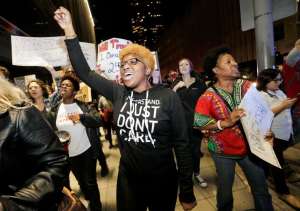

 A social media re-post from Mark Van Steenwyk, executive director of
  By Will O’Brien


 Radical Discipleship