Black and Palestinian Christians in Solidarity

Check out this Sojourners Magazine conversation between Josiah R. Daniels and Azmera Hammouri-Davis.

Honestly, I never thought much about Israel before college. Then, during my sophomore year, a prominent New Testament studies scholar had been invited to speak on campus; after it came to light that they were openly critical of the state of Israel, they were summarily disinvited. A few other students and I were still able to meet with the scholar, and we were shocked by the language they were using to describe the conditions in Israel for the Palestinians: “Second-class citizens,” “genocide,” and “apartheid” were the terms that struck me most.

“It can’t be as bad as what Black people have faced in the United States or what they faced in South Africa,” I remember saying to the scholar. “Go and see,” they admonished. And so, one year later, that’s exactly what I did.

In 2012, three other students and I had been invited to attend a conference at Bethlehem Bible College called Christ at the Checkpoint. The mission of this conference, which will be convening for the seventh time in May 2024, was to invite evangelicals to think about Israel and Palestine in ways that prioritized “peace, justice, and reconciliation,” while also explicitly giving voice to Palestinian Christians. And while I’m grateful that I was introduced to authors, theologians, and activists like Munther Isaac, Jonathan Kuttab, and Salim Munayer, nothing was quite as transformational as experiencing a checkpoint for myself.

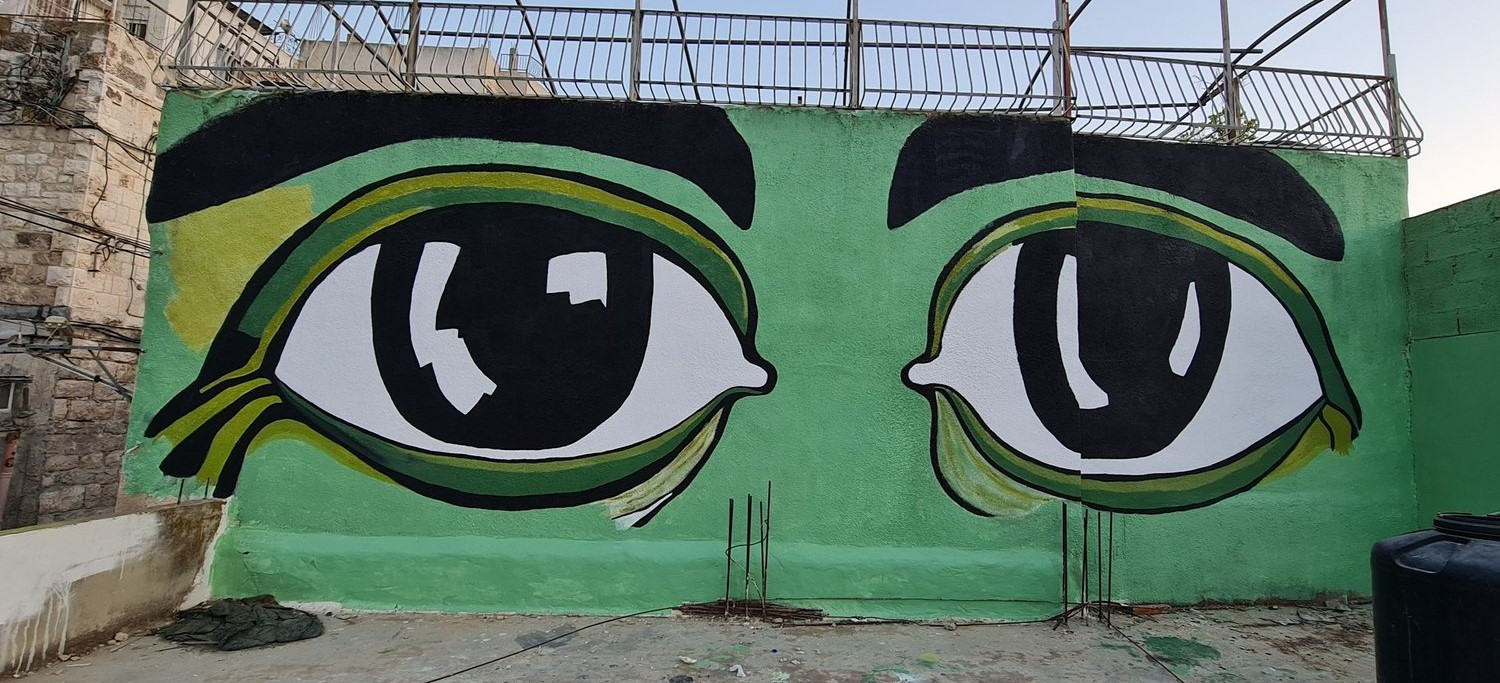
I’d been stopped at police checkpoints in the United States multiple times — either alone or with friends or my dad. During those stops, humiliation, pain, or death always seemed to be a likely outcome. So when I was preparing to pass through one of the checkpoints at Israel’s apartheid wall, I imagined the Israel Defense Forces soldiers would hassle me the same as the Chicago police. But there was no hassling. I handed them my blue U.S. passport and waltzed through the checkpoint. “I feel like the scholar exaggerated a bit,” I thought to myself. But as soon as that thought crossed my mind, I turned around to see a long line of Palestinians, each of them being hassled by an IDF soldier. When I looked into the eyes of those Palestinians, I saw that they, too, felt humiliation, pain, or death was a likely outcome.

To read the interview go to Sojourners Magazine here.

What is Christian Zionism?

Jewish Voice for Peace and Showing Up for Racial Justice are hosting a free webinar called Understanding Christian Zionism on Wednesday, November 29 at 8:00pmEST. You can register for it here.

What is Christian Zionism, how is it showing up in this moment, and why is understanding it important in our efforts to demand a ceasefire and an end to the violence in Gaza? Join SURJ and Jewish Voice for Peace for a mass teach-in about Christian Zionism. We’ll hear from an expert panel– Palestinian Christian activist Jonathan Brenneman, Jewish researcher and writer Aiden Orly, and scholar of pentecostalism and the Christian far right Elle Hardy– who will share their analysis of how we got here and how our strategies to demand a ceasefire and fight for Palestinian liberation can be aided by a deeper understanding of the forces we’re up against. Live ASL interpretation will be available on the call. If the Zoom reaches capacity, we will be livestreaming on SURJ and JVP’s Facebook pages. Register to receive the recording if you’re unable to make the call.

How Do We Celebrate Christmas While Bombs Drop in Gaza?

Another compelling offering from The Alternative Seminary.

How Do We Celebrate Christmas While Bombs Drop in Gaza?

Jesus was born in a context of occupation, political violence, and militant resistance. As much as we try to wrap the “Christmas story” in innocent, Hallmark-card imagery, the biblical texts describing the coming of Jesus are making powerful assertions about the politics of the Bible that speak very much to our contemporary global crises – including the current violence in Israel and Palestine.

Once again this year, the Alternative Seminary is offering their annual Advent gathering “Peace on Earth and the Politics of Christmas.” In this virtual program, we will explore the “nativity narratives” in the Gospels of Matthew and Luke to see how they express core biblical themes of justice and liberation. We will “un-domesticate” these stories and reflect on how they are truly challenging us to a revolutionary discipleship – an especially urgent need as we witness more violence in Jesus’ homeland. This program will be facilitated by Will O’Brien, coordinator of The Alternative Seminary and contributor to Radical Discipleship.

Continue reading “How Do We Celebrate Christmas While Bombs Drop in Gaza?”

Because God is Kind of Blue

By Johari Jabir

a little Palestinian boy, walking to school in Gaza
encountered an Israeli soldier driving a U.S. – made tank
Looking up into the soldier’s eyes, the little boy said,
“Mr. American President, when you look at me, would you say
he could have been my son,
like President Obama said of Trayvon Martin

meanwhile, a little black girl,
in a studio apartment in north St. Louis
waiting for her father to pour milk into her bowl of captain crunch cereal,
turned her gaze toward the tv,
where images of fire and smoke rained down on gaza
“daddy,” she said,
“is god blue?”

Continue reading “Because God is Kind of Blue”

We are Here to Make Ourselves Clear

An open letter from a coalition of anti-occupation Jewish students at Brown University. Re-posted from The Brown Daily Herald (November 7, 2023)

Solidarity is the political version of love.” – Jewish feminist activist Melanie Kaye/Kantrowitz

As of today, it has been a month since the Oct. 7 attacks that have dominated global political consciousness and discourse, not to mention our experiences as young Jewish people. Zionist institutions purport to be representative of all Jews, often using us as a rhetorical shield to support the unconscionable actions of the state of Israel. We feel a particular pain as Jews having to continuously justify our stance against genocide. We are here to make ourselves clear: We stand in solidarity with Brown Students for Justice in Palestine and the Palestine Solidarity Caucus in the pursuit of the liberation of Palestinian peoples. We know intimately that Jewish struggles are necessarily bound up in global struggles for freedom. We are a group of Jewish students who have coalesced around our shared vision of justice, anti-occupation, liberation and community. We ask you to listen to us now:

1. What do we mean when we say, “from the river to the sea”?

“From the river to the sea, Palestine will be free” is not a call for the forced removal of Jews from Palestine or, as it is commonly misconstrued, a call to “throw Jews into the sea;” instead, it is a call for the end to the oppression of all Palestinians — in Gaza, the West Bank and within the Green Line. Liberating all of Palestine requires revolutionary change: not an eradication of Jews from the land, but a total dismantlement of the apartheid regime occupying it. The assumption that this phrase is inherently genocidal falsely conflates liberation with the annihilation of each citizen of the oppressive state and ignores its liberatory intent. Within this conflation, we hear a racist assumption that Palestinians are ruthless “animals” and an intentional obscuring of the violent intent of a neo-fascist government — a characterization shared even by writers in Israel’s newspaper of record. It is not only blatantly false but obscene to frame a call for liberation and justice as genocidal while Israel is carrying out genocide in Gaza funded by billions of American tax dollars. If calling for a future in which Palestinians can live in their homeland unshackled implies an existential threat to the Zionist ideology, it is that ideology that must be called into question — not the call for liberation. 

Continue reading “We are Here to Make Ourselves Clear”

A Response to Rev. Barber on Palestinian Resistance

By Rev. Graylan Scott Hagler, re-posted from Mondoweiss, a source of news and opinion on Palestine, Israel and the US

The Bishop William Barber, II, of the Poor People’s Campaign wrote an Op-Ed that appeared in The Guardian on October 13, 2023, entitled, “We must say an emphatic ‘no’ to Hamas a thousand times“. I feel compelled to respond to that Op-Ed. I am hesitant to challenge a friend and a colleague, but on this issue, I must.

I understand Rev. Barber’s need to thread the needle, but in a time like this, we need truth-telling and not outrage when it is politically expedient to do so. As Bishop Barber decries and mourns the killings and atrocities carried out by Hamas, he makes the same error that he has made in the past, by diminishing — and at times ignoring the horrendous history of settler colonialism endured by Palestinians. I am not suggesting equivocation, where a massacre by Hamas in Israel is justified by the long history of Palestinian dispossession and oppression. But I am advocating for the consistent and equal acknowledgment of the long pain and suffering of the Palestinian people. Rev. Barber has not done that historically or even in the structure of his Op-Ed, where he mentions Palestinian suffering in a secondary position to the recent attacks upon Israel.

Rev. Barber seems to want to excuse 75 years of oppression and harm perpetuated by the Israeli regime and aided by a general silence from the world. Through the years, Israelis, Palestinians, Muslims, Christians, and Jews have worked to draw attention to the gross violence and injustices of Israeli occupation. Yet, it seemed that the world was not interested in war crimes, or the genocidal pogroms carried out against the Palestinians. In most cases, the death of a Palestinian child, or the eviction of a Palestinian family did not even amount to a footnote in the concerns of the U.S. government or many religious leaders, including Rev. Barber. Click here to read the rest on Mondoweiss.

Exposed

By Tommy Airey

I am re-reading Rev. Dr. Martin Luther King’s “Letter from a Birmingham jail.” MLK wrote the letter 60 years ago to white Christian and Jewish leaders. He lamented their lukewarm acceptance of the racist system. He lamented that they were more interested in order than justice – and that they were content with a kind of peace that forced the oppressed to accept their plight. MLK explained that the nonviolent actions that got him arrested were not creating tension, but simply bringing to the surface the tension that was already there for too long.

This letter is coming to life in those resisting the occupation of Palestinian land and the genocide of Palestinian people. MLK wrote that the movement for Black freedom was turning the monologue into a dialogue. The old Zionist monologue that mutes and cancels anyone with an opposing perspective is fading fast. People of faith and conscience are demanding a real dialogue about this situation. They are breaking the rules of what can be talked about in their families, faith communities, campuses, corporate media outlets and the Democratic Party.

Continue reading “Exposed”

A Call for Repentance: An Open Letter from Palestinian Christians to Western Church Leaders and Theologians

Originally posted here. Click on and sign the petition.

“Learn to do right; seek justice; defend the oppressed” (Isa 1:17).

We, at the undersigned Palestinian Christian institutions and grassroots movements, grieve and lament the renewed cycle of violence in our land. As we were about to publish this open letter, some of us lost dear friends and family members in the atrocious Israeli bombardment of innocent civilians on October 19, 2023, Christians included, who were taking refuge in the historical Greek Orthodox Church of Saint Porphyrius in Gaza. Words fail to express our shock and horror with regard to the on-going war in our land. We deeply mourn the death and suffering of all people because it is our firm conviction that all humans are made in God’s image. We are also profoundly troubled when the name of God is invoked to promote violence and religious national ideologies.

Further, we watch with horror the way many western Christians are offering unwavering support to Israel’s war against the people of Palestine. While we recognize the numerous voices that have spoken and continue to speak for the cause of truth and justice in our land, we write to challenge western theologians and church leaders who have voiced uncritical support for Israel and to call them to repent and change. Sadly, the actions and double standards of some Christian leaders have gravely hurt their Christian witness and have severely distorted their moral judgment with regards to the situation in our land.

Continue reading “A Call for Repentance: An Open Letter from Palestinian Christians to Western Church Leaders and Theologians”

Capitalism and Christianity are Incompatible

Three years ago, we interviewed Dr. Bruce Rogers-Vaughn (above), an ordained Baptist minister, pastoral psychotherapist and Associate Professor of the Practice of Pastoral Theology and Counseling at Vanderbilt Divinity School, and the author of Caring for Souls in a Neoliberal Age (Palgrave, 2016). “Neoliberalism,” he writes, “has become so encompassing and powerful that it is now the most significant factor in shaping how, why, and to what degree human beings suffer.”

This is why Bruce presses for a “post-capitalist pastoral theology” that empowers people to resist the system (instead of adapt to it), to embrace communion and wholeness in relation to others and the earth (instead of functioning in accord with the values of production and consumption) and to pursue interdependent reliance within the web of human relationships (instead of accepting shame-based personal responsibility narratives).

Above all, Bruce prods pastors, therapists and social workers to identify the source of personal distress in the social and political environment instead of within the individual (he rejects what he calls “sophisticated exercises in blaming the victim”). Oh—one more thing about Bruce. All of his work is informed by his deep roots in southern Appalachia.

This is an excerpt from the beginning of our five-part conversation. See this for Part I, this for Part II, this for Part III and this for Part IV.

—————————————————————————————-

Neoliberalism is simply an awful word. It is almost inevitably misleading. When I first encountered this expression, I imagined it was designating some new (“neo-”) form of political or theological “liberal.” But, actually, the term originates from economic philosophy. Its first proponents—the so-called “German Ordoliberals”—coined the name during the 1930s. Today the word is used, almost exclusively by its critics, to refer to the current phase of capitalism. This phase gained political traction in the USA and the UK in the 1980s, during the Reagan and Thatcher administrations, and by the mid-1990s was the dominant way of thinking and believing that guided global economics, politics, and culture.

Continue reading “Capitalism and Christianity are Incompatible”