The Spirits of the Lynched

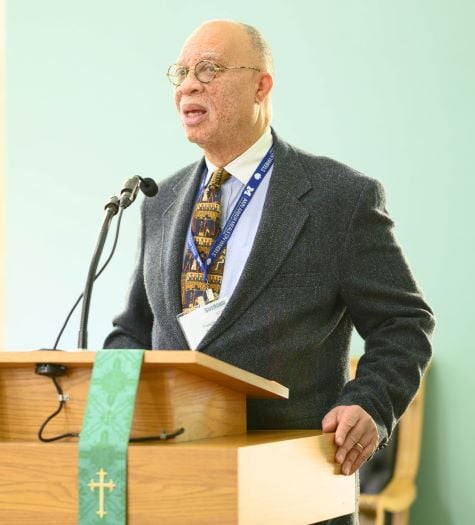
By Dwight L. Wilson, originally posted to Facebook on October 3, 2021

I have been a social activist since my first marches before Martin Luther King, Jr. was assassinated. In this week alone, I was involved in on-going projects in separate cities with police oversight, warrant resolution, and public health; in the county I worked on environmental protection; nationwide with responsible gun control.

Continue reading “The Spirits of the Lynched”

The Subversion of Hierarchical Power

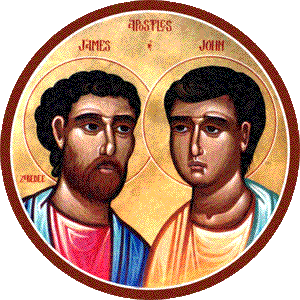
zebedeeBy Ched Myers, for the 21st Sunday in Pentecost (Mark 10:32-45), originally posted in 2015

Note: This is an ongoing series of Ched’s brief comments on the Markan gospel readings from the Revised Common Lectionary during year B, 2015.

The last cycle of the discipleship catechism begins, as did the previous story of the rich man, “on the Way.” Here the journey is finally revealed as headed to Jerusalem, the place of final confrontation with the Powers (10:32a). Jesus “goes before” the discipleship community, who are amazed and afraid (10:32b). This snapshot will be important to remember at the end of the story, where at the empty tomb we are told that Jesus “goes before” disciples who are both afraid and “ecstatic” (16:7f).
Continue reading “The Subversion of Hierarchical Power”

Blistering Hope

By Ken Sehested, the curator of Prayer & Politiks

Given the quivering state of our body politic, assailed from every side, I’ve been thinking a lot recently about how to sustain hope by way of persevering toil. As Daniel Berrigan once noted, the struggle for justice, the pursuit of peace, the advocacy of human rights in all their varied shape and kind, is sometimes “like pulling a piano through a plowed field.”

Thinking on these things, I remembered an older poem written from my years as a stone mason, “Blistering hope.”

§  §  §

Blistering Hope

A stonemason’s meditation on perseverance

When cutting capstone, carefully measured, from a larger block with nothing but hammer and chisel, you come to know the necessity of blister-raising toil to achieve envisioned result.

Continue reading “Blistering Hope”

The Call of the Rich Man as a Text of Terror

JesusBy Ched Myers, for the 20th Sunday in Pentecost (Mark 10:17-31), originally posted on October 8, 2015

Note: This is an ongoing series of Ched’s brief comments on the Markan gospel readings from the Revised Common Lectionary during year B, 2015. This post is 2-3 times longer than previous ones because of the importance of this text to our struggle to be disciples within a capitalist culture.
—————
The story of Jesus and the rich man lies at the crossroads of Mark’s narrative. From here Jesus will turn toward Jerusalem, a destination of confrontation with the Powers that evoked dread and denial among his disciples then (10:32) as now. But the encounter between Jesus and this affluent gentleman represents a theological crossroad as well.
Continue reading “The Call of the Rich Man as a Text of Terror”

“Defect-ive” Discipleship: Recovering from Domination Culture

JesusBy Ched Myers, for the 18th Sunday of Pentecost (Mark 9:38-50), originally posted on September 24, 2015

This week continues our journey through the second cycle of Mark’s discipleship catechism. Here John boasts that the disciples shut down the work of an exorcist who was not “following us” (9:38). Under these narrative circumstances, never was the “royal we” more inappropriate! Jesus’ attempt to deconstruct hierarchical power is met with the crudest of assertion of “franchise entitlement.” But is not this a poignant (if sardonic) portrait of how we Christians so often look at our faith traditions as membership clubs? Continue reading ““Defect-ive” Discipleship: Recovering from Domination Culture”

Whose Side Are We On?

Folks committed to a biblical faith, but also demanding beefed up border security have a serious problem. They will struggle to find support in the sacred text. Throughout the Hebrew bible, God is devoted to steadfast love, justice and a faithfulness to the most vulnerable, often simplified with this trifecta: widows, orphans and immigrants. In the Christian scriptures, Jesus says that those who are faithful will find him rising up in immigrants and welcome them. Images like this interrogate us. Whose side are we on?

Adelante

By Ruth Sawin, a letter to Daniel Berrigan (right)

Monday, November 10, 2014

Dear Fr. Dan,            

Having just finished your book, “The Steadfastness of the Saints,” on the flight home from El Salvador, I want to tell you of the gift that reading it on this journey has been, for me.               

I must first, of course, mention the twist in the gut that comes with reading about the work of Central American Jesuits, written five years before the martyrdom of six of them at the University of Central America, and more, since. You could not have known that would come, although I think you and all who worked in mission in Central America then knew that it was always a possibility.               

Also, during this trip we got the electrifying news that Fr. Jon Sobrino had announced that Rome announced on Tuesday (the day after we visited his tomb) that Monseñor Romero would be beatified in 2015… news which was contradicted in the edition of “La Prensa” I saw on the trip home. It seems fitting, given all the confusion that surrounded him in life, that news (or rumors) of the official recognition of the sainthood long recognized by the people, would come in confusing fits and starts. It really doesn’t matter; I still hear God whispering, “Adelante!”               

Continue reading “Adelante”

The Cross in Everyday Life: Embracing the “Least”

crucifixionBy Ched Myers, for the 17th Sunday of Pentecost (Mark 9:30-37), re-posted from September 2015

In the wake of the “confessional crisis” (last week’s reading), Mark’s narrative now turns to a triple cycle of object lessons and teaching I call the “discipleship catechism.” This Sunday’s gospel text comes from the second and longest cycle, with its focus of instruction on the less heroic, yet perhaps more difficult, practice of the Way in daily life.

The cross represents more than nonviolent resistance to the Powers; it includes the struggle against patterns of domination in interpersonal and social relationships as well. Thus Mark here addresses several expressions of social power imbalance: greatest and least (9:36f); outsiders and insiders (9:38-41); offenders and victims (9:42-50); male and female (10:2-12); children and adults (10:13-16); and rich and poor (10:17-31). This sequence exhibits certain similarities to catechetical traditions found elsewhere in the New Testament relating to family and community life such as the so-called “House-tables” (e.g. Col 3:12-4:6). Continue reading “The Cross in Everyday Life: Embracing the “Least””

Learning from the Other

lentzBy Ched Myers, for the 15th Sunday of Pentecost (Mk 7:24-37)

Note: This is a re-post of Ched’s brief comments on the Markan gospel readings from the Revised Common Lectionary during year B, 2015. The original piece was posted on September 3, 2015.

In a doublet I called a “tale of two women” (5:21-43; see my blog on the gospel for 5 Pentecost) Mark presented two linked healings in “Jewish” symbolic territory. He now narrates a corresponding doublet in clearly marked “Gentile” space (7:24). Tyre and Sidon were coastal cities not only well outside Palestinian Jewish society, but historic centers of the Phoenician naval empire, a legendary adversary of Israel (see e.g. Ezekiel 26-28), though now part of the Roman province of Syria. These healings of a woman and man are thus surprising, and serve as object lessons in the inclusivity just advocated in the previous Markan episode. Continue reading “Learning from the Other”

Other Vehicular Pathways of Prayer

By Bayo Akomolafe, a re-post from social media (August 9, 2021)

Growing up in an evangelical Christian community meant I was coached to think of prayer as a direct line to heaven – a telephone call I could make anytime I wanted. The problem was: God didn’t always pick up.

How does one make sense of that?

Competing theologies of prayer had different ways of making sense of divine rejection. God said no when we had not atoned for unconfessed sins, intoned one theory. Another theory presumed the pre-eminence of God’s Will, an intelligently composed plan so far-reaching in its consequences, so cosmic in its details, so wise in its objectives, that the only way an omniscient, omnibenevolent deity could ensure its completion was to lovingly reject our counter-proposals scripted in mortal and flawed ignorance. The clergy class therefore exhorted us to “pray in God’s will”: that is, to learn the details of this vast fabric of Being, and thread our petitions through the embroidery of this predetermined material. If the answer we sought wasn’t coming, we were to keep praying anyway (“delay is not denial”). The rumour that God worked in mysterious ways kept things fresh and exciting.

Continue reading “Other Vehicular Pathways of Prayer”