Those Deemed Different

NephsBy Tommy Airey, last Sunday’s silent sermon 

So when Peter went up to Jerusalem, the circumcised believers criticized him, saying, “Why did you go to uncircumcised men and eat with them?” Then Peter began to explain it to them, step by step…
Acts 11:2-4

When they heard this, they were silenced. And they praised God, saying, “Then God has given even to the Gentiles the repentance that leads to life.”
Acts 11:18

I give you a new commandment, that you love one another. Just as I have loved you, you also should love one another. By this everyone will know that you are my disciples, if you have love for one another.
John 13:34-35

In a previous life, I was the athletic director at a large public high school and an associate pastor at an Evangelical church plant at the same time. My single life and my Purpose Driven protein shakes subsidized my 80-hour workweek. It was a life of adventure. One week I was on a short-term mission trip to Nigeria. The next week I was dealing with the fallout of a teacher-and-coach who was sleeping with one of his students. Continue reading “Those Deemed Different”

Our Most Sacred Relative

Jim BearAn excerpt from Rev. Jim Bear Jacobs’ powerful Thursday morning sermon at the February 2019 Bartimaeus Kinsler Institute on Chumash land (“Oak View, CA”). Listen to all 40 minutes of challenge and inspiration here.

The principle of non-Indigenous environmental justice work could be summarized like this:

The earth is our greatest natural resource and it is incumbent upon us to protect it.

Sounds good, but it is wrong. Because when viewed from an Indigenous perspective, we would state it like this:

The earth is our most sacred relative and it is incumbent upon us to protect her.

The Earth has an identity. The Earth lives. She breathes. She moves. She thunders. She nourishes.

The Traumatic Somatic

MamieTillFrom the conclusion of a sermon that Ched Myers preached at Garret Evangelical Theological Seminary Chapel on April 24, 2019. Access the entire sermon here

Our gospel text—and the excruciating lesson of Emmet Till’s funeral, which launched the most significant social movement in U.S. history—challenge us to embrace the beat up bodies of both marginalized people and degraded places around our earth mother. As we do so, we will be motivated also to embrace the militant evangelistic vocation Jesus leaves his companions at the end of Luke’s Emmaus narrative: to “proclaim repentance and forgiveness of sins in my name to all nations, beginning from Jerusalem” (24:47). It is we who must continue the prophetic struggle to turn history around from its captivity to our terminal addictions and compulsions—that’s the meaning of “repentance.” Resurrection as Insurrection! And as Jesus notes, this good news is not just for individuals, but nations and systems, starting at the centers of power— for Luke, Jerusalem, for us, Washington DC. Continue reading “The Traumatic Somatic”

Wild Lectionary: Trees, a Gift for All or Entitlement for Some?

226AtlanticAveEaster 5C 5th
Revelation 21:1-6
John 13:31-35

By Rev. Dr. Victoria Marie

And I saw the holy city, the new Jerusalem, coming down out of heaven from God, prepared as a bride adorned for her husband. And I heard a loud voice from the throne saying, “See, the home of God is among mortals.”

I imagine that a new Jerusalem, where God will dwell, will most definitely have tree-lined streets. I also imagine that God’s design for the present Jerusalem—for Earth’s cities in general—is that all should benefit from the Divine gift of trees.

Continue reading “Wild Lectionary: Trees, a Gift for All or Entitlement for Some?”

Eastertide: the Outing of the Church

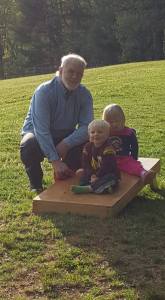
KenBy Ken Sehested (photo right with grandchildren), curator of prayerandpolitiks.org
Some years ago, writing in the days leading up to Easter, I realized important though tragic anniversaries arrived in the days immediately following that Sunday.

“Even before our resurrection flowers have wilted, we will be confronted again with the presence of evil. Since Easter falls early in the calendar this year, in the coming resurrection week we will be forced to remember the enduring power of death. In 1945, Dietrich Bonhoeffer, a German pastor and theologian, was executed by the Nazis two days after Easter Sunday. This next Thursday, April 4, we will remember the 1968 assassination of Dr. Martin Luther King Jr. right here in Memphis.” —continue reading “Open Letter to My Daughter: Easter morning, with the stench of death still in the air

What it is

We have entered Eastertide, the liturgical season beginning with Easter and ending 50 days later on Pentecost (aka Whitsunday). The formulation of this season parallels the period in Judaism between the first day of Pesach (Passover, marking their liberation from Egypt) and the feast of Shavu’ot (Feast of Weeks, both a harvest festival and a commemoration of the giving of Torah at Mount Sinai). Parallel resurrection moments, setting the stage for resulting resurrection movements. Continue reading “Eastertide: the Outing of the Church”

It Was Out of My Heart That I Spoke

MonicaA few summers ago in Detroit, a circle of high school students from a local church gathered with community organizer Monica Lewis-Patrick, executive director of the grassroots We The People of Detroit. The conversation flowed into what it looks like for faith to infuse political action when the odds are stacked against justice, freedom and equity. This is an excerpt.

All we have to do is start connecting the dots and telling the truth. When I started working in social justice, I was working in education, with children that were mentally impaired and extremely violent. What I found out really quickly was that the people at the table didn’t give a damn about the children. It was about the dollars. Because I cared about the children, I had to educate myself in terms of how I influence the policy—or the people who drive the policies—to help my people get the change they need. To help the children I served. That meant going to meetings where sometimes I would be the only one there speaking on behalf of the population that I thought was most vulnerable and most in need. Was I scared? Yes I was. Did I always get the language right? No I didn’t. Did I always have the data on hand that they had? No I didn’t. But it was out of my heart that I spoke. And then from there what would happen is that somebody would give me a card or somebody would say, “You know, I didn’t know that part” or “Can we talk?” And then I had to dig up from my spiritual history or family history and muster up enough energy to go meet with somebody that has a title—that seems to have power—and say to that person “We don’t like this.”

Wild Lectionary: Sheep, Gazelle and Rock

45073825842_789e1c317b_bActs 9:36-43
Psalm 23

By Laurel Dykstra

On this Good Shepherd Sunday, our annual engagement with the repeated biblical assertion that both kingship and divine-human relations resemble sheep husbandry, the lectionary illuminates two key aspects of the emerging Wild Church Movement. Connected to both Watershed Discipleship and Contemplative Ecology, Wild Church is nothing more than Christians who intentionally worship, or seek to experience holiness, outside of buildings. In forests, deserts, city parks, beaches, urban vacant lots we reassert the strand of our tradition where wilderness is the place of divine encounter. Continue reading “Wild Lectionary: Sheep, Gazelle and Rock”

Everyday Radical

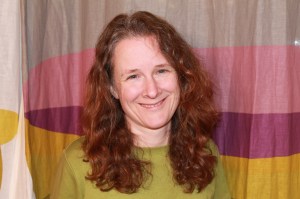
IMG_1388By Rev. Joanna Harader (right)

*This is part of a series of pieces from contributors all over North America each answering the question, “How would you define radical discipleship?” We will be posting responses regularly on Mondays during 2019.

I was struck by Rev. Dr. Victoria Marie’s statement that, in thinking of “radical discipleship,” “there is only discipleship.” The adjective is unnecessary, because to follow Jesus is radical. Period.

I get the temptation to add “radical,” though. Because we want to differentiate actually following Jesus from what too often passes as being Christian in our society. We add “radical” to remind ourselves that discipleship is not about just believing the right theology or showing up in the right place every Sunday or voting for the right political party or hanging the right calligraphied Bible verse poster above our couch. Continue reading “Everyday Radical”

A Theology that Loves Out Loud

Eboni
PC: arika.org.uk

From the opening paragraphs of Eboni Marshall Turman’s March 2019 article “Black Women’s Faith, Black Women’s Flourishing,” originally posted in the March 2019 edition of The Christian Century. Turman teaches at Yale Divinity School and is the author of Toward a Womanist Ethic of Incarnation: Black Bodies, the Black Church, and the Council of Chalcedon. Read the article in its entirety at The Christian Century here.

In 1985, while presenting her essay “The Emergence of Black Feminist Consciousness” to a room filled almost entirely with white theologians at the annual meeting of the American Academy of Religion, Katie Geneva Cannon fainted. It’s little wonder she was nervous. Hers was the first paper ever presented on womanist theology at the AAR, and it was a daring and dangerous proposition at the time. In the theological academy until the 1980s, as black feminist Akasha Gloria Hull notes, “all the women were white and all the blacks were men.” Continue reading “A Theology that Loves Out Loud”