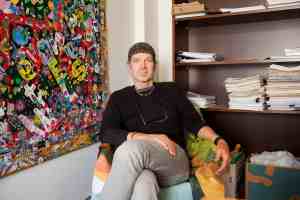
From Ric Hudgen’s recent social media collection “30 Poems in 30 Days.”

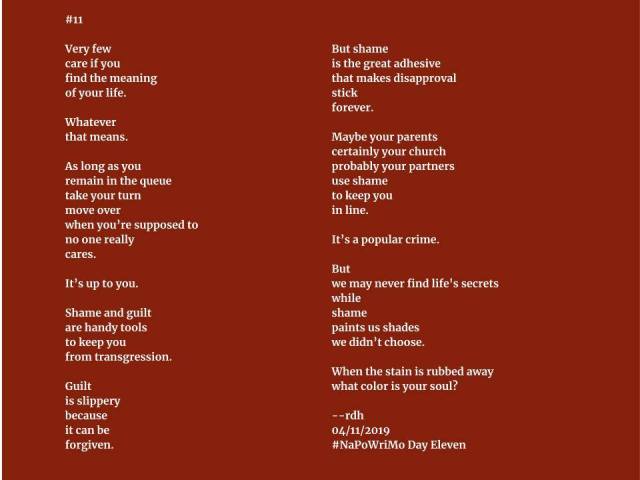
From Ric Hudgen’s recent social media collection “30 Poems in 30 Days.”

A few summers ago in Detroit, a circle of high school students from a local church gathered with community organizer Monica Lewis-Patrick, executive director of the grassroots We The People of Detroit. The conversation flowed into what it looks like for faith to infuse political action when the odds are stacked against justice, freedom and equity. This is an excerpt.
All we have to do is start connecting the dots and telling the truth. When I started working in social justice, I was working in education, with children that were mentally impaired and extremely violent. What I found out really quickly was that the people at the table didn’t give a damn about the children. It was about the dollars. Because I cared about the children, I had to educate myself in terms of how I influence the policy—or the people who drive the policies—to help my people get the change they need. To help the children I served. That meant going to meetings where sometimes I would be the only one there speaking on behalf of the population that I thought was most vulnerable and most in need. Was I scared? Yes I was. Did I always get the language right? No I didn’t. Did I always have the data on hand that they had? No I didn’t. But it was out of my heart that I spoke. And then from there what would happen is that somebody would give me a card or somebody would say, “You know, I didn’t know that part” or “Can we talk?” And then I had to dig up from my spiritual history or family history and muster up enough energy to go meet with somebody that has a title—that seems to have power—and say to that person “We don’t like this.”
Acts 9:36-43
Psalm 23
By Laurel Dykstra
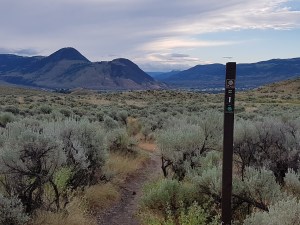
On this Good Shepherd Sunday, our annual engagement with the repeated biblical assertion that both kingship and divine-human relations resemble sheep husbandry, the lectionary illuminates two key aspects of the emerging Wild Church Movement. Connected to both Watershed Discipleship and Contemplative Ecology, Wild Church is nothing more than Christians who intentionally worship, or seek to experience holiness, outside of buildings. In forests, deserts, city parks, beaches, urban vacant lots we reassert the strand of our tradition where wilderness is the place of divine encounter. Continue reading “Wild Lectionary: Sheep, Gazelle and Rock”
By Rev. Joanna Harader (right)
*This is part of a series of pieces from contributors all over North America each answering the question, “How would you define radical discipleship?” We will be posting responses regularly on Mondays during 2019.
I was struck by Rev. Dr. Victoria Marie’s statement that, in thinking of “radical discipleship,” “there is only discipleship.” The adjective is unnecessary, because to follow Jesus is radical. Period.
I get the temptation to add “radical,” though. Because we want to differentiate actually following Jesus from what too often passes as being Christian in our society. We add “radical” to remind ourselves that discipleship is not about just believing the right theology or showing up in the right place every Sunday or voting for the right political party or hanging the right calligraphied Bible verse poster above our couch. Continue reading “Everyday Radical”

From the opening paragraphs of Eboni Marshall Turman’s March 2019 article “Black Women’s Faith, Black Women’s Flourishing,” originally posted in the March 2019 edition of The Christian Century. Turman teaches at Yale Divinity School and is the author of Toward a Womanist Ethic of Incarnation: Black Bodies, the Black Church, and the Council of Chalcedon. Read the article in its entirety at The Christian Century here.
In 1985, while presenting her essay “The Emergence of Black Feminist Consciousness” to a room filled almost entirely with white theologians at the annual meeting of the American Academy of Religion, Katie Geneva Cannon fainted. It’s little wonder she was nervous. Hers was the first paper ever presented on womanist theology at the AAR, and it was a daring and dangerous proposition at the time. In the theological academy until the 1980s, as black feminist Akasha Gloria Hull notes, “all the women were white and all the blacks were men.” Continue reading “A Theology that Loves Out Loud”
From Jeannine Hill Fletcher, Professor of Theology at Fordham University, Bronx NY and author of The Sin of White Supremacy: Christianity, Racism and Religious Diversity in America (Orbis, 2017). This is an excerpt from a sermon originally posted in June 2018 at Catholic Women Preach entitled “Body and Blood of Christ.” Read the sermon in its entirety here.
When Christians drink the cup of the covenant, we insert ourselves in the final meal of the One who gave over his body and his blood in the stand against the systems of violence in his world, committing his blood to reveal that things could be different. And we’re not alone in this commitment. In 1953, Mamie Till raised her son Emmett to an international gaze when she had the courage to show how the sin of White supremacy made the blood of her only son flow to his death. In 2018, from out of the aftermath of the blood that flowed from a code red active shooter, Emma Gonzalez had the courage to name how blood is meant for life. In Charlottesville, and Philadelphia, and New York City, people are finding the courage to stand and to march, to show up and stand against the blood the flows from White insecurities and White supremacies which refuse to acknowledge that Black Lives Matter. Christians are committing to the life blood of fathers, uncles and mothers threatened when ICE decides that no space is sacred. In response to the triple threat of racism, materialism and militarism, the many movements in our day carry on the work of the Rev. Dr. Martin Luther King who witnessed with his blood what it looks like to be in covenantal relationship with the God who dwells in human beings, responding to violence with peace; even if it means giving over one’s life.
Easter 3C
John 21:1-19
Bring some fish you have caught and come and have breakfast
By The Rev. Marilyn Zehr
This week I loved reading the resurrection story of barbequed fish and bread on the beach through Joanna Macy’s three narrative lens of business as usual, the great unraveling, and the great turning. Continue reading “Wild Lectionary: Raised for the Great Turning”
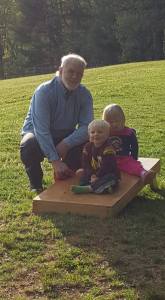
By Tommy Airey (right: posting up with the nephews)
*This is part of a series of pieces from contributors all over North America each answering the question, “How would you define radical discipleship?” We will be posting responses regularly on Mondays during 2019.
In the wilderness journey of deconstructing the white suburban fundamentalist Evangelical Christianity of my adolescence, I am reclaiming a Christian faith of expansive hospitality and prodigal vulnerability. My foot race to the empty tomb has been spurred on by conversation partners who are non-white, non-male, non-hetero and more-than-human. The binary bombs are bursting in air! I am intentionally taking my cues from Black and Indigenous and Immigrant freedom struggles. This marks the trailhead for my journey of radical discipleship to a divinity defined by Steadfast Love. Continue reading “A Faith of Expansive Hospitality and Prodigal Vulnerability”
From Weldon Nisly, retired pastor and half-time Christian Peacemaker Teams member serving five months per year in Iraqi Kurdistan (photo right) serving. This is an excerpt from his Holy Week update on the ground in Kurdistan.
On this Holy Saturday between Good Friday and Easter Sunday, we live liturgically between the powers of death and the powers of life. All of us choose daily whether we worship death or life and are committed to lies or truth.
Recently CPT encountered someone who knows the cost of choosing life and truth confronting militarized political powers. Independent Kurdish journalist Mohammed (name changed to protect identity) told the CPT Iraqi Kurdistan team of his refusal to promise to stop seeking and speaking truth about the powers of death. “I am a journalist,” Mohammed simply and firmly declared to us. His commitment was not a theoretical stance. He had recently been arrested, imprisoned, and tortured for more than 40 days and his family was threatened by the powers of death who accused him of inciting opposition to the ruling political party leader. Continue reading “The Powers of Death and Life, Lies and Truth”
From the Twitter account of Lisa Sharon Harper, Founder and President of Freedom Road and Senior Fellow at Auburn Seminary. It was posted on March 18, 2019.
To all the people, designated White by colonizing nations, who are becoming disillusion by your evangelical or Christian faith: When you walk away from Jesus you are not #woke. You are operating out of the white supremacy you say you abhor. #LiberatingEvangelicalism
When you walk away from Jesus and Christian faith to be “woke” you are walking away from a faith that sprang from brown, indigenous, colonized people. You’re walking away from faith born on the underside of empire in the context of oppressed peoples. #LiberatingEvangelicalism Continue reading “Liberating Evangelicalism”