Wild Lectionary: Married to the Land

315093_10150333054956366_927635786_n
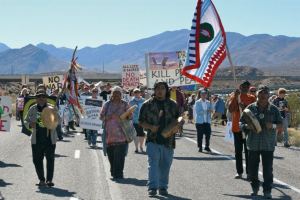
Vikki Marie has been listening to and collaborating with Indigenous people for many years, here she is with Western Shoshone leaders at the Navada Desert Test Site in 2011.

Second Sunday after Epiphany
Ordinary Time C
Isaiah 62:1-5
1 Corinthians 12:1-11
John 2:1-11

By Rev. Dr. Victoria Marie

Today’s readings speak to me of several related themes God’s love and God’s love of justice; our gifts and the gifts of others; to use our gifts in the service of the Creator; and, of our need to remember to trust and have faith. In this homily(-starter), I wish to plant seeds for reflection through giving snippets of my thought on the readings. Continue reading “Wild Lectionary: Married to the Land”

Send me

imagesBy Ken Sehested

It was a time of great turmoil in the land. The Spirit of God bypassed all the famous leaders and came to me with a dream.

And I saw the Ruler of All Creation sitting on a throne, high and lofty, with majesty filling the sky as far as the eye could see.

Angels filled the air, shouting, “Holy, holy, holy! Just and Righteous and Merciful is God’s name!” Continue reading “Send me”

The Heirloom Seeds of an Ancient and Profoundly Relevant Faith

sngBy Rev. Solveig Nilsen-Goodin (right), a pastor, parent, author and organizer in Portland, OR
*This is the third installation of a year-long series of posts from contributors all over North America each answering the question, “How would you define radical discipleship?” We will be posting responses regularly on Mondays during 2019.

As is often quoted within Radical Discipleship circles, ‘Radical’ comes from the Latin: radix, meaning root — getting to the root causes, the root pressures, the roots of our faith. Yes! Let’s get to the roots!

But today as I reflect on what Radical Discipleship means to me, and why it is necessary in the first place, I want to talk about seeds. Continue reading “The Heirloom Seeds of an Ancient and Profoundly Relevant Faith”

Through the Wilderness

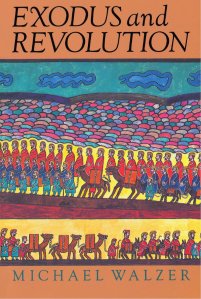
walzerFrom Jewish political theorist Michael Walzer’s Exodus and Revolution (1985):
So pharaonic oppression, deliverance, Sinai, and Canaan are still with us, powerful memories shaping our perceptions of the political world. The “door of hope” is still open; things are not what they might be–even when what they might be isn’t totally different from what they are. This is a central theme in Western thought, always present though elaborated in many different ways. We still believe, or many of us do, what the Exodus first taught, or what it has commonly been taken to teach, about the meaning and possibility of politics and about its proper form:

-first, that wherever you live, it is probably Egypt;

-second, that there is a better place, a world more attractive, a promised land;

-and third, that “the way to the land is through the wilderness.” There is no way to get from here to there except by joining together and marching.

Nature Against Empire

chedAn excerpt from Ched Myers‘ must-read article “Nature against Empire: Exodus Plagues, Climate Crisis and Hardheartedness.” Digest this taste-tester and then spend time with the entire piece, where Myers weaves together climate science and our sacred Scripture. Join Ched and other theological animators at the 2019 Bartimaeus Kinsler Institute in February.

British theologian Michael Northcott’s important 2013 Political Theology of Climate Change argues that our modern worldview offers no frame of reference for the “politics of slow catastrophe” stalking our history through ecological catastrophe.  He shows how traditional cosmologies, including the Bible, saw climate as political.  That is, the actions of nations influenced the health of nature; when people behaved badly, the earth behaved badly back.  Modernity, however, banished that notion as superstitious and unscientific.  Humans and our technologies are now in control, we believe, while nature is depersonalized, demystified and at our disposal.  That paradigm may have “worked” for a few centuries, but now we are realizing that nature seems to be biting back. Continue reading “Nature Against Empire”

Wild Lectionary: Song of the Baptizer

43176273425_c82227ae91_o
Photo by Tim Nafziger

Baptism of the Lord C

Luke 3:15-17, 21-22

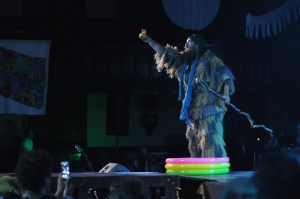
By Jay Beck and Tevyn East

we must rid our lives of the participation
in the greed driven schemes of these corporations
who are pushing and forcing the privatization
of the river of life, causing evaporation, (desertification)
leaving us choking on hot dry frustration. Continue reading “Wild Lectionary: Song of the Baptizer”

Water to my Weary Soul

graceBy Joshua Grace, a pastor, pitcher, parent and DJ in North Philly

*This is the second installation of a year-long series of posts from contributors all over North America each answering the question, “How would you define radical discipleship?” We will be posting responses regularly on Mondays during 2019.

Radical discipleship doesn’t lend itself to the typical rat race towards better answers. We’re trying asking better questions. What does it mean to be a human being in our past, present, and future social and natural locations? How can our practices toward bioregional health shape our approach to faith and how do our spiritualties contribute to the health of the communities we root into? How can we contribute to the mission of God with eyes open to systemic oppressions, levels and layers of privilege, and hearts open to healing? Continue reading “Water to my Weary Soul”

The Advent of Stars and “Pagans”

MagiBy Jim Perkinson, on Matthew 2:1-12

So, the stage is set. Matthew has an old horny codger taking up a young nubile teenager (could be a headline on CNN tomorrow) but then discovering he is late to the freshness. She already has a loaf in the oven. He resolves to part in quiet but is accosted by a Dream-Time appearance counseling adventure—the child is Spirit-born, the event is “Emmanuel,” the promise is deliverance. He wakes and tries to stay “woke.” Continue reading “The Advent of Stars and “Pagans””

Suffering the Gift: Decolonizing the Holidays

winslowBy Luke Winslow, a re-post from The Seattle School blog

Which story? Whose thanks?

In the days surrounding Thanksgiving, I was practicing mindful listening to Native and indigenous activists whom I follow on social media. As a kind of bookend to the emotional harm Native American communities re-experience every fall when the dominant culture still acknowledges days like Columbus Day (rather than its increasing replacement, Indigenous Peoples’ Day), followed by the colonial version of Thanksgiving, I find myself searching for language weeks later for how to translate what I’m hearing back to my own communities.

Although each holiday focuses on different themes (one could say, American and Christian identity formation, respectively), perhaps Thanksgiving and Christmas need to be viewed together, not separately, that with a retrospective, deconstructive view we can look at the ways these holidays mutually inform how and what we celebrate at the end of the year. In short, what does giving thanks and giving gifts mean in the specific context of—for we white and settler communities—being guests on stolen land? Continue reading “Suffering the Gift: Decolonizing the Holidays”