From Disposability to Essentiality

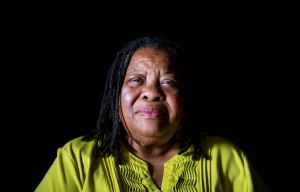
Ruby SalesDay 37 of our Lenten Journey beyond “Beyond Vietnam.  From Ruby Sales (photo right), Civil Rights veteran and long-distance runner for justice, in an interview with Krista Tippett:
I really think that one of the things that we’ve got to deal with is that how is it that we develop a theology or theologies in a 21st-century capitalist technocracy where only a few lives matter? How do we raise people up from disposability to essentiality? And this goes beyond the question of race. What is it that public theology can say to the white person in Massachusetts who’s heroin-addicted because they feel that their lives have no meaning, because of the trickle-down impact of whiteness in the world today? What do you say to someone who has been told that their whole essence is whiteness and power and domination? And when that no longer exists, then they feel as if they are dying or they get caught up in the throes of death, whether it’s heroin addiction. Continue reading “From Disposability to Essentiality”

Wild Lectionary: Plastics as a Spiritual Crisis

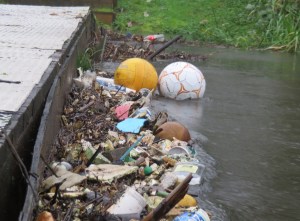
IMG_3769 copy
Plastics in Still Creek, salmon spawning stream, Fraser River watershed

Palm Sunday
Psalm 118:22

The stone that the builders rejected has become the chief cornerstone.

By Sasha Adkins

The ever-increasing abundance of plastic trash in land, sea and bodies is, fundamentally, a spiritual problem. Plastics habituate us to accept unhealthy relationships—and not only because our use of them is so typically fleeting. The foundation of a healthy relationship lies in a celebration of the Other’s unique and intrinsic value; disposable plastics, however, are by design both fungible and instrumental. Continue reading “Wild Lectionary: Plastics as a Spiritual Crisis”

Wild Lectionary: Dry earth, Dry bones

IMG_3439.jpegFifth Sunday in Lent
Ezekiel 37:1-14

By Carmen Retzlaff

The hand of the Lord came upon Ezekiel, who was in exile from his homeland. “The prophet very rarely speaks of God’s face: he feels his hand,” says Abraham Heschel in The Prophets (Harper, 1962). In his vision, Ezekiel feels the hand of the Lord upon him, bringing him out and setting him in the middle of a dry valley, filled with bones. Continue reading “Wild Lectionary: Dry earth, Dry bones”

Wild Lectionary: There is No New Water. Living Water is Life-Giving Water.

rainonland
Water after a rain on the New Life Church land

Third Sunday in Lent
John 4:5-42

By Rev. Carmen Retzlaff

In Central Texas, we think a lot about water. The Texas climate is famously described by meteorologists as, historically, “drought with periods of flooding.” And so it seems. After seven years of droughts in which water wells dried up in our area, the nearby Blanco River flooded the small town of Wimberley and towns downstream in 2015. With this view of water in mind, I read the story of Jesus’s conversation with the woman at the well as a story about water. Continue reading “Wild Lectionary: There is No New Water. Living Water is Life-Giving Water.”

Wild Lectionary: Love Flows Like a River

The Third Sunday in Lent
John 4

By Sue Ferguson Johnson and Wes Howard-Brook

John 4 is like a kaleidoscope. From one angle, it is a story about Jesus’ gender-inclusive invitation to dis-cipleship. Turn it slightly and you can see Jesus seeking to heal a hostile history between Samaritans and Judeans. From yet another angle, it speaks to the question of authentic worship. Continue reading “Wild Lectionary: Love Flows Like a River”

These Voiceless Ones

JuliusDay 15 of our Lenten Journey through Dr. King’s “Beyond Vietnam” speech.

So they go, primarily women and children and the aged. They watch as we poison their water, as we kill a million acres of their crops. They must weep as the bulldozers roar through their areas preparing to destroy the precious trees. They wander into the hospitals with at least twenty casualties from American firepower for one Vietcong-inflicted injury. So far we may have killed a million of them, mostly children. They wander into the towns and see thousands of the children, homeless, without clothes, running in packs on the streets like animals. They see the children degraded by our soldiers as they beg for food. They see the children selling their sisters to our soldiers, soliciting for their mothers.

What do the peasants think as we ally ourselves with the landlords and as we refuse to put any action into our many words concerning land reform? What do they think as we test out our latest weapons on them, just as the Germans tested out new medicine and new tortures in the concentration camps of Europe? Where are the roots of the independent Vietnam we claim to be building? Is it among these voiceless ones?
———————
A Lenten liturgy from Exodus 17:3-7 and John 4:5-42 from Atlanta-based UCC pastor Julius Jessup Peterson (photo above):

Call to Worship:

Leader: We are called in this time to remember and to anticipate.

People: We can’t see through the fog around us, we are without water, and the fruit of our land is filled with disease.

Leader: We are called to remember that salvation is liberation from the fear of death, and sin is separation from you.

People: Violence has divided us, neighbor against neighbor, loved one against kin, we have lost our way. Continue reading “These Voiceless Ones”

Wild Lectionary: Heaven and Earth, Sun and Moon, Mountain and Cloud

IMG_1192
Burnaby Mountain on the Kinder Morgan Trans-mountain Pipeline Expansion route.

Notes for Lent 2, By Laurel Dykstra

Genesis 12

In these four verses two words, rough synonyms, eretz and adamah, are used for land

  1. 1 Eretz is used twice in this verse to speak of Abram’s native country, territory or perhaps property. It is linked to his people, his kin.
  2. 3 Adamah (same root as Adam) is used for the earth—the known world, and in contrast to v. 1 it is linked to all families.

Continue reading “Wild Lectionary: Heaven and Earth, Sun and Moon, Mountain and Cloud”

Sermon: On Not Taking Up Crosses

transfigurationRev. Rebecca Stelle, Church of the Covenant, Lynchburg, VA
Sunday February 26, 2017
Matthew 17:1-9

I adored Gordon, my spiritual teacher and mentor, and I would have willingly followed him up a mountain. But if instead of saying, “Becca, we are going to be developing new forms of church life through which the Spirit can end poverty,” Gordon had said, “Becca, I will be arrested, suffer torture, die at the hands of church leadership and then rise again on the third day,” I can’t imagine what my reaction would have been. Without a context for that kind of comment, my adoration would not have translated to comprehension, and certainly not to collaboration.  I’m glad he didn’t say it. Continue reading “Sermon: On Not Taking Up Crosses”

Wild Lectionary: A Way Without Fear

IMG_2492.JPG
Victoria Marie (blue) at the Break Free from Fossil Fuels action at the Burnaby Mountain, Kinder Morgan tank facility.

Eighth Sunday in Ordinary Time
(many churches observe the Transfiguration this Sunday)

Isaiah 49:8-16
1 Corinthians 4:1-5
Matthew 6: 24-34

By Reverend Dr. Victoria Marie

Today I’m just going to touch on a few points in the Gospel reading in the hopes that they stimulate more thoughts and questions for all of us. To set the stage, look at the unrestrained resource extraction, our addiction to fossil fuels, and the consumerism that threatens to consume us and the earth. Yet, we all have to earn a living and unfortunately, some people have no other choice but to work for industries and systems that are killing us. We have been drafted into a system where we are trying to serve God but are enslaved by wealth; quite a dilemma! Upton Sinclair wrote, “It is difficult to get a man to understand something, when his salary depends on his not understanding it.” Continue reading “Wild Lectionary: A Way Without Fear”