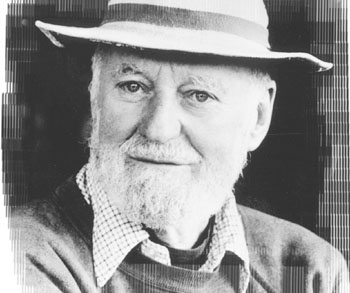
I AM Waiting

lawrenceby Lawrence Ferlinghetti

I am waiting for my case to come up
and I am waiting for a rebirth of wonder
and I am waiting for someone to really discover America and wail
and I am waiting for the American Eagle to really spread its wings
and straighten up and fly right
and I am waiting for the Age of Anxiety to drop dead
and I am waiting for the war to be fought which will make the world safe for anarchy
and I am waiting for the final withering away of all governments
and I am perpetually awaiting a rebirth of wonder Continue reading “I AM Waiting”

Magnificat: Poor Women’s Voices Liberated

MyersMagnificatBy Ched Myers, for the 4th Sunday in Advent (Luke 1:39-55)

Note: This is part of a series of Ched’s occasional comments on the Lukan gospel readings from the Revised Common Lectionary during year C, 2015-16.

Luke 1 is the prolegomenon to the nativity story, and is structured around the stories of two women who, for radically different reasons, cannot conceive. In a nutshell, Elizabeth is too old, and Mary is too young. Their stories are narrated in staggered parallel:

  • Annunciation to Elizabeth (1:5-25) Annunciation to Mary (1:26-38)
  • Elizabeth’s Response (1:41-45) Mary’s Response (1:46-55)
  • John’s birth (1:57-66) Jesus’ birth (2:1-20)

Continue reading “Magnificat: Poor Women’s Voices Liberated”

These Long Advent Nights

 By Tommy Airey, an Advent Communion Meditation from Detroit

And maybe this is what heroism looks like nowadays: occasionally high-profile heroism in public but mostly just painstaking mastery of arcane policy, stubborn perseverance year after year for a cause, empathy with those who remain unseen and outrage channeled into dedication.
Rebecca Solnit, Hope in the Dark (2004)

About 40-50 years after the death of Jesus, Luke’s Gospel, the story of Jesus the suffering servant, was read in its entirety in small Christian communities all over the Roman Empire. Out loud. It would take about 90 minutes to two hours. About the length of one of our movies.
Continue reading “These Long Advent Nights”

Making The House Ready for the Lord

squirrelBy Mary Oliver

Dear Lord, I have swept and I have washed but
still nothing is as shining as it should be
for you.  Under the sink, for example, is an
uproar of mice—it is the season of their
many children.  What shall I do?  And under the eaves
and through the walls the squirrels
have gnawed their ragged entrances- but it is the season
when they need shelter, so what shall I do?  And
the raccoon limps into the kitchen and opens the cupboard
while the dog snores, the cat hugs the pillow;
what shall I do?  Beautiful is the new snow falling
in the yard and the fox who is staring boldly
up the path, to the door.  And still I believe you will
come, Lord: you will, when I speak to the fox,
the sparrow, the lost dog, the shivering sea goose, I know
that really I am speaking to you whenever I say,
as I do all morning and afternoon:  Come in, Come in.

The Baptist’s Radical Critique of Entitlement: Repentance as Radical Discontinuity

LentzJohntheBaptistBy Ched Myers, the 3rd Sunday in Advent (Luke 3:7-18)

Note: This is one of Ched’s occasional comments on the Lukan gospel readings from the Revised Common Lectionary during year C, 2015-16.

The third week in Advent lingers on Luke’s portrait of John the Baptist, in which we get our most substantive glimpse into this wilderness prophet’s message (right, icon by Robert Lentz, 1984). This reading cuts sharply against the grain of the holiday season, so often defined in corporate-sponsored Christmas culture by commercialization and commodification of all things religious. But the Lectionary’s wisdom seeks to restrain the manic rush into what a young Jewish friend calls “the days of craze,” insisting rather on a sober look at the travails of empire.
Continue reading “The Baptist’s Radical Critique of Entitlement: Repentance as Radical Discontinuity”

Healing the Open Wound: Imagining Christian Border Ethics with Gloria Anzaldúa

Border at NightBy Justin Ashworth, first published in The Other Journal

Border encounters occur every day in our global and globalizing cities.[1] We consume food touched by people born outside the United States; we purchase things from non-citizens, brush shoulders with them as we go to work. Some of us kiss immigrants goodbye as we head out the door for the day, while others of us are non-citizens ourselves. Our daily lives are filled with border encounters like these, that is, with economic, political, cultural, and personal interactions between citizens and foreigners.[2] But what should be the marks of these encounters? In asking this question, I am not concerned primarily with how cosmopolitan bigwigs interact with each other but rather with how the images of the border that citizens carry around in their heads influence their interactions with border crossers. Are our border images accurate, and what type of ethic do they imply? Continue reading “Healing the Open Wound: Imagining Christian Border Ethics with Gloria Anzaldúa”

Welcome to the Cult

WesBy Tommy Airey

Here’s an easy way to figure out if you’re in a cult: If you’re wondering whether you’re in a cult, the answer is yes.
Stephen Colbert

Not too long ago, in the years of early adulthood, I was attending a church in Southern California with weekend attendance in the tens of thousands. This was Respectable Religion. The pastor prayed at Obama’s inauguration. But something dreadful was percolating inside of me as I took inventory of what was happening all around me.
Continue reading “Welcome to the Cult”

This Advent

This Advent, as we light the candles in the dark and sing for Emmanuel, let’s be even more intentional than usual in clearing the commercial Christmas assault advent wreathfrom our minds and hearts. Whatever God is calling us to has little to do with shopping and driving ourselves into a frenzy creating the “perfect” holiday. We need to honor the silence and the dark, to remember our stories, to teach the youth in our lives what we believe matters. We need to recall, to intuit, to dream the life we’re called to and then make a plan that allows us to strip down enough to have it. In the course of that, of course, we need to give thanks for all that we are and for those traveling in our circles and beyond.    -Jeanie Wylie-Kellermann, THe Witness 1998