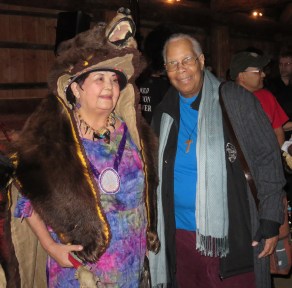
Vikki Marie and a St’at’imc Bear Dancer praying for healing and protecting wild salmon.
Easter 3(B)
Acts 3:1-21
By The Rev. Dr. Victoria Marie
The liturgical season of Easter is the only time that our readings are all from the New Testament. During this season the first readings are from the Acts of the Apostles. Today’s reading from Acts is another occasion where our Roman Catholic Lectionary differs from the Revised Common Lectionary and omits scripture verses. This textual omission significantly changes the meaning and therefore our understanding of the scriptural message.
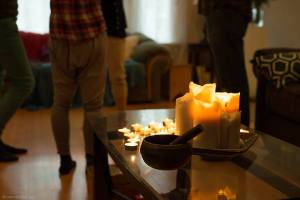
After gathering the documents I need from my office, I walk across the street to the former rectory of St. Margaret’s Anglican Church in East Vancouver, British Columbia.
It’s already dark at 7pm, and a most welcoming yellow glow greets me as I knock on the door.
As it opens and I enter, a wonderful chorus of “Heeey!” spills forth from the big dining room table, which is spread with a beautiful vegetarian dinner. Continue reading “Welcome to Hineni House”→
Seven Catholic plowshares activists were detained early Thursday morning at the Kings Bay Navel Base St. Mary’s Georgia.
They entered on Wednesday nightApril 4. Calling themselves Kings Bay Plowshares, they went to make real the prophet Isaiah’s command: “beat swords into plowshares”. Continue reading “Plowshares on King’s Anniversary”→
I remember precisely where I was when I got the news of Martin Luther King’s assassination. It was my freshman year in college, a midwestern liberal arts school, and I’d just walked into the lounge of my dormitory when a bulletin broke into regular TV programing. The lone other student, whose face and name I mercifully do not recall, was seated high on the back of an overstuffed black leather chair. He muttered, “Somebody finally got that n****r.” I remember running the length of hall to the pay phone booth and calling my folks in Detroit, weeping into the receiver. In those tears, something shifted in me vocationally that day which bears on who I am. Continue reading “Remembering King’s Assassination 50 Years Ago”→
The aboriginal people of the Kalahari desert break and bury ostrich shells in the sand. The extreme temperatures cause condensation inside the eggshells. As the nomads move over the desert, they survive by drawing drops of moisture from these shells with reeds.
You must prepare well,
Rise in the knowing dark,
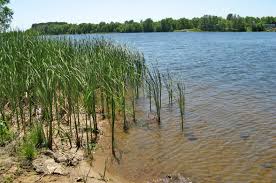
Go down to the river,
And listen to the reeds.
A single one will call you.
Listen. Continue reading “Crossing the Desert”→
Easter, Year B
Acts 10:34-43
Isaiah 25:6-9
Psalm 118:1-2, 14-24
John 20:1-18
Mark 16:1-8
By Jessica Miller
Across the northeast of North America at this season, a wonder is happening. The flowers of Symplocarpus foetidus have begun emerging and blooming from swamps and wet places. These true Easter-lilies—members of the same family of the Calla ‘lily’—are more commonly known as skunk-cabbage. Varieties of the plant also grow in Japan, where the red robe-like blossoms resembling a monk’s hood have gained it the name Zazen-sou, or Zen meditation plant.
Tanker in the Burrard Inlet near the proposed end of the Kinder Morgan Transmountain pipeline
This liturgical resource was assembled by members of Salal + Cedar (www.salalandcedar.com) and Earthkeepers (www.theearthkeepers.org) two Christian environmental groups on Coast Salish Territory, lower mainland British Columbia who host an Ecological Stations of the Cross each year during Holy Week. Stations of the Cross are a Good Friday tradition of prayer and contemplation on images depicting the events from the time that Jesus is sentenced to death to his burial. We walk outdoors at a site slated for the expansion of a tar-sands bearing pipeline and draw connections between Jesus’ suffering and the suffering and betrayal of creation. The traditional passion narrative from John (18:1-19:42) moves from the betrayal and arrest in the garden to Jesus’ burial. Our stations include action, poetry, song and contemplation when we read from John we use the word Judeans (a more accurate and less anti-semetic translation) instead of “the Jews.” Themes include: repentance, culpability, betrayal, complicity, empire, suffering, compassion, power/powerlessness, death, lament, longing despair, hope and hopelessness, outrage.
Coast Salish Territory Water Station (overlook)
Come all you who are thirsty, come to the waters. Isaiah 55:1
And Jesus, knowing that all was now finished said, “I thirst.” John 19:28
Here where Fraser River, the Sto:lo, flows into the Salish Sea, where parts of our region are temperate rainforest, our reservoirs are full and we consign gallons of clean drinking water to the sewers with every flush –we can forget, or even ignore, those who thirst. Continue reading “Ecological Stations of the Cross”→
Whisper words of wisdom, let it be:
Commentary on the March For Our Lives rally in Washington, DC
Saturday 24 March 2018
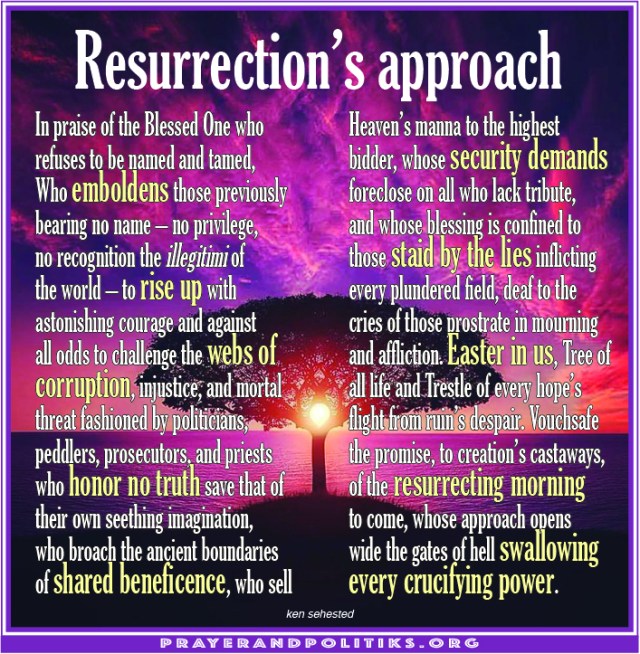
I am not ashamed to admit it. They made me do it. Cry. More than once. “They” being the uncommonly common students who led the March For Our Lives rally—three-quarters of a million strong—in Washington, DC. The day may well be accounted as among the most significant in our nation’s history. Continue reading “Resurrection’s Approach AND Commentary on the March For Our Lives”→

 From Ellen Grady
 By
By  Easter, Year B
 Palm Sunday, Year B
 Radical Discipleship