The woman on the phone, speaking heavily accented Spanish, introduced herself as Consuela to Rebecca, the coordinator and translator for our bilingual group Mujeres Unidas en Fe (Women United in Faith). Consuela said that she wanted to visit the group and offer a Medicaid presentation. Continue reading “Lost in Translation”
Category: Uncategorized
Lead Us Home By Another Way
 By Lindsay Airey
Spirit who animates All Things,
help us to listen now.
May we abandon our many pursuits
keeping us ever-busy and never listening
to your gentle,
fierce proddings.
Guide us in the way(s) of life.
Help us release:
our addictions,
superiorities,
certainties,
white-knuckling, fear-suppressing
blame,
shame
and deep-seeded
hatreds.
May we find something more reliable
to keep us warm
these
long
winter nights. Continue reading “Lead Us Home By Another Way”
Epiphany: Manifesting the Bias of Heaven
 By Ken Sehested
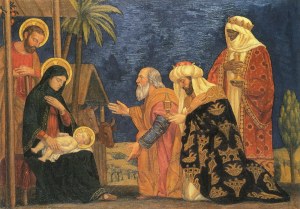
There are three versions of what Epiphany (“Manifestation”) is meant to commemorate in the church’s calendar. One of those traditions is to celebrate Jesus’ baptism on January 6. Another tradition links Epiphany Sunday with the birth of Jesus. Yet another tradition celebrates Epiphany as marking the arrival of the magi, of “We Three Kings” fame—the figures played in every Christmas play by children dressed in bathrobes. Yet the common element in each is the inauguration of a confrontation between God’s Only Begotten and those in seats of power. Continue reading “Epiphany: Manifesting the Bias of Heaven”
Wild Lectionary: Metanoia and John – Transformation in Wilderness
 By Valarie Luna Serrels
Epiphany 1B
Mark 1:4-11
There’s a story in Greek mythology about Kairos, the young, swift god of opportunity, with wings on his feet. When he passes by you, it’s too late to grab hold of said opportunity. However, in the wake of Kairos’ fleeting journey, stands the sorrowful goddess Metanoia. She invites those passed by with opportunity for reflection, mourning, and space to make a decision. An urgent decision. Metanoia literally means change. A changed mind, heart, behavior, life. Continue reading “Wild Lectionary: Metanoia and John – Transformation in Wilderness”
Grace Lee Boggs
 This piece was developed during the second Bartimaeus Institute Online (BIO) Study Cohort 2016-2017. These pieces will eventually be published in a Women’s Breviary collection. For more information regarding the BIO Study Cohort go here.
By Jeannette Ban, 10/7/17
Grace Lee Boggs
Born: June 27, 1915 Providence, Rhode Island
Died: October 5, 2015 Detroit, MI
Our challenge, as we enter the new millennium, is to deepen the commonalities and the bonds between these tens of millions, while at the same time continuing to address the issues within our local communities by two-sided struggles that not only say ‘no’ to the existing power structure but also empower our constituencies to embrace the power within each of us to create the world anew.
-From The Next American Revolution: Sustainable Activism for the Twenty-First Century by Grace Lee Boggs
Until her death in 2015, Grace Lee Boggs lived, marched, and dreamed among her beloved community of 55 years in Detroit, Michigan. “I stayed involved because I stayed,” she said.[1] Detroit glows at the center of her tale, a city tumbling continuously through the chaos of automation and industrial collapse. Mirroring its periods of bloom and decay, Grace’s journey as an activist spanned the Marxist movement in the 1960s to the Black Power movement in the 1970s, culminating in a community-centered and community-led philosophy until her death. Continue reading “Grace Lee Boggs”
Prayer for New Year’s Day
 By
Oh God, I stand on the threshold
Of this new-old beginning day,
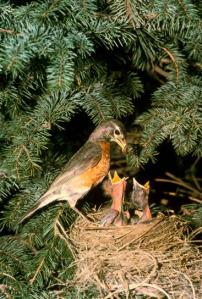
open throated as a small robin
huddles in the nest,
waiting with all my senses
for you, oh Spirit,
to fill me. Continue reading “Prayer for New Year’s Day”

Wild Lectionary: Let All Creation Praise
Christmas 1B
Psalm 148
By Laurel Dykstra
The first Sunday after Christmas with the annual reading of Psalm 148, marks Wild Lectionary’s first anniversary: 51 blog posts, from diverse watersheds, reflecting on land, creation and indigenous justice themes from the readings of the Revised Common Lectionary. Continue reading “Wild Lectionary: Let All Creation Praise”
Learning from Laughter and the Trees: Loved by the Generations
 By Lydia Wylie-Kellermann
I was terrified for Isaac’s first day of school. Terrified he wouldn’t go. That we would see his tremendous stubbornness arise. Somehow, we made it. The thrill of the newness got him there. I woke up on Day 2 even more worried. The newness had passed. The daily reality would start setting in and the idea of staying home all day to play with me and Cedar would be hard to leave. Erinn had gotten an attachment to her bike so that they could ride the 3 miles to school each day. We hoped that the excitement of biking would help and that the exercise would help him with the long days of sitting and focus. But by Day 2, the excitement of the bike wasn’t enough. We started hearing “I won’t go.” I kept a smile on my face and a calm, upbeat attitude as my heart raced. I had been on the opposite side of his stubbornness and there had been times I had lost. It is a powerful force that only joy seems to be able to crack. We went downstairs with him kicking and screaming, stepped outside, and there…..was Grandpa. On his bike, helmet on, ready for a race. Continue reading “Learning from Laughter and the Trees: Loved by the Generations”
The Manger
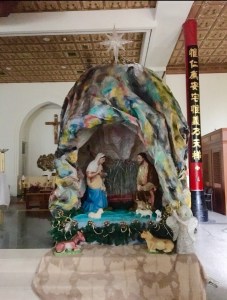
By Marcia Lee
As we walk during las posadas, we remember the journey of Mary and Joseph and their arrival to the manager in Bethlehem. The image of the manger was first brought to the Christmas celebration by St. Francis of Assisi. He said, “I want to do something that will recall the memory of that Child who was born in Bethlehem, to see with bodily eyes the inconveniences of his infancy, how he lay in the manger, and how the ox and ass stood by.” (From the accounts of St. Bonaventure).
St. Francis set up an empty manger in a cave. It is said that as St. Francis preached, a vision of the baby Jesus came into the manger. Prior to St. Francis, people did not include a manger scene in their Christmas celebration, but now we see them in churches and on the side of the road. Continue reading “The Manger”