Wild Lectionary: What We Do with Our Bodies

227350_659624815131_692849_nEpiphany 4B
1 Corinthians 8:4-6, 8

As to the eating of food offered to idols, we know that “no idol in the world really exists,” and that “there is no God but one.” Indeed, even though there may be so-called gods in heaven or on earth–as in fact there are many gods and many lords– yet for us there is one God, the Father, from whom are all things and for whom we exist, and one Lord, Jesus Christ, through whom are all things and through whom we exist.

 “Food will not bring us close to God.” We are no worse off if we do not eat, and no better off if we do.

By David Pritchett

Fireflies and Feathers: Two Kinds of Farming

The summer of 2012 was hot in the Midwest. By the fourth week of temperatures over 90 degrees, and over two months without rain, the grass was brown and our crops in Northeastern Indiana were not faring any better. Continue reading “Wild Lectionary: What We Do with Our Bodies” →
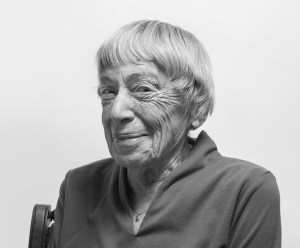
Ursula: ¡Presente!

UrsulaThe prophetic and passionate Ursula Le Guin (October 21, 1929 to January 23, 2018), excerpted from her 2014 speech at The National Book Awards:

Hard times are coming, when we’ll be wanting the voices of writers who can see alternatives to how we live now, can see through our fear-stricken society and its obsessive technologies to other ways of being, and even imagine real grounds for hope. We’ll need writers who can remember freedom – poets, visionaries – realists of a larger reality.

Right now, we need writers who know the difference between production of a market commodity and the practice of an art. Developing written material to suit sales strategies in order to maximise corporate profit and advertising revenue is not the same thing as responsible book publishing or authorship. Continue reading “Ursula: ¡Presente!” →

How Do I Reassure My Children About the Future When the Future Is Terrifying? An activist’s lament.

imagesBy Frida Berrigan, Re-posted from TomDispatch.com and MotherJones.com.

As a mother and an activist, here’s what I’ve concluded as 2018 begins: It’s getting harder and harder to think about the future—at least in that soaring Whitney Houston fashion. You know the song: “I believe the children are our future, teach them well and let them lead the way…” These days, doesn’t it sound quaint and of another age? Continue reading “How Do I Reassure My Children About the Future When the Future Is Terrifying? An activist’s lament.” →

Prayer: Holy Light

imagesBy Nancy Hastings Sehested
Co-Pastor, Circle of Mercy Congregation

Holy Light,

We stand somewhere in the shadows, in-between the battlefield of our struggles and the sanctuary of our souls.

Shed a little light on our way. Keep your lighted sanctuary within us portable, able to see clearly, to walk courageously, to withstand the forces that corrupt the truth of our belonging to your one world-wide family. Continue reading “Prayer: Holy Light” →

Wild Lectionary: Fishing On Our Ancestral Territory

pic 2
My late father, on our traditional Nisga’a fishing territory. Photo credit Tanya Stanley, summer 2011.

Epiphany 3B
Mark 1: 16-18

By: Jeffery Stanley

May the words of my mouth, and the meditation of my heart, be acceptable unto you, Oh God our rock and Redeemer.

“As Jesus passed along the sea of Galilee, he saw Simon and his brother Andrew casting a net into the lake – for they were fishermen. And Jesus said to them ‘follow me and I will make you fish for people.’ And immediately, they left their nets and followed him.”

In the days of Jesus of Nazareth it was the custom for teachers to gather their students from the people of any community and lead them as a company from place to place as they taught. He (a teacher) would from time to time, talk to people and share truths with them. Certain students would be attracted to him and would come to listen to him from time to time. Sometimes they would linger at some favorable spot for awhile and persons would join them to listen and often respond to the message. Gutzke, Manford George. “Plain talk on Mark” pp. 18 Continue reading “Wild Lectionary: Fishing On Our Ancestral Territory” →

Sermon: Becoming my Body

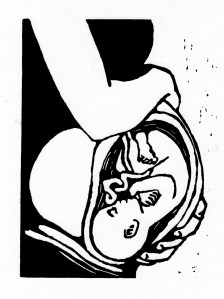
thirdtrimeseter
Third trimester By Julia Jack-Scott

By Lydia Wylie-Kellermann
Day House, Detroit Catholic Worker, January 14, 2018

Psalm 40:2, 7-10
1 Samuel 3: 3-10, 19
1 Corinthians 6: 13-15, 17-20

I am not a body person. I feel my identity rests in my head and my heart and far too often, I think of my body only as a tool. A means to an end. It helps me get me where I want to go, but it is not….me.

Lately, I’ve been sitting with health fears for loved ones as tests are done to see if there are things growing in their bodies. And I realized the fear that swells up in me. I don’t understand the body. How could something be killing someone I love from the inside without us knowing?

I grew up along Michigan Avenue where, even as a child, cars pulled over or hollered or followed. I learned what it was like to be a woman in this country and to be seen only as a body. And there is outrage in that rises up, for I want to be seen for the workings of my mind and not the shape of my body. Continue reading “Sermon: Becoming my Body” →

Prayer for the birthday of Martin Luther King, Jr.

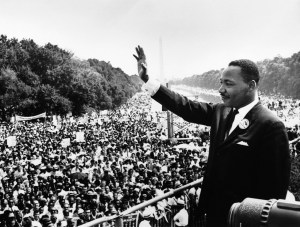
USMC-09611By Bill Wylie-Kellermann

Spirit of the Universe, whose moral arc you make to bend toward justice,
thank you for birthing our brother Martin, right on time, into our history, into the journey of transformation for which we yearn. For uttering him in the Word, and forming him in the womb.

We lift him up this day in the communion of ancestors, summoning him from among all who have ever interceded and struggled for justice. Continue reading “Prayer for the birthday of Martin Luther King, Jr.” →

Wild Lectionary: Woven in the Depths

Womb_2_Kovil_BG
Womb 2 Kovil BG Photo Credit: Fillipov Ivo, Creative Commons

Epiphany, Year B
Psalm 139:1-6, 13-18

By Ragan Sutterfield

E. Stanley Jones once wrote that if there is an instinct in the human heart to conceal there is also a deeper instict to reveal” (Victory Through Surrender). And yet, our culture keeps from authentic disclosure. We are invited, instead, to a kind of performative exposure, a way of revealing that also hides. We want to be known and seen but we do not trust those who might see us. We are afraid of what might happen if we are known, fully, authentically. So we manufacture disclosure on Facebook, hoping that in the commiseration of comments or praise of likes we will achieve what we are afraid to risk through a real openness. It is disclosure at the surface rather than at the depths.

Continue reading “Wild Lectionary: Woven in the Depths” →

What I Would Do and Say the Next Time

AlexieFrom Sherman Alexie, “On The Amtrak From Boston to New York City:”

The white woman across the aisle from me says ‘Look,
look at all the history, that house
on the hill there is over two hundred years old, ‘
as she points out the window past me

into what she has been taught. I have learned
little more about American history during my few days
back East than what I expected and far less
of what we should all know of the tribal stories Continue reading “What I Would Do and Say the Next Time” →