Wild Lectionary: Jesus seeds, sprout!

4472671089_c4d4169f44_b.jpgEaster Sunday
By Wes Howard-Brook and Sue Ferguson Johnson

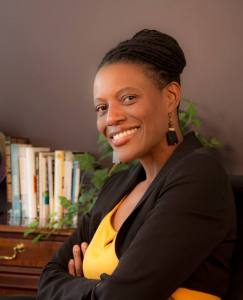
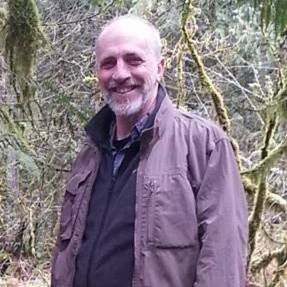
Night and day, woman and man, soil and sky, humanity and God: all these primal pairs are present in this week’s proclamation of the Uprising of Jesus. Each pair echoes an element of the first chapters of Genesis, the foundational narrative of the “religion of creation” upon which John’s gospel is grounded. These connections help us to hear that the hope of Easter is not in an invisible part of one’s self (“the soul”) leaving earth for somewhere else, but in the power of the Creator God to continue to bring forth life from the earth, despite the murderous ways of empire. Continue reading “Wild Lectionary: Jesus seeds, sprout!”

The Categories We Need

JyarlandDay 43 of our Lenten Journey beyond “Beyond Vietnam. A rich resource from Jyarland Daniels (photo right) of Harriet Speaks, who did the hard work of reading Dr. King and then compiling some of his key convictions.  Informative and inspiring.
After reading several works written by Martin Luther King, his comments seemed to fall into several categories. I’m not sure if they fell into those categories, or if I see those categories that I believe we need the words of MLK today.

Martin Luther King: On Ally-ship

“Young Negros had traditionally imitated whites in dress, conduct, and thought in a rigid, middle-class pattern… Now the ceased imitating and began initiating. Leadership passed into the hands of Negros, and their white allies began learning from them.” (“The Trumpet of Conscience”)

“I have almost reached the regrettable conclusion that the Negro’s great stumbling block in his stride toward freedom is not the White Citizen’s Councilor or the Ku Klux Klan, but the white moderate, who is more devoted to “order” than to justice.” (“Letter from Birmingham Jail”) Continue reading “The Categories We Need”

Sermon: “Save Us!”

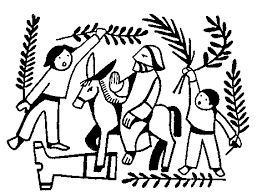
palm sunday.pngBy Joyce Hollyday, April 9, 2017, Palm Sunday: Circle of Mercy
Our text tonight is Luke 19:29-41. I’m reading from the New Revised American Version:

When he had come near Bethphage and Bethany, at the place called the Mount of Olives, he sent two of his billionaire cronies, saying, “Go into the town ahead of you, and as you enter it you will find tied there a stallion that has been ridden many times in war. Untie it and bring it here. If anyone asks you, ‘Why are you untying it?’ just say this, ‘The Lord wants it. And what the Lord wants, the Lord gets.’ If necessary, pay off its owners with a bribe. Close the deal with whatever it takes.” So those who were sent departed and found it as he had told them.  Continue reading “Sermon: “Save Us!””

Wild Lectionary: Plastics as a Spiritual Crisis

IMG_3769 copy
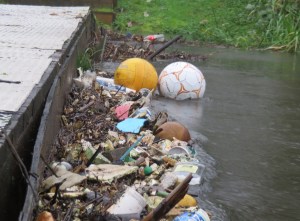
Plastics in Still Creek, salmon spawning stream, Fraser River watershed

Palm Sunday
Psalm 118:22

The stone that the builders rejected has become the chief cornerstone.

By Sasha Adkins

The ever-increasing abundance of plastic trash in land, sea and bodies is, fundamentally, a spiritual problem. Plastics habituate us to accept unhealthy relationships—and not only because our use of them is so typically fleeting. The foundation of a healthy relationship lies in a celebration of the Other’s unique and intrinsic value; disposable plastics, however, are by design both fungible and instrumental. Continue reading “Wild Lectionary: Plastics as a Spiritual Crisis”

Wild Lectionary: Dry earth, Dry bones

IMG_3439.jpegFifth Sunday in Lent
Ezekiel 37:1-14

By Carmen Retzlaff

The hand of the Lord came upon Ezekiel, who was in exile from his homeland. “The prophet very rarely speaks of God’s face: he feels his hand,” says Abraham Heschel in The Prophets (Harper, 1962). In his vision, Ezekiel feels the hand of the Lord upon him, bringing him out and setting him in the middle of a dry valley, filled with bones. Continue reading “Wild Lectionary: Dry earth, Dry bones”

Wild Lectionary: We Are Animals

12289514_10153766241763739_1680757321006336246_n.jpgFourth Sunday in Lent
Psalm 23:1-3

1The Lord is my shepherd, I shall not want.
2
God makes me lie down in green pastures; God leads me beside still waters;
3
God restores my soul.

By Ric Hudgens

I live in a household with a seven-year old who has no trouble connecting with her animal identity. I often awaken in the morning to hear her downstairs growling, barking, howling, or singing. She may be imitating a dog, a monkey, a bear, a lion, or a bird.  Like all young children she will eventually learn to separate her human identity from her animal identity. Mornings will grow quiet and my world will in one sense be a sadder place. Continue reading “Wild Lectionary: We Are Animals”

The ACA and the AHCA: Understanding What is at Stake

MisakBy James Misak MD (photo right), Cleveland, OH

With efforts underway to “repeal and replace” the Patient Protection and Affordable Care Act of 2010 (ACA) with the proposed American Health Care Act of 2017 (AHCA), understanding what is at stake can be challenging. It is my hope that this essay will bring some clarity to this issue.

  1. The US Health Insurance System Prior To The ACA: A Brief Review

The United States is currently the only high-income country without nearly universal health-care coverage. As a result, an estimated 44.6 million Americans (representing 16.7% of the US population under age 65) were uninsured in 2013, the year before the ACA went into effect.1

Most Americans under the age of 65 receive health insurance as a benefit from their employer, but this percentage has been steadily decreasing over time, from 67% of nonelderly Americans in 1999 to 56% in 2013, or approximately 148 million people. Additionally, people in families with lower incomes were less likely to receive health insurance through an employer, and these families lost employer-sponsored insurance at a faster rate than the population as a whole.2 Continue reading “The ACA and the AHCA: Understanding What is at Stake”

Wild Lectionary: There is No New Water. Living Water is Life-Giving Water.

rainonland
Water after a rain on the New Life Church land

Third Sunday in Lent
John 4:5-42

By Rev. Carmen Retzlaff

In Central Texas, we think a lot about water. The Texas climate is famously described by meteorologists as, historically, “drought with periods of flooding.” And so it seems. After seven years of droughts in which water wells dried up in our area, the nearby Blanco River flooded the small town of Wimberley and towns downstream in 2015. With this view of water in mind, I read the story of Jesus’s conversation with the woman at the well as a story about water. Continue reading “Wild Lectionary: There is No New Water. Living Water is Life-Giving Water.”

Wild Lectionary: Love Flows Like a River

The Third Sunday in Lent
John 4

By Sue Ferguson Johnson and Wes Howard-Brook

John 4 is like a kaleidoscope. From one angle, it is a story about Jesus’ gender-inclusive invitation to dis-cipleship. Turn it slightly and you can see Jesus seeking to heal a hostile history between Samaritans and Judeans. From yet another angle, it speaks to the question of authentic worship. Continue reading “Wild Lectionary: Love Flows Like a River”

Wild Lectionary: Heaven and Earth, Sun and Moon, Mountain and Cloud

IMG_1192
Burnaby Mountain on the Kinder Morgan Trans-mountain Pipeline Expansion route.

Notes for Lent 2, By Laurel Dykstra

Genesis 12

In these four verses two words, rough synonyms, eretz and adamah, are used for land

  1. 1 Eretz is used twice in this verse to speak of Abram’s native country, territory or perhaps property. It is linked to his people, his kin.
  2. 3 Adamah (same root as Adam) is used for the earth—the known world, and in contrast to v. 1 it is linked to all families.

Continue reading “Wild Lectionary: Heaven and Earth, Sun and Moon, Mountain and Cloud”