We hungered to imagine a world where people could just eat together without anyone trying to rescue the other, without anyone more powerful or anyone more shamed.
I raised my sweater and put the baby to my breast, the still-thick rolls of my middle cushioning his tiny body as he slurped hungrily for his dinner. Around us, people milled about, flicking cigarettes into the grass to free their fingers for a plate and fork.
Image credit: Kris’ daughter Flora, 3 (top), and Em’s daughter Lorena, 2.5 (bottom) kneed dough from the same family sourdough starter 1,400 kilometres apart, Em and Kris Jacoby, April 2021, Castleton, Vermont and Chicago, Illinois.
I am repeatedly called back, like a ministry, to the growing, tending, gathering, transforming, and sharing of food.
The seed was planted during one of my teenage summers spent living on my sister’s small homestead in rural Vermont. I heard my sister say: Why not centre your life around something that is essential for it? I looked down at the dough I was kneading as I heard the coos of my infant nephew.
Two decades later, though Kris remains on that rural homestead and I live in a dense urban neighbourhood 1,400 kilometres (880 miles) away, we share a calling to food as though we share a kitchen. I can still taste that dough we were kneading, rich with ricotta and basil. Only now, my ricotta comes from boiling cast-off gallons of food-bank-donated milk from a Nicaraguan neighbour; Kris’ comes from Tulip, the brown cow born and raised in view of the kitchen window, milked a few hours earlier. While my basil grows in hand-built boxes that hang over my porch railing two stories up, Kris’ comes from the rows of vibrant green herbs in her fields ready to cut for farmers markets.
I easily spend 40 hours a week in my kitchen. I find my vocation in the grinding of grains mounding into a peak in the shiny metal bowl beneath, the dripping of whey from fermenting cream cheese, the snap of a sealed jar of canned tomato sauce speckled with basil and peppercorn. Because of my sister’s words – their grounding in sustainability and history – I am repeatedly called back, like a ministry, to the growing, tending, gathering, transforming, and sharing of food. Even sitting here to write these words, my mind wanders to the seedlings sprouting up from dirt-packed milk cartons resting on my bathroom tiles, and to the pumpkin roasted last fall now thawing to bake into spice bread as edible gratitude for a neighbour.
Re-posted with permission from the social media account of Alicia Crosby, a writer, speaker and justice educator from Chicago (August 18, 2021).
When I resigned from my leadership position at the Wild Goose Festival in 2016 I asked the board a question.
Do you want to be a prophetic place for transformation or a playground for white progressives?
When <10 sessions out of 400+ focus on racial equity, the answer is clear.
I should note that most of those <10 sessions are not explicitly named as racial justice spaces but I can trust @lennyaduncan, @JoLuehmann, @irobyn, @RevDrBarber, & my beloved Dr. Forbes to prioritize what is just because I know their public theology & preaching pushes for this.
Aside from the impudence of still hosting an multi-day, in-person event in which masks are not required during a COVID surge across the South, it’s clear to me that safety is still not being prioritized in myriad ways.
As I gaze upon this little garden I see not time scarcity or profit motive or long term financial yields.
I see a harvest of abundance Some for my mouth more for my neighbors some shelved for the long winter And yet more will fall like manna. Squirrels will feast worms will fill their bellies and little by little capitalism with crumble.
For each child that’s born Earth waits with her gift and wounds; The creatures smile and weep; The waters and winds rush and grow still.
A monarch unfolds its wings, A beak breaks through its shell, A tadpole finds legs, And a million larva take flight.
For each child that’s born, The Balance shifts to make room and matter, time and light bend around The squalling cries.
For each child that’s born, An ancestor lives. May this child ancestor be welcomed as a previous, sacred being By all of creation- As a partner and friend. May their landing be gentle and our protection and love be fierce.
May this child be a joyful wake-up call to each of us To live with gusto and stillness, With righteous anger and creative action, With tenderness and compassion. May we say that your birth breathes life in each of us.
Eloheh Indigenous Center for Earth Justice and Eloheh Farm & Seeds is a learning centre, farm, and community that includes a seed bank and a seed store. My husband, Randy, and I consider ourselves to be co-sustainers of the land and of the seeds. We understand seeds as our lifeline to the future generations. Seeds are not an object, but they are precious relatives to be enjoyed. Each seed is beautiful, unique, and life-giving. When I hold the seeds in my hand, I talk to them as if they were my own children. I want the best from them, so I treat them with love and respect, and in return, they give us their best. If we don’t attend the seeds properly, we are simply cutting ourselves off from Mother Earth and our future as co-sustainers of the Earth.
This sermon was offered at Charlemont Federated Church in Charlemont, Massachusetts, on June 20, 2021. The focus scriptures are 1 Kings 17:1-16 and Matthew 6:25-34.
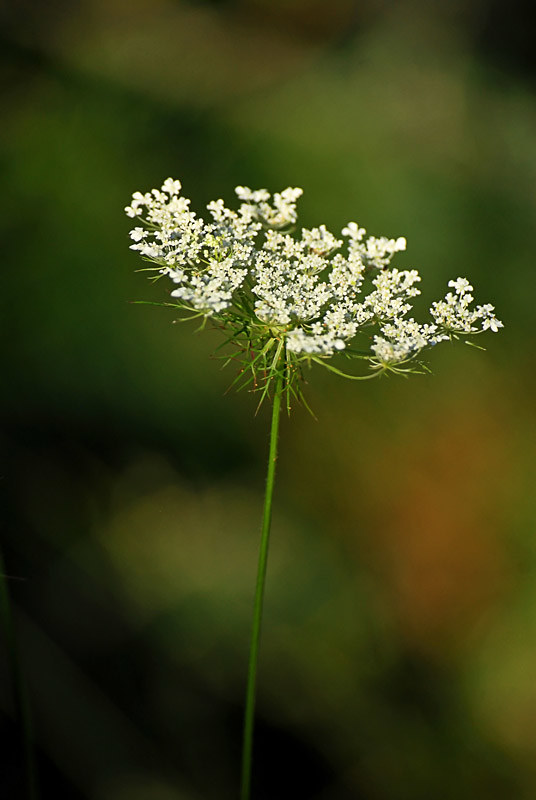
As a young girl, I loved this Gospel passage from Jesus’s Sermon on the Mount. It made me think of the bright purple violets that carpeted the field near my home every spring—and the pretty flowers known as Queen Anne’s lace, which looked like miniature doilies popping up here and there among them. It conjured images of meadow larks and wood thrushes, which were free to spend all day just singing, and redtailed hawks soaring lazily in the sky. God took care of them. And—if I was good and didn’t make any trouble—God would take care of me, too. I would have all the food and clothing I needed—and everything I wanted.
This was easy to believe, sitting in the First United Methodist Church on Chocolate Avenue in Hershey, Pennsylvania—just a couple blocks from the chocolate factory that made our town rich and renowned, and not far from the amusement park, vintage theater, and golf courses that drew tourists from all over the world.
But then—when I was 13—Dr. Martin Luther King was assassinated. In wonder and horror, I watched the images that exploded on our black-and-white TV in the aftermath. People in Harrisburg—just 12 miles away—were setting fires and breaking windows and destroying their neighborhoods. In ominous, fear-laced whispers, people in my neighborhood, and in my church, warned that soon they would be coming to tear down our park and tear up our golf courses. When the adults around me used the phrase “race riot,” I thought they were referring to people racing to get out of the way of the coming mayhem.
Oh say can you see by the dawns early light, the dew left as gift upon the spider’s glistening web?
And at twilight’s last gleaming, care not for stars and stripes, but walk slowly waiting for the racoon to rise from slumber and the great horned owl to begin his search.
Pledge not your allegiance to the flag, but lie down in the grass and whisper your unwavering allegiance to the grasshopper and morel who share the same rainfall and will one day be mixed in with the soil of our bodies offering land to rest upon for future generations of maples and earwigs and children.
Where is the liberty and justice for the imprisoned? for those sleeping below underpasses? for those wandering heat waves and wading through floods? for those living in the bombed out rubble? for the vanishing insects and songbirds?
By Justin Eisinga, published in Geez magazine’s Signs of Dawn
The stench of death is nearly impossible to contain when organic matter is left to decompose in the open air. If you live on or near a farm, this principle is one you encounter on a regular basis. But you do not need to be a farmer to understand that the scent of decomposition means something altogether wonderful is occurring. The smell of rotting food is a sign of life, indicating that intricate processes involving bacteria and fungi are at work. For people who compost, it is also an emblem of future food on the table – for the result of these processes contributes to the health of the soil in our gardens.
Compost, at its core, resembles a Shakespearean tragedy, as two lovers find themselves intertwined at their death. To generate healthy compost, two elements are required: carbon and nitrogen. We contribute these elements to our compost piles when we dump our green waste (in the form of food scraps and plants) and introduce it to our brown waste (dead leaves or straw). In their last days, the disintegration of these two types of matter introduces these foundational elements into the intricate dance of death and decay.

 By Ched Myers, for the 19th Sunday of Pentecost (Mark 10:1-16), originally posted on October 1, 2015


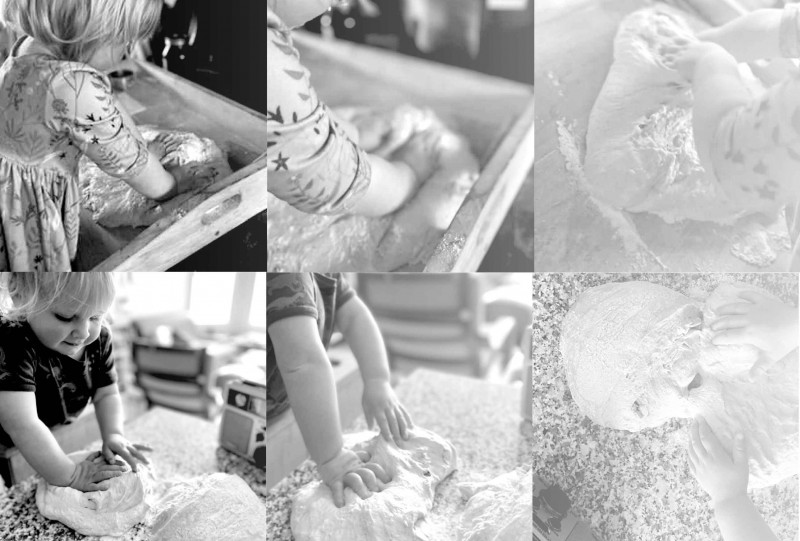 Image credit: Kris’ daughter Flora, 3 (top), and Em’s daughter Lorena, 2.5 (bottom) kneed dough from the same family sourdough starter 1,400 kilometres apart, Em and Kris Jacoby, April 2021, Castleton, Vermont and Chicago, Illinois.