Countee Cullen. 1929.


Countee Cullen. 1929.

By Naomi Ortiz, published in Geez magazine’s Signs of Dawn
As a mixed person with Indigenous, Latinx, and white heritage, I’ve become practised at acknowledging the historical complexities that live within my own body.
I came to doing ancestral work not because I had access to information through websites or even family stories, but because I felt responsibility to legacies that live on in my body. I am aware that violence got me here as much as love. Ancestral work is an invitation to the in-between.
Sitting on the side of the road at the edge of the desert, I look up into a mountain ridge full of Palo Verdes, Ocotillos, Jojoba bushes, and Saguaros. Intuitively, I know if I could see my ancestors and their numbers, they would stretch like this desert plant life as far as I could see.
Continue reading “The Dance with our DNA”From Michael Boucher

When Word and World first began in 2001, the dream was to bring together the seminary, sanctuary, streets and soil in a traveling alternative seminary in order to fill a gap that so many had been noticing. Word and World stood in the traditions of ‘church as movement’ and movement work as church and sought ways to the bring stories, practices and histories of liberation into deep and meaningful dialogue with our rich faith tradition.
Originally Word and World focused on creating week long (or multi-day) “schools” where participants would create a movement village and learning collaborative at various places across the United States to witness the local stories of struggle, faith and liberation as they were lived out in that context.
Continue reading “Transition News from Word and World”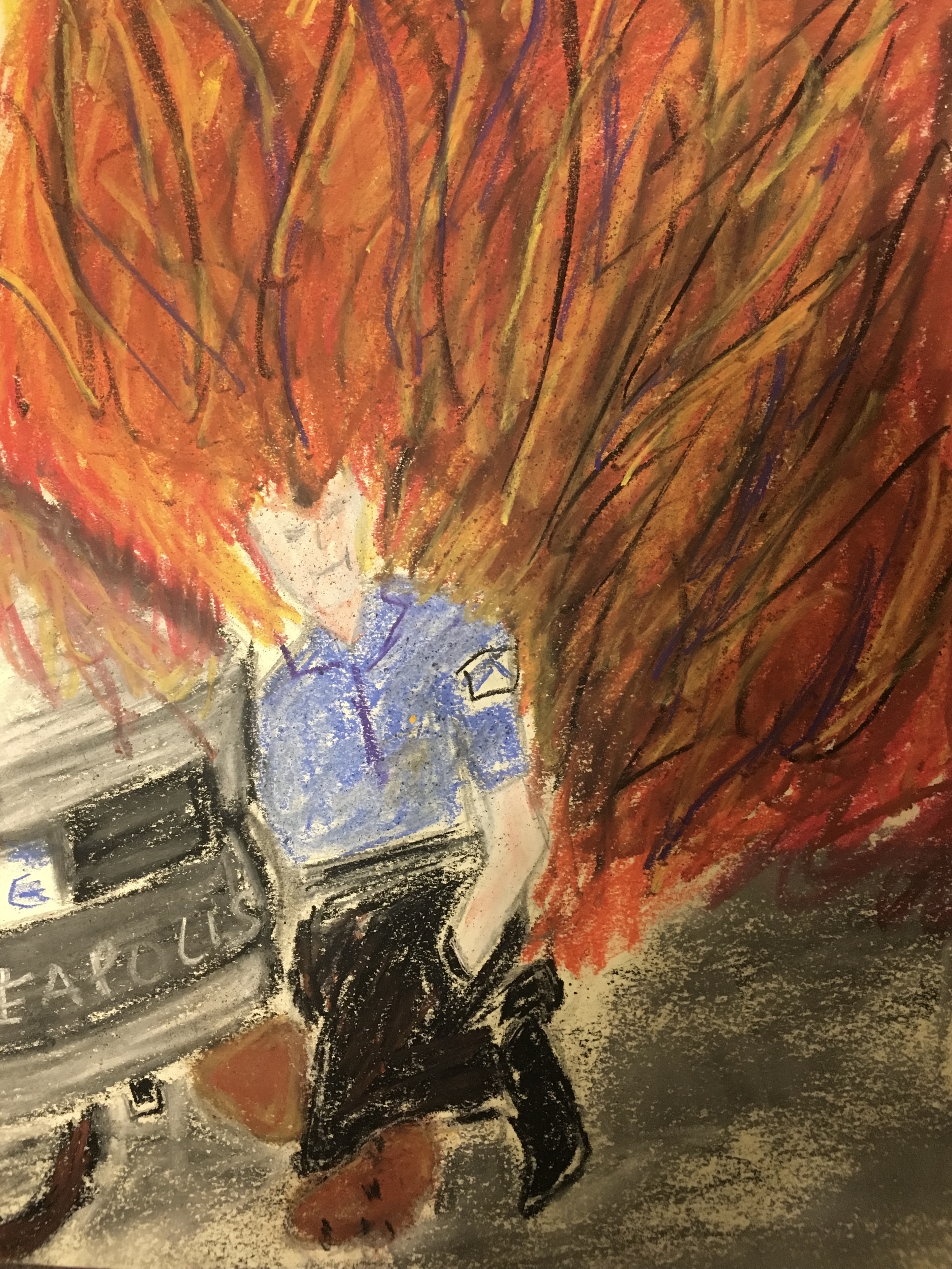
By Marcia Foutch
I lived in Minneapolis for more than 30 years before I moved to Greensboro five years ago. Our family home is at 32nd and Columbus which is 6 blocks from where George Floyd was killed. The majority of my family lives in the Minneapolis area (including the now infamous Brooklyn Center). At the beginning of the uprising that started last summer my son, who we call Bubby, asked me,” “Why do white people care about the murder of George Floyd? They’ve been killing us for more than 400 years – so what is so different about this one?” I struggled trying to figure out an answer to his question. I thought about Grace Lee Boggs and her advice to look at “What time is it on the clock of the world?’. And I thought of Reverend Nelson Johnson talking about the small streams of justice that flow into a mighty river that cannot be stopped. And I thought of something that Deacon Bob Foxworth at Faith Community Church told me when I got to Greensboro a few years ago about what it takes to hold a man down in a ditch. And after months of grappling with this question- this poem is my attempt to answer Bubby’s question.
What
Sparked this
Uprising? What is it
About the killing of
George Floyd that
Made White America care
About the killing of
This Black Mother’s son?
Embracing Darkness
Due June 1, 2021
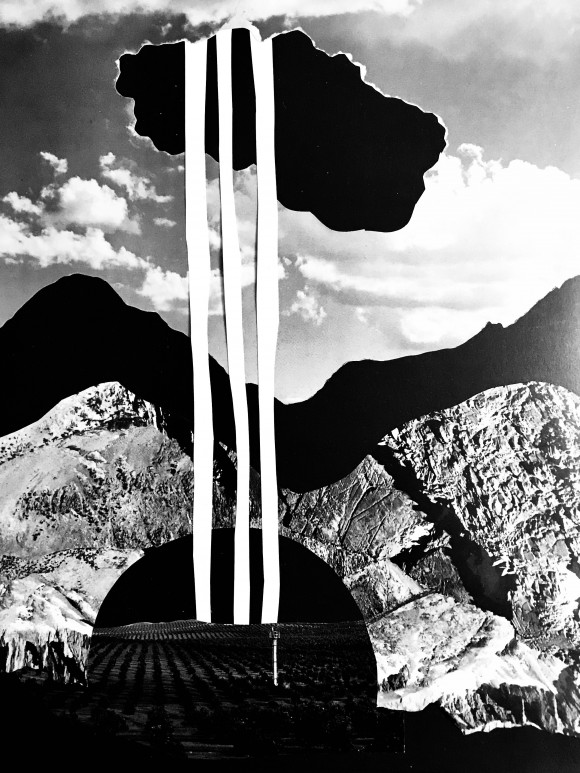
This year, Geez will offer a second edition of our daily Advent reflection book. While we hope that the pieces are as wild and varied as our community, we also hope to narrow in on the theme of Embracing Darkness. We are looking for reflections, poetry, prayers, and whatever else you can think of that fits in 200 words.
What can the darkness teach us? What gifts or wisdom can only be accessed in the night? What would the moon have to say about the dance between dark and light? Which Biblical or movement ancestors do we turn to as models of embracing darkness? How do we build our courage to stay in the dark? How do we resist the problematic binary of light (good) and darkness (bad)? How does this season offer a spiritual invitation towards racial justice? How does darkness welcome us into the counter-cultural work of rest and slowing down? What does fear of the dark have to do with fear of death? How do we resist the flashing lights of capitalist, consumerist Christmas? How do we learn from seeds that germinate in the dark and creation that is formed in the womb?
As always for Geez, we will be looking for words that shift the structures of power, incite community, make us belly laugh, and illuminate beauty and imagination.
Continue reading “Geez magazine: Call for Advent pieces”
Today we celebrate the retirement of Dr. Bruce Rogers-Vaughn from Vanderbilt Divinity School with an excerpt from his book Caring For Souls in a Neoliberal Age (2016), a vital resource for pastors, parents, social workers, therapists and community organizers.
A corollary of the claim that neoliberalism is now globally hegemonic is that pastoral care, as well as other forms of the care of souls, must undergo revision in order to have some hope adequate for both healing and protest. In this book, I will argue that the theories corresponding to this care, including pastoral theology, are generally constrained within postmodern cognitive models, as well as dwelling largely within the fabric of neoliberal versions of identity politics. Any substantial innovation in the fields of pastoral theology and the care of souls today, therefore, will require us to reaffirm our commitment to a common ground that unifies us as diverse people, and to the public good. It will also demand that we extend our analyses and critiques of oppression due to difference (identity) to include the problems of domination intrinsic to capitalism. Indeed, it will mean that subjugations rooted in difference will now be understood, and appreciated more profoundly, in light of capitalism’s current global hegemony. The time has arrived, then, to work toward a post-capitalist pastoral theology, by which I mean a pastoral theology that does not assume the normativity of capitalism.
By Lydia Wylie-Kellermann
I keep clearing space to write this piece and then finding a dozen other things to do instead. Perhaps a sign that I need to write this and perhaps a that it is harder to do than I expected.
Over the last few years, I’ve spent hours and hours gathering a book on parenting. Although I don’t write much about my mom within, she breathes there from beginning to end. I have so much love and appreciation for how she nurtured who I am in both her living and her dying.
I know that Mother’s Day is complicated. There is joy and love and celebration, but there is also grief and pain and longing.
It has been 16 Mother’s Days without my mom now.
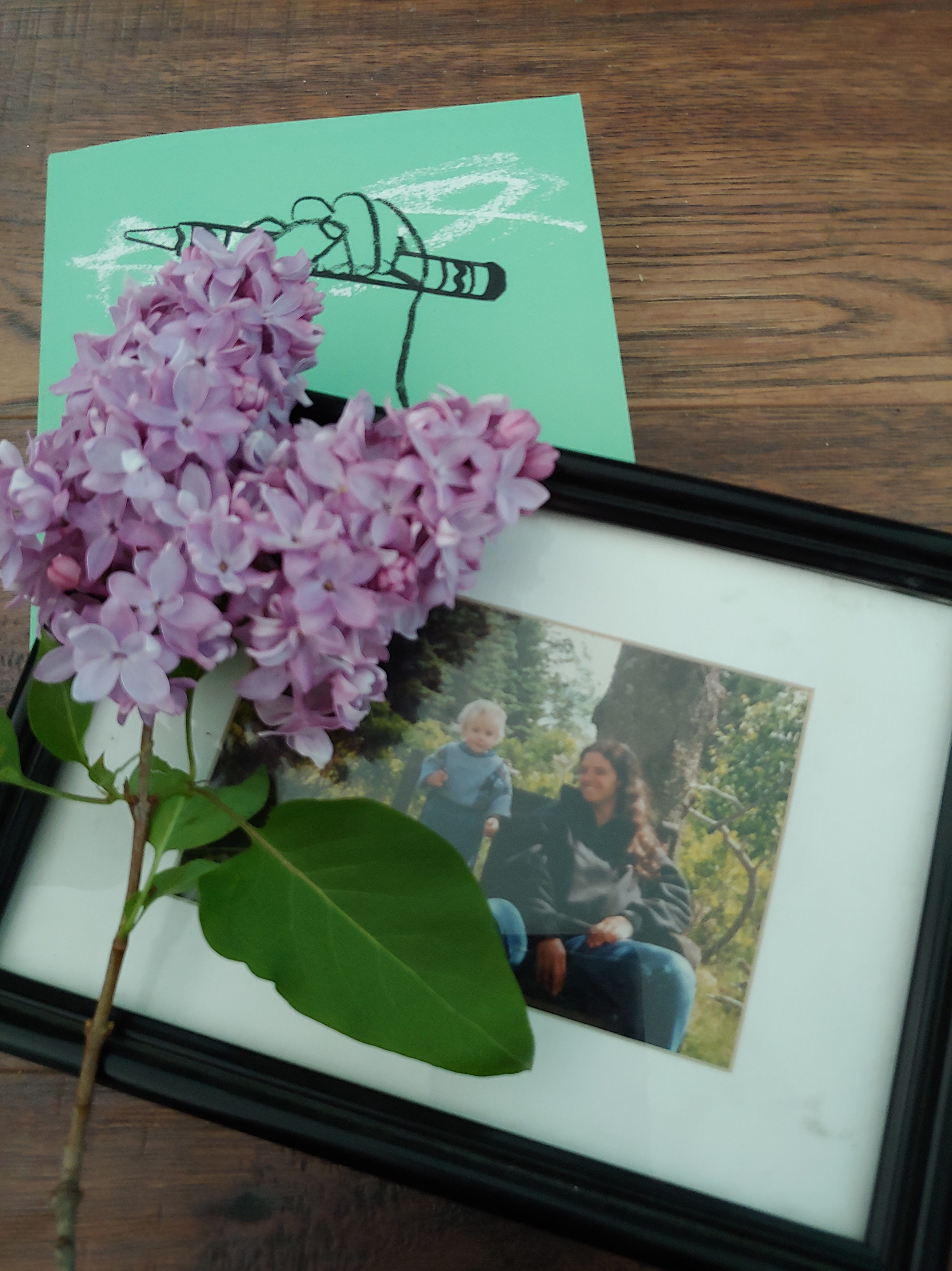
Continue reading “Stop to Smell the Lilacs: A Mother’s Day Reflection”
By Lydia Wylie-Kellermann
I consider myself a lover of liturgical seasons. I might even go as far as to call myself a geek. I love the rhythm of it in my body. The way it coincides with the changing earthly seasons. The cries for justice and stillness and singing and baking. I love it all!
Yet, I have never understood Lent. I can get it with my head, but I don’t feel it in my body. I haven’t found traditions or practices that summon me deeper.
So, I began the season this year with the question “what do you love about Lent?” I threw it out in trusted circles and on social media. I didn’t have a lot of capacity to try much, but I could spend the season listening. I scratched down quotes in the margins of notebooks. I collected wisdom and words.
Continue reading “Learning from the Laughter and the Trees: Tell me about Lent”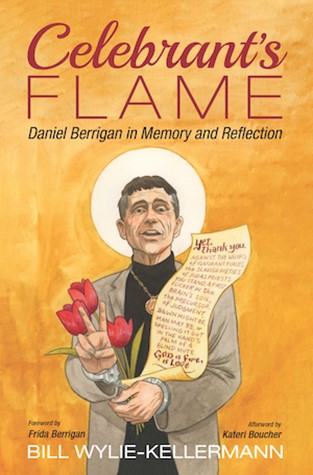
Society had developed and perfected a whole lexicon as ways of stigmatizing the wrong that threatened its wrongs. You know the phrases: to the poor – wrong side of the tracks; to a child in school – wrong question, wrong answer; to the people’s spectrum – wrong color; to the women – wrong sex; to the gays – wrong ecstasy.
In 1974 the War Resisters League Peace Award was given to Daniel Berrigan. The honor was conscious counternarrative, an audacious act of love and respect. Beat poet Allen Ginsberg was the formal presenter, reading, “To Daniel Berrigan, for his irritating vocation as a prophet in our times, angering us in our complacency, embracing us in our humanity. Leaping beyond his own limits, he has led us beyond ours.”
The year prior Berrigan had been invited to address the Association of Arab-American University Graduates in D.C. But then the October/Yom Kippur War broke. He kept the date, speaking as the bombs fell. Confessing his own inexpertise, and excoriating all sides of the war for violence (including our own U.S, and Christian “sides”), he nonetheless came down firm in outraged love for Israel’s betrayal of what he read as its own history and tradition – one akin to his own. He did not mince words. A firestorm broke. He was accused of being wrong in every way or other. Invitations were withdrawn, awards cancelled. Hence, WRL’s honor and his own words to embrace being wrong.
Continue reading “These Intersections: On Writing Celebrant’s Flame: Daniel Berrigan in Memory and Reflection”
By Lydia Wylie-Kellermann, Editorial from Geez magazine’s Signs of Dawn.
Many years ago now, when I was still a teenager, I fell upon my mother’s dead body and wept. I clung onto her when the life was gone, but the warmth still remained on her skin.
We carried her body downstairs and then into the living room. With the help of women in our neighbourhood, I washed her body. I ran my fingers along her surgery-scarred head, her eyes that had loved me so well, and her mouth that I would never again hear sing. Behind the blur of tears, I can still smell burning sage and hear Taizé chants playing on the CD player. She lay on dry ice there for two days and nights. We told stories. We prayed. We cried. We vigiled.
Several months later as we approached Easter, scripture shapeshifted before my weary eyes. My heart clung to the women as they carried spices and travelled toward Jesus’ tomb to anoint his body. Violated and brutalized on the cross, his body was now guarded by Roman soldiers. Yet, here came these women full of bravery, carrying grief and love, to honour his body and ritualize their mourning.
Continue reading “Do I Believe in the Resurrection?”
