God in a Grape; Spirit in a Sheep

JPerk, Ilustration
Icon of the Unburnt Bush 

By Jim Perkinson, a homily on John 15:1-8 and Acts 8:26-40 preached last Sunday to the beloved community at St. Peter’s Episcopal Church in Detroit

I begin by thanking four primary ancestors: my own Celtic, Nordic, Saxon, Frankish kin deep in the past before my people became sick with white supremacy; the African Eve of all of our origins whose black folk offspring of Detroit engaged survival efforts and justice demands and creation-in-spite-of that are nothing short of prophetic and wondrous; the Algonquian and Haudenosaunee communities of the Strait who lived by profound dignity and wisdom on the land and waters; and all the non-human denizens of this place themselves, whose continuous gift makes possible the breathing and loving and struggle of all of us sitting here. For all of them: gratitude. And indebtedness to live, worthy. Continue reading “God in a Grape; Spirit in a Sheep”

Wild Lectionary: Hermit Thrush Joy

IMG_0466
Mature beech trees succumb to Beech Bark Disease

Easter 6(B)
John 15:9-17, Psalm 98

I have said these things to you so that my joy may be in you, and that your joy may be complete. John 15:11

By The Reverend Marilyn Zehr

I stood on the crest of the hill today in that moment of barometric stillness between four days of spring sunshine and an impending afternoon rainstorm. And in the distance I heard the magical flute call of the hermit thrush. Its Mozart-rivaling melodic line threads its way through the forest now and on summer evenings. That wee bird, hard to spot but thrilling to hear, expresses creation’s joy.

Joy can be like that. It can be hard to spot in the midst of the world, as we know it. Continue reading “Wild Lectionary: Hermit Thrush Joy”

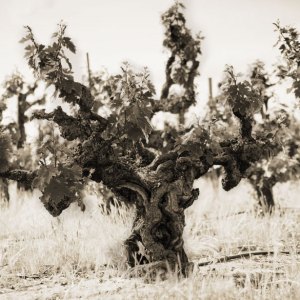
Wild Lectionary: Wild Vine

13-grist-vineEaster 5(B)
By Matthew Syrdal

I am the true vine, and my Father is the vinegrower. He removes every branch in me that bears no fruit. Every branch that bears fruit he prunes to make it bear more fruit. You have already been cleansed by the word that I have spoken to you. Abide in me as I abide in you… My Father is glorified by this, that you bear much fruit and become my disciples.                                     John 15:1-8

The invitation is clear, the summons real, in this mashal, this rabbinical parable today as it was then. May we let it sink deeply into the soil of the world in our hearts. Continue reading “Wild Lectionary: Wild Vine”

Earth Day – The link between Easter and Pentecost

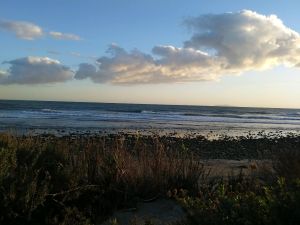
VenturaBeachBy Ken Sehested

Pacem, pacem, pacem in terries

Easter’s focus is always sharper when allied with Earth Day. We sing, properly, of being wayfaring strangers. “A wandering Aramean was my ancestor” (Deuteronomy 26:5) is among the oldest testimonies of fate and faith. An alternate translation—“A Syrian ready to perish was my ancestor”—brings added poignancy to the text.

We are indeed strangers; but not foreigners. In common usage these two words seem similar. Biblically speaking, though, the theological difference could not be greater. Continue reading “Earth Day – The link between Easter and Pentecost”

Act Together…By Moving Upstream

EcoFaithBy Robyn Hartwig, for EcoFaith Recovery’s Practices for Awakening Leadership
Community Dimension: We nurture relational cultures, identifying common interests and public issues affecting our communities, so that we are ready to act together to promote justice and healing for the whole community of creation.

From childhood through adulthood, the faith communities I have belonged to over the course of my life have been good at certain kinds of “acting together.” We are good at worship which is certainly a kind of public action. We are great at potlucks. Jello salads and hot dishes used to be some of the favorite offerings when I was growing up, but with well over a hundred people having participated in Simply in Season small groups within my current faith community, salads with locally grown vegetables are now much more common. We are also great at collecting socks, coats, care kits, blankets, discretionary funds, and food for those in need. We collected over 10,000 pounds of food during one Lenten food drive! Continue reading “Act Together…By Moving Upstream”

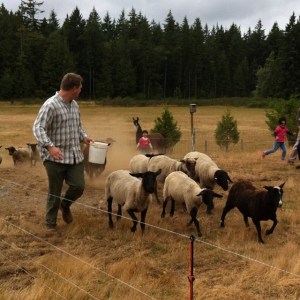
Wild Lectionary: Sheep are not sexy

10599554_10152591711770351_5785986799088242268_nFourth Sunday of Easter (B)
John 10: 1-18
By Matthew W. Humphrey

Sheep are not sexy.

Many biblical commentators struggle with language for this most archetypal figure, oftentimes casting them in unfortunate ways.  In a brief review of the 9 commentaries on the Gospel of John, which contains the reading this week, I counted no less than 6 which noted that sheep were “stupid,” “dumb,” or “dirty.”  (And, equally surprising, all noted how the role of Shepherd in the ancient world was one of ill repute.)  Perhaps that is correct, but if sheep are dumb it is in the same ways as you and I.  Namely: they seek out their own self-preservation, reacting to circumstances and perceived threats, often making rash decision based on incomplete knowledge.  Sheep lack depth perception, meaning they see shadows and pools of water as mysterious threats to be avoided.  (I don’t know about you, but I often lack vision too.)

Continue reading “Wild Lectionary: Sheep are not sexy”

Wild Lectionary: Universal Restoration

IMG_1921.JPG
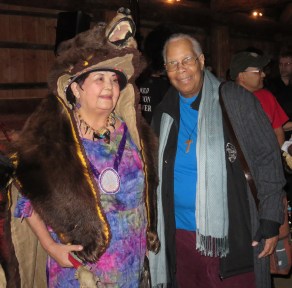
Vikki Marie and a St’at’imc Bear Dancer praying for healing and protecting wild salmon.

Easter 3(B)
Acts 3:1-21

By The Rev. Dr. Victoria Marie

The liturgical season of Easter is the only time that our readings are all from the New Testament. During this season the first readings are from the Acts of the Apostles. Today’s reading from Acts is another occasion where our Roman Catholic Lectionary differs from the Revised Common Lectionary and omits scripture verses. This textual omission significantly changes the meaning and therefore our understanding of the scriptural message.

Continue reading “Wild Lectionary: Universal Restoration”

Wild Lectionary: Wonder and the True Easter Lily

skunk_cabbage.jpgEaster, Year B
Acts 10:34-43
Isaiah 25:6-9
Psalm 118:1-2, 14-24
John 20:1-18
Mark 16:1-8

By Jessica Miller

Across the northeast of North America at this season, a wonder is happening. The flowers of Symplocarpus foetidus have begun emerging and blooming from swamps and wet places. These true Easter-lilies—members of the same family of the Calla ‘lily’—are more commonly known as skunk-cabbage. Varieties of the plant also grow in Japan, where the red robe-like blossoms resembling a monk’s hood have gained it the name Zazen-sou, or Zen meditation plant.

Continue reading “Wild Lectionary: Wonder and the True Easter Lily”

Ecological Stations of the Cross

IMG_1214
Tanker in the Burrard Inlet near the proposed end of the Kinder Morgan Transmountain pipeline

This liturgical resource was assembled by members of Salal + Cedar (www.salalandcedar.com) and Earthkeepers (www.theearthkeepers.org) two Christian environmental groups on Coast Salish Territory, lower mainland British Columbia who host an Ecological Stations of the Cross each year during Holy Week. Stations of the Cross are a Good Friday tradition of prayer and contemplation on images depicting the events from the time that Jesus is sentenced to death to his burial. We walk outdoors at a site slated for the expansion of a tar-sands bearing pipeline and draw connections between Jesus’ suffering and the suffering and betrayal of creation. The traditional passion narrative from John (18:1-19:42) moves from the betrayal and arrest in the garden to Jesus’ burial. Our stations include action, poetry, song and contemplation when we read from John we use the word Judeans (a more accurate and less anti-semetic translation) instead of “the Jews.”  Themes include: repentance, culpability, betrayal, complicity, empire, suffering, compassion, power/powerlessness, death, lament, longing despair, hope and hopelessness, outrage.

Coast Salish Territory
Water Station (overlook)

Come all you who are thirsty, come to the waters. Isaiah 55:1

And Jesus, knowing that all was now finished said, “I thirst.” John 19:28

Here where Fraser River, the Sto:lo, flows into the Salish Sea, where parts of our region are temperate rainforest, our reservoirs are full and we consign gallons of clean drinking water to the sewers with every flush –we can forget, or even ignore, those who thirst. Continue reading “Ecological Stations of the Cross”

40 Birds of Lent: Final Count

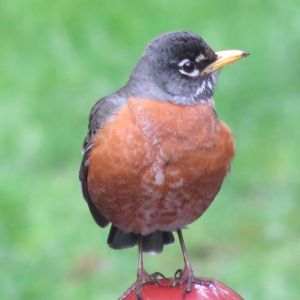
Laurel1By Laurel Dykstra

While the word Lent comes from Middle English, quadragesima, the Latin word for the season means fortieth referring to the fortieth day before Easter. And while this resonates with a host of biblical wilderness forties—the 40 days of the flood, the Hebrew’s 40 year sojourn in the desert, Moses’ 40 days on Sinai, Elijah’s 40 day journey to Mt. Horeb, Jesus’ 40 days in the wilderness—the actual number of days doesn’t quite add up, so different traditions have different metrics, (don’t count Sundays, Lent ends on Maundy Thursday) in order to get to 40. I love the biblical associations but the 40 Birds of Lent involved some cheating to make the numbers come out right.
Continue reading “40 Birds of Lent: Final Count”