Radical Discipleship: An Invitation to be Led by the Spirit in Prayer

JoBy Rev. Joanna Lawrence Shenk

*This is part of a series of pieces from contributors all over North America each answering the question, “How would you define radical discipleship?” We will be posting responses regularly on Mondays during 2019.

A version of this article was first preached at First Mennonite Church of San Francisco on March 31, 2019

During Lent this year I experienced a stripping away, a reorientation in a vulnerable and uncomfortable way. I recognized my need for God and guidance by the Spirit anew. It has led to questions such as:

Where is the Spirit at work?
Am I attentive enough to follow the Spirit’s leading?
Am I courageous enough to follow?
Do I actually need God or do I think I’m okay with my analysis and intention to do good in the world?


In this time prayer has become a central practice. Continue reading “Radical Discipleship: An Invitation to be Led by the Spirit in Prayer”
Ideological Remoulding

Bullets
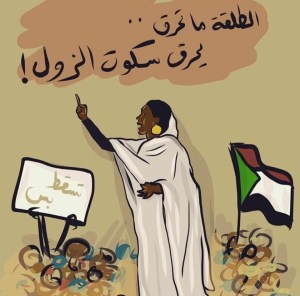
Bullets Don’t Hurt. The Silence of the People Does. Khartoum, Sudan, 2019 (Source: http://www.thetricontinental.org).

An excerpt from a recent newsletter “Radical Change Must Fall Like a Gentle Mist, Not a Heavy Downpour” at The Tricontinental, an international, movement-driven institution focused on stimulating intellectual debate that serves people’s aspirations.

Change comes at different tempos. Political change – the removal of a government – can be swift. Slower yet is economic change, with systems of production far less easy to pivot than the ejection of a government. Harder to change social systems, institutions such as the family, which have deep roots not only in our consciousness but also in our infrastructure (consider how our housing is built, to facilitate an ideological view of the ‘family’). But the hardest of all to change are the rigidities of culture, the tap roots of norms and customs that go deep into the centre of human experience. Prejudices of all kinds – racism and patriarchy – lie far beneath the surface, requiring what Zhou Enlai called ‘ideological remoulding’ to alter them. ‘It cannot be done with haste’, Zhou Enlai says several times in his speech. Such cultural work takes time. It has to dig gently into the earth to investigate the tap root, digging deeper to understand its power. Radical change has to confront culture’s blockages. Two kinds of work are necessary: cultural work, to stretch the imagination, and political work, to undermine the power of nasty cultural forms.

The Intensity of the Witness

ClarenceFrom the Essential Writings of Clarence Jordan, founder of Koinonia Farm and author of the Cotton Patch paraphrase of the New Testament.

The history of the Christian movement demonstrates that the intensity of persecution is geared, not to the moral level of the non-Christians, or persecutors, but to the intensity of the witness of the Christian community. The early believers were not persecuted because the Romans were such bad people. In fact, on big occasions they would throw a thousand or two helpless people into the amphitheater to be clawed to pieces by lions, but the thought of atomizing [with a nuclear bomb] a whole city probably would have horrified them. The strong conviction of the believers might not have caused the Romans to persecute them, but there could have been no persecution without such faith. One wonders why Christians today get off so easily. Is it because unchristian Americans are that much better than unchristian Romans, or is our light so dim that the tormentor can’t see it? What are the things we do that are worth persecuting?

To Enlist

J PerkAn excerpt from Detroit-based theologian Dr. Jim Perkinson’s classic piece “Theology and the City: Learning to Cry Struggling to See.
*To live in a suburb “neutrally” is to participate in the American fiction of innocence.

…In complex, globally interdependent societies like those we now live in, theology that is not simply ideology requires a kind of militancy. It must enter a fray that is neither gentle nor innocent. But it has not ever been different for Christian “God talk.” In the first centuries of the church’s life, for instance, the early meaning of paganism was both “rural-dweller” and “noncombatant.” To become a believer in the early church meant to enlist. In the Roman imperial order, a sacramentum was an oath of loyalty taken by a soldier to Caesar. For Christians living under that imperial regime, celebrating “sacraments” like the Eucharist was a practice of political resistance in a struggle that engaged war-making as its nonviolent, but combative opposite. From the beginning, Christianity has been about spiritual warfare, when it has not forgotten its calling. And Christian theology in the mix is the articulation of where God is most likely to be encountered in the ongoing conflict.

Wild Lectionary: God’s Own Pocket

Batch hills(1)
Bachelor Hills, Secwepemc Territory

Easter 6C

Revelation 21:10; 21:22-22:5

And in the spirit he carried me to a great, high mountain and showed me the holy city Jerusalem coming down out of heaven from God…I saw no temple in the city.

by Rev LeAnn Blackert

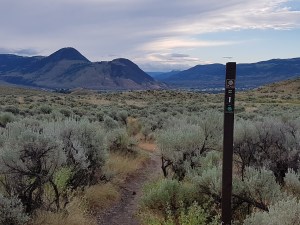
Forty-five minutes into our hike, we crest the last steep stretch and find ourselves standing on a flat section of land with limitless views in all directions. The snow covered peaks of the mountains of Wells Gray Park highlight the northern view, while off to our west the sun begins its descent to the horizon. Blue gray hills rim the southern exposure and to the east the city of Kamloops nestles in the valley. I recall words offered to me years ago on a trail leading to the water’s edge in western Vancouver: “Truly we are being held in God’s own pocket.” Our Wild Church group’s experience atop one of the hills in Kenna Cartwright Park in Kamloops, BC, comes to mind when I read the words from Revelation. Continue reading “Wild Lectionary: God’s Own Pocket”

Those Deemed Different

NephsBy Tommy Airey, last Sunday’s silent sermon 

So when Peter went up to Jerusalem, the circumcised believers criticized him, saying, “Why did you go to uncircumcised men and eat with them?” Then Peter began to explain it to them, step by step…
Acts 11:2-4

When they heard this, they were silenced. And they praised God, saying, “Then God has given even to the Gentiles the repentance that leads to life.”
Acts 11:18

I give you a new commandment, that you love one another. Just as I have loved you, you also should love one another. By this everyone will know that you are my disciples, if you have love for one another.
John 13:34-35

In a previous life, I was the athletic director at a large public high school and an associate pastor at an Evangelical church plant at the same time. My single life and my Purpose Driven protein shakes subsidized my 80-hour workweek. It was a life of adventure. One week I was on a short-term mission trip to Nigeria. The next week I was dealing with the fallout of a teacher-and-coach who was sleeping with one of his students. Continue reading “Those Deemed Different”

Our Most Sacred Relative

Jim BearAn excerpt from Rev. Jim Bear Jacobs’ powerful Thursday morning sermon at the February 2019 Bartimaeus Kinsler Institute on Chumash land (“Oak View, CA”). Listen to all 40 minutes of challenge and inspiration here.

The principle of non-Indigenous environmental justice work could be summarized like this:

The earth is our greatest natural resource and it is incumbent upon us to protect it.

Sounds good, but it is wrong. Because when viewed from an Indigenous perspective, we would state it like this:

The earth is our most sacred relative and it is incumbent upon us to protect her.

The Earth has an identity. The Earth lives. She breathes. She moves. She thunders. She nourishes.

The Traumatic Somatic

MamieTillFrom the conclusion of a sermon that Ched Myers preached at Garret Evangelical Theological Seminary Chapel on April 24, 2019. Access the entire sermon here

Our gospel text—and the excruciating lesson of Emmet Till’s funeral, which launched the most significant social movement in U.S. history—challenge us to embrace the beat up bodies of both marginalized people and degraded places around our earth mother. As we do so, we will be motivated also to embrace the militant evangelistic vocation Jesus leaves his companions at the end of Luke’s Emmaus narrative: to “proclaim repentance and forgiveness of sins in my name to all nations, beginning from Jerusalem” (24:47). It is we who must continue the prophetic struggle to turn history around from its captivity to our terminal addictions and compulsions—that’s the meaning of “repentance.” Resurrection as Insurrection! And as Jesus notes, this good news is not just for individuals, but nations and systems, starting at the centers of power— for Luke, Jerusalem, for us, Washington DC. Continue reading “The Traumatic Somatic”

This Sacred Work

TeresaIn April 2016, Teresa Grady joined the Ancestors after 88 years of resisting and rising above the colonial script. This is an excerpt from the eulogy given by her granddaughter Cait De Mott Grady at the funeral mass at Immaculate Conception Church in Ithaca, New York.
My grandma who found cracks in empire and planted seeds in the rich and fertile soil that’s there. My grandma knew in her gut, in her bones, in her heart, in her spirit, that it is imperative that each of us say something, do something, speak from our specific position within the interlocking systems of oppression — patriarchy, white supremacy, capitalism, racism, militarism, materialism — systems that work to strip us all of our humanity. And that this sacred work starts with relationships.

Teresa Grady: Presente!

The Ghosts America Has Kept At Bay

BayoAnother pressing social media post from Bayo Akomolafe (April 30, 2019).

An older gentleman in Iowa asked me:

As a non-American, what do you think is our greatest problem in America today?

I replied, “I’m not sure about it being the ‘greatest’, but I would say immigration.”

He nodded his head as if in agreement, so I drove the real point home: Continue reading “The Ghosts America Has Kept At Bay”