Wild Lectionary: Trees, a Gift for All or Entitlement for Some?

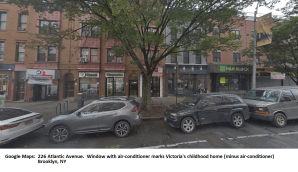
226AtlanticAveEaster 5C 5th
Revelation 21:1-6
John 13:31-35

By Rev. Dr. Victoria Marie

And I saw the holy city, the new Jerusalem, coming down out of heaven from God, prepared as a bride adorned for her husband. And I heard a loud voice from the throne saying, “See, the home of God is among mortals.”

I imagine that a new Jerusalem, where God will dwell, will most definitely have tree-lined streets. I also imagine that God’s design for the present Jerusalem—for Earth’s cities in general—is that all should benefit from the Divine gift of trees.

Continue reading “Wild Lectionary: Trees, a Gift for All or Entitlement for Some?”

Eastertide: the Outing of the Church

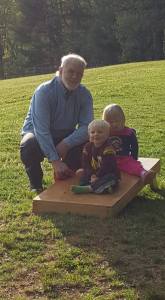
KenBy Ken Sehested (photo right with grandchildren), curator of prayerandpolitiks.org

Some years ago, writing in the days leading up to Easter, I realized important though tragic anniversaries arrived in the days immediately following that Sunday.

“Even before our resurrection flowers have wilted, we will be confronted again with the presence of evil. Since Easter falls early in the calendar this year, in the coming resurrection week we will be forced to remember the enduring power of death. In 1945, Dietrich Bonhoeffer, a German pastor and theologian, was executed by the Nazis two days after Easter Sunday. This next Thursday, April 4, we will remember the 1968 assassination of Dr. Martin Luther King Jr. right here in Memphis.” —continue reading “Open Letter to My Daughter: Easter morning, with the stench of death still in the air

What it is

We have entered Eastertide, the liturgical season beginning with Easter and ending 50 days later on Pentecost (aka Whitsunday). The formulation of this season parallels the period in Judaism between the first day of Pesach (Passover, marking their liberation from Egypt) and the feast of Shavu’ot (Feast of Weeks, both a harvest festival and a commemoration of the giving of Torah at Mount Sinai). Parallel resurrection moments, setting the stage for resulting resurrection movements. Continue reading “Eastertide: the Outing of the Church”

Elders

JeanieBy Jeanie Wylie-Kellermann, an excerpt from her “Editor’s Note” in the May 1999 issue of The Witness magazine, organized around the theme “Aging: Learning to be an Elder.” 
Elders usually must let go of their expectations to be power brokers, but they are also often positioned in a way that allows them greater freedom to act politically. Recently my partner Bill and I were at an Ash Wednesday vigil at the local manufacturer of cruise missile engines. Except for a few college students, we were probably the youngest people there–which isn’t saying much since we are in our 40s. On one level, that gave us an opportunity to beat ourselves up for our demographics–Why is the peace movement so white, so middle class and now so elderly? But in thinking about it, where would we prefer that elders be? What better task, could they adopt than to witness against fire power that can carry nuclear payload, but now is used in first-strike attacks against countries like Iraq or the former Yugoslavia? The conviction of these older ones is a gift to us. (I remember during a civil disobedience campaign against this same manufacturer in the early 1980s hearing a senior citizen say to a young mother who was agonizing about whether to do the action, “You take care of your babies. I’ll do this in your name and, before long, you can do this in the name of another mother.”) Continue reading “Elders”

It Was Out of My Heart That I Spoke

MonicaA few summers ago in Detroit, a circle of high school students from a local church gathered with community organizer Monica Lewis-Patrick, executive director of the grassroots We The People of Detroit. The conversation flowed into what it looks like for faith to infuse political action when the odds are stacked against justice, freedom and equity. This is an excerpt.

All we have to do is start connecting the dots and telling the truth. When I started working in social justice, I was working in education, with children that were mentally impaired and extremely violent. What I found out really quickly was that the people at the table didn’t give a damn about the children. It was about the dollars. Because I cared about the children, I had to educate myself in terms of how I influence the policy—or the people who drive the policies—to help my people get the change they need. To help the children I served. That meant going to meetings where sometimes I would be the only one there speaking on behalf of the population that I thought was most vulnerable and most in need. Was I scared? Yes I was. Did I always get the language right? No I didn’t. Did I always have the data on hand that they had? No I didn’t. But it was out of my heart that I spoke. And then from there what would happen is that somebody would give me a card or somebody would say, “You know, I didn’t know that part” or “Can we talk?” And then I had to dig up from my spiritual history or family history and muster up enough energy to go meet with somebody that has a title—that seems to have power—and say to that person “We don’t like this.”

You Will Continue to Inspire

Ben, RachelBy Ben Wideman, community pastor of the 3rd Way Collective in State College, Pennsylvania

*This piece was originally posted on the 3rd Way Collective blog on May 6, 2019.

Dear Rachel Held Evans,

I’m writing with a long-overdue note of appreciation. Last week’s news of your passing shook me at a deeper level than I anticipated, and I wondered if putting words on paper would help me process some of what I felt.

I think my first memory of you was hearing about your second book, A Year of Biblical Womanhood. I’m guessing that my reaction to hearing about an effort to live according to a legalistic reading of scripture was typical of many short-sighted folks at the time… hadn’t AJ Jacobs already tried that and written a book about the experience a few years prior? Was yours just going to be the female version of that? Continue reading “You Will Continue to Inspire”

Wild Lectionary: Sheep, Gazelle and Rock

45073825842_789e1c317b_bActs 9:36-43
Psalm 23

By Laurel Dykstra

On this Good Shepherd Sunday, our annual engagement with the repeated biblical assertion that both kingship and divine-human relations resemble sheep husbandry, the lectionary illuminates two key aspects of the emerging Wild Church Movement. Connected to both Watershed Discipleship and Contemplative Ecology, Wild Church is nothing more than Christians who intentionally worship, or seek to experience holiness, outside of buildings. In forests, deserts, city parks, beaches, urban vacant lots we reassert the strand of our tradition where wilderness is the place of divine encounter. Continue reading “Wild Lectionary: Sheep, Gazelle and Rock”

To what do I devote my life?

DSC04133(1)
by Becker1999 Flickr, cc

By Dahr Jamail, excerpted from a piece from TruthOut.org

By way of the corporate capitalist industrial growth culture within which most of us have been raised and immersed, we have become disconnected from the planet we are so deeply part of. This, I believe, is the root cause of the climate crisis we now find ourselves in. Hence, the first step toward answering the question of “how to be” during this time, which must be answered before any of us can decide “what to do,” is to connect ourselves back to the planet. For we cannot begin to walk until our feet are on the ground.

Each day I wake and begin to process the daily news of the climate catastrophe and the global political tilt into overt fascism. The associated trauma, grief, rage and despair that come from all of this draws me back to the work of Stan Rushworth, Cherokee elder, activist and scholar, who has guided much of my own thinking about how to move forward. Rushworth has reminded me that while Western colonialist culture believes in “rights,” many Indigenous cultures teach of “obligations” that we are born into: obligations to those who came before, to those who will come after, and to the Earth itself.

Hence, when the grief and rage threaten to consume me, I now orient myself around the question, “What are my obligations?” In other words, “From this moment on, knowing what is happening to the planet, to what do I devote my life?

Each of us must ask ourselves this question every day, as we face down catastrophe.