Questions for Christian America From Your Sibling in Christ

immigration
By Julia Jack-Scott

By Liza Neal

“Do you think they will believe me?”
He asked with desperation, scars visible and invisible.
How do I answer such a question?
“I don’t know.”

“Do you think they will separate me from my child?”
She asked clutching her sleeping 2 year old.
How do I answer such a question?
“I don’t know.” Continue reading “Questions for Christian America From Your Sibling in Christ”

Like a Radish

Screen Shot 2019-02-06 at 9.39.24 AMBy Kyle Mitchell

*This is the ninth installation of a year-long series of posts from contributors all over North America each answering the question, “How would you define radical discipleship?” We will be posting responses regularly on Mondays during 2019.

The word discipleship reminds me that the way of the Jewish rabbi named Jesus is grounded in a posture of discipline and learning. For those of us whose native religious tongue is Jesus language, discipleship is the main way that we express our faith in the world. We never “arrive”, but are always growing, maturing, discerning, listening, and learning. We make the road by walking. Continue reading “Like a Radish”

Until They Became Landless Non-Citizens

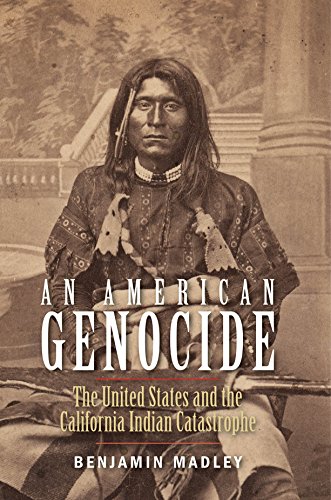
MadleyFrom Benjamin Madley’s An American Genocide: The United States and the California Indian Catastrophe, 1846-1873, quoted early and often at last week’s Bartimaeus Kinsler Institute in Southern California.

…federal lawmakers expelled California Indians from mainstream colonial California society and relegated them to a shadowy legal and social status between man and beast. This was not preordained. In each phase of legislation, anti-Indian views prevailed over more sympathetic voices, each time pushing Indians farther beyond the bounds of citizenship and community. Through a succession of laws, legislators slowly denied California Indians membership in the body politic until they became landless non-citizens, with few legal rights and almost no legal control over their own bodies. Indians became, for many Anglo-Americans, nonhumans. This legal exclusion of California Indians from California society was a crucial enabler of mass murder.

Book Recs from Professor Kendi

KendiFrom a Bill Moyers interview with Ibram X. Kendi, the author of Stamped From The Beginning: The Definitive History of Racist Ideas in America (2017). Kendi was asked what five books should be mandatory reading (once readers were done with his book). 

I think that it really depends on what they’re interested in. But I think books that are critical in understanding the popular sort of discussions that we’re having now that have to do with race injustice. Of course, there is Bryan Stevenson’s Just Mercy, which I think really takes the reader through understanding how much of a problem the death penalty is, how much of a black problem it is, and how virulently racist the policies and operators are within that — in Alabama and other places. Continue reading “Book Recs from Professor Kendi”

A Vision

CornelAn excerpt from The Sun Magazine’s interview with Dr. Cornel West.

Fluidity doesn’t necessarily mean subversion. You can be highly fluid and just come up with creative ways of adjusting to or reproducing the status quo. Fluidity and flexibility are important, but to transform society you need more than that. You need a vision. You need a different way of looking at the world. That’s where the Hebrew prophets and the legacy of Jerusalem come in. The words of Isaiah, Micah, and others authorized an alternative vision of the world. Continue reading “A Vision”

Wild Lectionary: Whose Power and What For?

52474426_1163536123802532_4269623067648458752_n

7th Sunday After Epiphany
Genesis 45:3-11, 15

By Rev. Miriam Spies

Some commentators read this passage as a moment of reconciliation and forgiveness between family…or a story of redistributing food and wealth based on need, but the misuse of power and thinking we know the mind of God has harmful effects for Joseph’s family and for generations of people to come.

Continue reading “Wild Lectionary: Whose Power and What For?”

Winter’s Coziness

candleIn January, over twenty women gathered for a Word and World weekend of rest and writing using winter as their guide and teacher. This is the second reflection offered which also gives some writing prompts. May it be company in these longer winter days.

By Joyce Hollyday

Guided Imagery

Imagine yourself in a harsh winter landscape. Take note of what is present—and what is absent.

You trudge through deep snow in drifts piled high by a strong and biting wind. Your feet begin to ache. Your fingers go numb. The journey feels endless. Continue reading “Winter’s Coziness”

Learning from Laughter and the Trees: The Child Come to Make Story Sacred Again

20190109_083129By Lydia Wylie-Kellermann
January 13, 2019

He wouldn’t get in his car seat. He screamed and arched his back. I felt the exhaustion in my own back with the car filled with groceries. Do I sit down and wait it out? Do I offer him candy? (I didn’t have any) Do I physically force his small body into the seat?

Out of desperation, I said “If you get into your seat, I will tell you the story of what happened three years ago on the day you were born.” Continue reading “Learning from Laughter and the Trees: The Child Come to Make Story Sacred Again”

Death is All They’ve Got to Stand On

Screen Shot 2019-02-15 at 9.26.01 AMBy Rev. Bill Wylie-Kellermann (right)

*This is the 8th installation of a year-long series of posts from contributors all over North America each answering the question, “How would you define radical discipleship?” We will be posting responses regularly on Mondays during 2019.

If you would be my disciples… take up your cross and follow me.

I am so glad for this beloved mosaic, a series piecing together the shape of radical discipleship in our moment (plus the history we stand upon and with). The calls to the discipline of Jesus are here rooted in spirit, heart, earth, watershed, creaturehood, beauty, community and the stories of a Way incarnate. Continue reading “Death is All They’ve Got to Stand On”

Practices Cannot Be Separated From The Bodies That Practice Them

Hara1An excerpt from Tada Hozumi‘s brilliant piece “The Key to Healing Whiteness is Understanding Cultural Somatic Context,” originally posted on the Selfish Activist site last month.

Intellectualism itself is a white colonialist pattern. It’s only natural that whiteness can’t be solved through brain wrangling. Usually what happens is that the intellectual quality of systemic analysis often leads people to burn out, usually with their micro-aggressing behaviors intact. Continue reading “Practices Cannot Be Separated From The Bodies That Practice Them”