We Are the Offspring of the Ignorantly Discarded

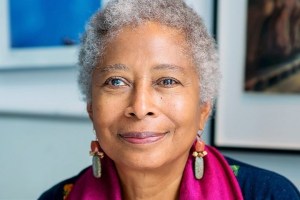
Alice WalkerA sample from Alice Walker’s newest book of poetry Taking the Arrow Out of The Heart (October 2018). This is called “I Am Telling You, Discouraged One, We Will Win.”

I am telling you
Discouraged One
we will win.
And I will show you
why.
We are the offspring
of the ignorantly
discarded:
we conjure
sunrise
with our smiles
and provoke music
out of trash.
Who can completely
disappear
such genius? Continue reading “We Are the Offspring of the Ignorantly Discarded”

No words

2017-10-22-10-42-55-1100x825By Kateri Boucher


What would the trees say, if we asked them now?
What have we done?
What shall we do?
The Climate Report said 12 years.
Now, even closer to 11.
How is a little body like mine supposed to hold news that big?
The wheels keep turning,
hurtling us all forward, or
backward.
Whatever direction —
unceasing.
And where will this little body be in 11 years?
Will I still be one of the ones who can continue pretending?
The trees outside don’t say a thing.
Or maybe they do,
but I never listen long enough
to hear them.

Wild Lectionary: Parched Shrub and Watered Tree

RDnetlogo76th Sunday after Epiphany C

Jeremiah 17:5-10
Psalm 1

By Laurel Dykstra

Psalm 1 and the verses from Jeremiah 17 are two of many passages where something valued or successful is compared to a tree by water.

For the preacher engaging with ecological themes, reading these two passages together suggests several overlapping subjects for exploration to “test the mind and search the heart.” Continue reading “Wild Lectionary: Parched Shrub and Watered Tree”

Winter’s Harshness

ice-formationsIn January, over twenty women gathered for a Word and World weekend of rest and writing using winter as their guide and teacher. This is the first reflection offered which also gives some writing prompts. May it be company in these longer winter days.
By Kate Foran


Ceremony

I will tell you something about stories,
[he said]
They aren’t just entertainment.
Don’t be fooled.
They are all we have, you see,
all we have to fight off
illness and death.
You don’t have anything
if you don’t have the stories.
Their evil is mighty
but it can’t stand up to our stories.
So they try to destroy the stories
let the stories be confused or forgotten.
They would like that
They would be happy
Because we would be defenseless then.
He rubbed his belly.
I keep them here
[he said]
Here, put your hand on it
See, it is moving.
There is life here
for the people.
And in the belly of this story
the rituals and the ceremony
are still growing.

Continue reading “Winter’s Harshness”

Anti-Semitism and Hypocrisy at the Top: a Jewish response

OmarBy Wes Howard-Brook

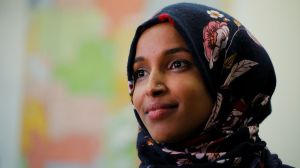
Three, young, powerful, brash women of color have come down upon the Capitol and left the old while folks there sputtering in their wake. The most well-known—so much so that she already can be recognized by her initials, AOC—Rep. Alexandria Ocasio-Cortez (NY)—has blown the doors off Congress by daring to offer her “Green New Deal” vision. The other two are both Muslim women, Michigan Rep. Rashida Tlaib and Minnesota Rep. Ilhan Omar. Tlaib and Omar have strongly promoted the international “Boycott, Divestment, and Sanction” campaign to pressure the Israeli government to withdraw from West Bank settlements. Continue reading “Anti-Semitism and Hypocrisy at the Top: a Jewish response”

For What Do We Hope

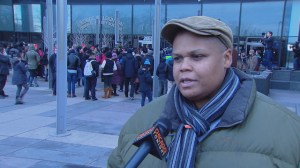
Ken SehestedBy Ken Sehested (right with grandchildren), whose fluency tends toward poetic expression, in response to our 2019 question, “What is your definition of radical discipleship?”
 “Always be ready to make your defense to anyone
who demands from you an accounting for the hope
that is in you: yet do it in gentleness and reverence.”
—1 Peter 3:15-16

To your feet, you pilgrims of faith’s long journey! Stand and pledge your allegiance to that nation-supplanting Realm to come.

For what do we hope?

We hope for the Beloved’s Promise to overtake the world’s broken-hearted threat. Continue reading “For What Do We Hope”

The Failed Attempts That Lead to Bigger Successes

keeyanaAn excerpt from Jacobin’s recent interview with Keeanga-Yamahtta Taylor, professor of African-American studies at Princeton University.

…a lot of people who are unfamiliar with organizing, through no fault of their own, have little idea that it’s often the failed attempts that lead to the bigger successes. Big, successful marches that are connected to social movements — especially in the 1960s — don’t come from heaven. They have to be built and organized. And sometimes that lesson today can be distorted, because you can have lots of money from foundations that swoop in and make all of these resources available, but you still have the same problem: if it’s not connected to ongoing organization or organizing, then it’s a flash in a pan that can bring attention to a particular issue but doesn’t create the means to actually do anything about it.

What Freedom Means

robin d.g. kelleyAn excerpt from Robin D.G. Kelley’s 2016 “Yes, I Said ‘National Liberation.'” Re-posted from Verso. 
Whatever the reasons, our solidarity ought to be based on building a new world together. I am not suggesting that we abandon the struggle to hold Israel accountable for its continued crimes against humanity and violations of international law, or that we stop mourning and honoring the dead, or that we cease any of the immediate actions designed to sustain life and bring a modicum of peace. But peace is impossible without justice. The brilliant Egyptian writer Ahdaf Soueif put it best: “The world treated Gaza as a humanitarian case, as if what the Palestinians needed was aid. What Gaza needs is freedom.” And what is freedom for Palestine? “Free Palestine” means, at a minimum, completely ending the occupation; dismantling all vestiges of apartheid and eradicating racism; holding Israel accountable for war crimes; suspending the use of administrative detention, jailing of minors, and political repression; freeing all political prisoners; recognizing the fundamental rights of all Palestinian and Bedouin citizens of Israel for full equality and nationality; ensuring all Palestinians a right to return and to receive just compensation for property and lives stolen, destroyed, and damaged in one of the greatest colonial crimes of the twentieth century.

The Culture of Whiteness

RubyA Ruby Sales Ted Talk? Hell yes. This is just an excerpt. Watch and listen to the entire talk here.

Now that we’ve touched the hurt, we must ask ourselves, “Where does it hurt and what is the source of the hurt?” I propose that we must look deeply into the culture of whiteness. That is a river that drowns out all of our identities and drowns us in false uniformity to protect the status quo.

Notice, everybody, I said “culture of whiteness,” and not “white people.” Because in my estimation, the problem is not white people. Instead, it is the culture of whiteness. And by culture of whiteness, I mean a systemic and organized set of beliefs, values, canonized knowledge and even religion, to maintain a hierarchical, over-and-against power structure based on skin color, against people of color. It is a culture where white people are seen as necessary and friendly insiders, while people of color, especially black people, are seen as dangerous and threatening outsiders, who pose a clear and present danger to the safety and the efficacy of the culture of whiteness. Continue reading “The Culture of Whiteness”

Wild Lectionary: Seraphim, seed people and fish folk, oh my!: celebrating God’s kaleidoscopic web of life

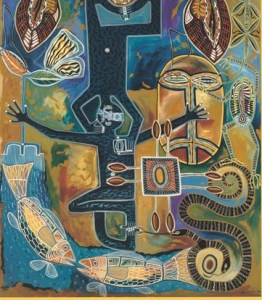
circle of life
Circle of Life, Zane Saunders, 1993 Creative Commons

Fifth Sunday after Epiphany C
Isaiah 6:6:1-13
1 Corinthians 15:1-11
Luke 5:1-11

By Wes Howard Brook and Sue Furguson Johnson

This week’s readings reveal life springing forth from sky, sea and soil: seraphim speak to Isaiah, fish are netted by Simon Peter, and images of fleshy seeds of resurrection flow from Paul’s mouth (in the section of 1 Cor 15 that follows the lectionary passage). And if we listen a bit more closely, we can hear the usual lines that distinguish one creature from another blur and cross: Jesus promises that Simon will fish for people, while, for Paul, humans bloom and fruit like flowering trees. What might these criss-crossing images teach us about the intersectionality among living beings, in this realm and in the realm beyond the veil? Continue reading “Wild Lectionary: Seraphim, seed people and fish folk, oh my!: celebrating God’s kaleidoscopic web of life”