40 Birds of Lent: Nesting Season

Nest2By Laurel Dykstra

Lente in Middle English means springtime, which means a kind of lovely irony is built into Lent, at least where I live on Coast Salish Territory. The church’s season of fasting and austerity falls during nesting season so while we smear our heads with ashes and forswear chocolate, facebook, and alcohol, our feathered friends are setting up housekeeping and getting it on. The bird songs of spring are about defending territory and announcing sexual availability. Continue reading “40 Birds of Lent: Nesting Season”

“Let Us Not Forget, So That We Never Repeat” My Lai: A Litany of Remembrance and Repair

White_House_DCWritten by Bill Ramsey and Joyce Hollyday. The litany is being read and prayed in front of the White House today on the anniversary.

We remember those victims whose names we read today, and all the residents of My Lai who were killed while cooking breakfast, huddling beneath their homes, shielding their children, running from danger, or being herded into ditches.

Let us not forget, so that we never repeat. Continue reading ““Let Us Not Forget, So That We Never Repeat” My Lai: A Litany of Remembrance and Repair”

#RevolutionOfValues: A Week of Creative Action

RevolutionThe U.S. Department of Arts and Culture has no connection whatsoever to the government.  It is a people-powered department—a grassroots action network inciting creativity and social imagination to shape a culture of empathy, equity, and belonging.  The USDAC is  calling on artists, creative organizers, concerned citizens, and all community members to join together from April 2-8, 2018, to draw inspiration from and breathe new life into the prophetic words of Dr. Martin Luther King, Jr., strengthening our commitment to speak truth to power and sparking creative action in the year ahead. Below are some ideas that the USDAC has provided to help spark the imagination.

MORE INFO ON #REVOLUTIONOFVALUES:

“Radical” is a much maligned word: it comes from the Latin radix (root), and refers to anything that goes to the root of the matter, rather than tinkering with the leaves and branches. Many people have downplayed Dr. King’s deep spiritual and political radicalism, trying to whitewash his true views. Now it is more important than ever to use our creativity to nourish the roots of love and justice. Continue reading “#RevolutionOfValues: A Week of Creative Action”

Wild Lectionary: Purge Me with Hyssop

Screen Shot 2018-03-04 at 8.43.44 PMLent 5B
Psalm 51:7b

By Laurel Dykstra

The psalmist says “purge me with hyssop” –clean me with a scrubby aromatic plant.

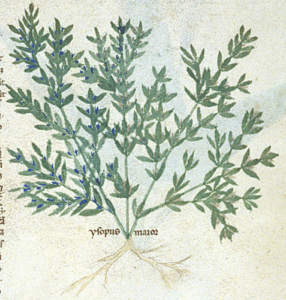
Mediterranean Hyssop— Hyssopus officinalis is a pungent-leafed bush with blue flowers that is used medicinally, mostly in teas as an expectorant, antiseptic and for cough relief. But the qualities that the bible ascribes to Hyssop: it grows in walls, can hold moisture, has a long, stiff stalk, has a purgative effect, appear in no one plant. Other suggested candidates for biblical Hyssop include caper, Syrian oregano, and za’atar a word which Palestinians use for a family of aromatic herbs (and the ubiquitous condiment made from their dried leaves). Continue reading “Wild Lectionary: Purge Me with Hyssop”

Let the Children Lead Us

index#enough
By Leah Grady Sayvetz, Ithaca, NY. 3/14/18

This morning, March 14, I woke late and as I looked at the numbers 9:24 on the clock I remembered that today is National School Walkout Day. At 10am, the students from the middle/high school across the street from my house would be leaving school, walking out of class as part of a nationally coordinated protest for an end to gun violence. I wanted to be with them. Thirty-five minutes later, as I stepped out of my front door, my breath caught in my chest: hundreds of children clad in coats and boots filed silently past. They filled the snowy sidewalk as far as I could see, many carrying signs drawn with colored markers on pieces of large white paper. My first instinct was to cheer, to encourage the students, to let these youngsters know how proud of them I am. But each small face passed me by in solemnity; a quiet, focused march through the falling snow. Their spirit drew me, then, into reverence. I fell in step with the crowd, following in silence, letting the children lead. The beanie-clad heads before and behind me rose no higher than my chest. I felt a deep sense of humility to be following the lead of such little ones. Today the children are showing us where we need to be.

Continue reading “Let the Children Lead Us”

Digging In

EucharistLast month, Bartimaeus Cooperative Ministries hosted its annual Kinsler Institute in Southern California’s Ventura River Watershed (right). This year’s theme was “Digging In: Heels, Histories, Hearts,” an exploration of the roots of individual and collective stories and an examination of what it takes to recover from addictions and renew spirits for long term healing and movement building (all photos from Clancy Dunigan).

The reviews are sprouting forth, testifying to a mind-blowing and heart-expanding week.

From Grace Aheron, a poet, pastor and gardener living on 8 acres of land in an intentional community in the vicarage of a rural Episcopal Church in Charlottesville, Virginia.  Continue reading “Digging In”

The Ties that Bind: The Integrity of Penitence, on the 50th Anniversary of the Massacre at My Lai

my-lai-1024x683By Ken Sehested

Concealment makes the soul a swamp. Confession is how you drain it.

—Charles M. Blow

Except in a few traditional religious settings, penitence is a relatively unknown word. While its more common synonyms—confession, apology, contrition, and repentance—are standard parts of many church liturgies, the images they convey have generally fallen out of favor. There are good reasons why this is so. The primary definition of penance is “voluntary self-punishment inflicted as an outward expression of repentance for having done wrong.” A web search for penance reveals more than a few pictures of people whipping themselves. Continue reading “The Ties that Bind: The Integrity of Penitence, on the 50th Anniversary of the Massacre at My Lai”

Dos ancianos locos una para otra

OLYMPUS DIGITAL CAMERAAuthor asked to remain Anonymous.The author and her novio have been in relationship for over six years. When people ask why they don’t get married so he can get a green card, her answer is, “It only works that way in the movies.

So we’re walking through slush on a February Sunday

Going up to the drugstore so you can get some medicine for your friend Continue reading “Dos ancianos locos una para otra”

Fallen Upon Me To Do So

WellsRe-posted from the brilliant New York Times series of fifteen obituaries written for women that were overlooked over the decades.  This piece on Ida B. Wells was written by Caitlin Dickerson, a national immigration reporter who still uses the reporting techniques that were pioneered by Wells.

It was not all that unusual when, in 1892, a mob dragged Thomas Moss out of a Memphis jail in his pajamas and shot him to death over a feud that began with a game of marbles. But his lynching changed history because of its effect on one of the nation’s most influential journalists, who was also the godmother of his first child: Ida B. Wells.

“It is with no pleasure that I have dipped my hands in the corruption here exposed,” Wells wrote in 1892 in the introduction to “Southern Horrors,” one of her seminal works about lynching, “Somebody must show that the Afro-American race is more sinned against than sinning, and it seems to have fallen upon me to do so.” Continue reading “Fallen Upon Me To Do So”

The Joke Is All We Have Left

Free the WaterBy Jim Perkinson (right), an excerpt from “Jesters, tricksters, taggers and haints: Hipping the church to the Afro-hop, pop-‘n-lock mock-up currently rocking apocalyptic Detroit,” a November 2017 article in Teologiese Studies/Theological Studies (HTS):

In many places today, the joke is all we have left to pry open the prison gate – a jest and a belly laugh rooted in the deep past and the abandoned margins. But its truth remains absolute, despite corporate pretention otherwise. We all finally will come apart at the seams and decay into streams of composting liquid and molecules – even US drones and bankers’ computer screens, blinking with algorithms. The only question is when and for what.

In recognition of such an eventuality of equality, may we choose well where to expend our breath and exercise our push back and dreaming otherwise. May we become soldiers of the unrepentant joke, militant laughers learning our hope from the least. May we keep our jest visceral and its spear-point like a razor, ready for whatever crack of freedom the Mystery of Wild Hilarity that created this planet may open. May we do so, even if that possibility is ephemeral and uphill as a spray-painted st and a stenciled demand on a tower and the political struggle to ‘free the ow’ that follows! Indeed, may we finally be strong like water and as insurgent as a tower growing from concrete!