Any anabaptist theology that isn’t re-baptized through liberation theology reinforces oppression.
Anabaptism, on its own, only makes sense as a religion of the oppressed. Just like the Gospels are unintelligible to the middle and owner classes apart from the experiences of the oppressed.
In other words: Any calls for pacifism, meekness, and simplicity that come insistently from the powerful are attempts to keep the oppressed docile and poor.
Nonviolence must be a tool of the oppressed in their struggle, with the aid and support of repentant allies. Otherwise, in the hands of the powerful it becomes an ideology of oppression.
To be clear: I’m a pacifist. But pacifism and nonviolence must be in service to liberation or they become a force for oppression. If you’re a pacifist that isn’t working alongside (and following the lead of) those who struggle for liberation, then your nonviolence is just the velvet pouch sheathing the hammer of oppression
until Spring dripped from the fingers of every tree.
She leapt out hungry into the fields
and heard the hymns of sparrows in flight
and children in chase
and somewhere the bats upside down.
For a moment she thought she saw
the taxman barefoot and eating cherry popsicles.
The sun pressed itself upon her,
armpits swelling with sweat,
and the grass itched
and the buds gained confidence
and the sky shouted “infinity!” at everything. Continue reading “Psalm 150: With What You Have”→
Re-posting this Lectionary reflection from 3 years ago on radicaldiscipleship.net written by Ched Myers.
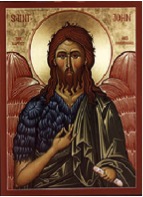
John the Baptist appeared in the wilderness, proclaiming a baptism of repentance for the forgiveness of sins. 5And people from the whole Judean countryside and all the people of Jerusalem were going out to him, and were baptized by him in the river Jordan, confessing their sins. Mark 1:4-5
Photo by Victoria Loorz, taken during the Thomas Fire near her home
December 10, 2017
Advent 2B
Isaiah 40:3
A voice cries out: “In the wilderness, prepare the way of the LORD…
2Peter 3:10-13
…and then the heavens will pass away with a loud noise, and the elements will be dissolved with fire, and the earth and everything that is done on it will be disclosed…waiting for the coming of the day of God, because of which the heavens will be set ablaze and dissolved, and the elements will melt with fire? … But, in accordance with his promise, we wait for new heavens and a new earth, where righteousness is at home.Continue reading “Wild Lectionary: The Voice Crying, “Out in the Wilderness, Prepare the Way””→
Among the many manifestations of his project to “make America great again,” President Trump has frequently and pompously declared that “We will be able to say ‘Merry Christmas’ again!” When he spoke at last fall’s Values Voters Summit, this vow garnered the most boisterous applause. For many conservative Christians, Trump is the conquering hero who waged battle against secularism in the annual “war on Christmas” – and finally won the war. Like many Trumpisms, this would be simply pathetic were it not for the fact that it is part of a treacherous national vision. Continue reading “The Politics of Christmas in the Age of Trump”→
I’ve started an altar of stones beside my desk. With each death, birth, or marriage that passes, I write the name upon the rock and let the rock hold the memory and the prayer.
This fall, our family went to Block Island for the first time in many years. We used to stay in Dan Berrigan’s little cottage beside the ocean every summer. Stepping back on that ferry with my kids felt like introducing them to a piece of my heart- a piece nourished by beauty, where my mom’s hair blew fiercely in the wind, where my imagination learned to soar climbing on rocks and pulling clay from the cliff. Continue reading “Learning from Laughter and the Trees: What do these stones mean?”→
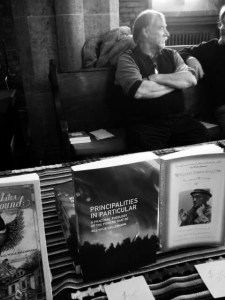
Rev. Bill Wylie-Kellermann and his recent releases
Because Christmas has become so central to the American economy and American consumption is so central to global capitalism, this festival of ‘Holy Days’ has become a central expression and embodiment of American imperial domination, an imperial religion. Richard Horsley, Religion and Empire (2003)
Truly, this Season signals a major tension for North American radical disciples. We resist and reclaim. Whether it is our love language our not, we give. But some forms of giving are far more redemptive than others.
It is in this Spirit that we offer gift ideas from more out-of-the-way, up-and-coming, long-suffering and open-hearted thinkers and artists. Links to their work are provided here and will eventually be added to our now-pemanent “STORE” tab up top. We hope this list is an Advent-instigator: please add your recommendations to the comments below or email us so we can add them to the store!!!
A beautiful 2016 publication from Philly-based pastor-parent-activist about using the difficult and challenging parts of life as a way to deepen your spiritual path and become more authentic.
Truly, it is a time of exile for those of us on the left. Let’s set the clock back to the early Bush years with this re-examination of the Exodus from a Vancouver-based pastor-activist.
From the foot of Tiger Mountain in Washington State comes a vital perspective on early church history (aka, “the roots of why Christians want to make America great again.”).
And lest we think gift-giving is only for adults, the executive director of the Center for Prophetic Imagination in Minneapolis tells this St. Francis-inspired tale for our young ones.
This year, Charlottesville exposed us all to some of the most vicious forms of American white supremacy. But far less known, C’Ville is home to some radical experimentation, including sweet sounds from a young singer-songwriter. Perfect for people defined by death-and-resurrection.
And this! From a Minneapolis-based artist and PhD candidate releasing her first album, a powerfully rich blend bursting with beauty, grief, creativity and prophetic wisdom.
Probably the most unique musical contribution of the movement is from Philly-based Holy Fool Arts, a voice of and for the wilderness that combines poetry, theatrical masks, ancient rhythms, traditional and modern dance forms, with a heavy side of the blues.
Lastly, a recommendation from author-activist Wes Howard-Brook fair-trade, organic chocolate from Mama Ganache. From WHB:
They are THE BEST! As we all know, corporate chocolate production is both a human and environmental horror show. The folks at MG use their profits to support farmers in West Africa in many ways, as explained on their website. I’ve been ordering from them for years!
It is the time of gathering in,
pulling lightly the earth,
turning under,
of looking out at dusk
from the door lintel
at the long road,
beckoning or wearying,
and offering gratitude for
every home space;
and every setting forth.
Oh Spirit Holy,
wrap us in silence this one
fragile moment of prayer,
and set us into our day, attentive.
Burn in us, and make us new-born,
newly-woke, resting in you.
Somewhere in this day before us
lies the pearl of great price;
the single, gleaming coin.
Somewhere in this day lies also
the wounded one by the road;
and the second touch,
ready to heal us again.
We draw to you now,
Beseeching.
Our hearts are not proud.
Our judging hands are spread open,
knowing that of which we are capable.
Draw us to our deeps,
O Spirit Who Is, and Who Is Coming,
And let our deepest yearnings
Be joined with yours.
Starting today, we will be posting prayers on Mondays on radicaldiscipleship.net. Please send your prayers or recommendations to lydiaiwk@gmail.com.



 A social media re-post from Mark Van Steenwyk, executive director of

 By Will O’Brien