What the Tears Falling to the Ground Might Yet Fertilize

BayoBy Tommy Airey

Earlier this month, I started Bayo Akomolafe’s recently-released These Wilds Beyond Our Fences seeking spiritual solidarity.  Like most, my soul has been squeezed by concentric circles of cacophony. Climate catastrophe rages (globally) while a major political party (led almost exclusively by white men) denies it all and “successfully” utilizes weapons of voter suppression, legalized bribery, gerrymandering and Russian collusion to take full reigns of power (nationally and state-wide). Meanwhile, water shutoffs and home foreclosures pelt a city cloaked by leaders calling it a “comeback” (locally).

These rings of austerity and white supremacy have formed the ice rink of an epic institutional collapse. Families, faith communities, foundations, the “free” market and finance—these fail to offer compelling solutions for any of it. Instead, they drive the Zamboni. These are maddening times and no one, it seems, is really sure what to do about it.  Confusion reigns. Continue reading “What the Tears Falling to the Ground Might Yet Fertilize”
Love Told You

ValFrom Valerie Burris (aka, “Queen Abrihet”), daily dropping light, love, good deeds and prophetic wisdom all over her native Detroit:
Your pastor told you to stand with a pussy grabber and you did, now he is your president. Your preacher told you to stand with the crook and you did, now he is your mayor. Your preacher told you to stand with a business man, you did, now he is your governor. Love told you to come out of those synagogues of Satan, but for some reason, you can’t or won’t listen to love. We were told to protect our minds, that if we didn’t someone would come along and convince us that love is hate and we would believe it. We are in this day. A paradigm shift is happening. Sadly, too many sistas are being left behind.

The Sheep and the Goats

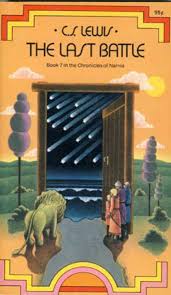
images“The creatures came rushing on, their eyes brighter and brighter as they drew nearer and nearer to the standing Stars. But as they came right up to Aslan one or other of two things happened to each of them. They all looked straight in his face; I don’t think they had any choice about that. And when some looked, the expression of their faces changed terribly- it was fear and hatred… And all the creatures who looked at Aslan in that way swerved to their right, his left, and disappeared into his huge black shadow which (as you have heard) streamed away to the left of the doorway. The children never saw them again. I don’t know what became of them. But the others looked in the face of Aslan and loved him, though some of them were very frightened at the same time. And all these came in at the Door, in on Aslan’s right.”

  • The Last Battle, C.S. Lewis

Advent Books still available!

IMG_2472Thanks to all who have ordered Advent books over the last few weeks. We have been overwhelmed by how many folks have reached out for books. We are grateful to be heading into an Advent season journeying with so many of you.

We have extended out timeline and are continuing to take orders and mail books and cards. There are a couple more days to order if you want to receive your book by Advent.

You can visit the store here!

Art and Politics of Indexing

index.jpgBy Bill Wylie-Kellermann, re-posted from his facebook.

A long aside. I’ve been indexing a book on the principalities and powers which will appear in October from Fortress Press. “Principalities” is a new testament name for spiritual structures of power (a notion important to movements various) – and I’ve actually been writing about them in the concrete for four decades or so. The index has been kicking my butt and taken a chunk out of my life at a very hectic time of transition. But in point of fact, and unlikely as it may seem, I love indexing. My first, twenty-five years ago, involved a highlighter, note cards and a shoe box. The process is still layered, but electronic search functions come into play now (toward the end). I always do them myself because there’s often a politics involved. A hired indexer is unlikely to enter, “Immigration and Customs Enforcement (ICE). See also Ku Klux Klan.” Plus I love the ironies and accidental poems which surface. In my recent Detroit book (if you bought one and it doesn’t have an index, email or inbox me), we get: “Hicks, Charity; Hitler, Adolph: Homrich Wrecking; House, Gloria.” Or how about: “Climate change; Columbus, Christopher; Commodity fetishism; Conservancy; Corktown”? I smile at such conjoinings. In this current one, an entry can have 20 subheads that amount to a theological or biographical snapshot. Indexes are for the sake of the reader’s search, but can be a sly pedagogy tagging along. I also surmise that what’s turned so long and exhausting on this current one is to a certain extent personal. This collection does cover a broad range of topics (think: barbed wire, drugs, family, commercial sports, nuclear weapons, emergency management…) and yet because it’s a series of articles there’s a good bit of repetition on theological framing. Page mark every reference to demonic, war, or hope? Decisions at every click. But the real thing is that this is an integrative process in my own head – making connections and cross-connections in my life and world over four decades of work, right at a point where I’m trying to make sense of my history and discern what’s next. Sifting and sorting what’s incidental from what is absolutely crucial.

A Litany of Thanksgiving

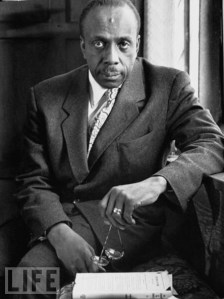
Howard ThurmanBy Howard Thurman, forwarded by Marian Wright Edelman via Ched Myers (that’s how the radical network flows)

Today, I make my Sacrament of Thanksgiving.

I begin with the simple things of my days:

Fresh air to breathe,
Cool water to drink,
The taste of food,
The protection of houses and clothes,
The comforts of home.

For all these I make an act of Thanksgiving this day! Continue reading “A Litany of Thanksgiving”

Wild Lectionary: Soothe the Earth and Heal the Waters

at_Nevada_National_Security_Site_2011
Western Shoshone and North American Catholic Workers at the Nevada National Security Site.

Feast of Christ the King

Ezekiel 34.11-12, 15-17
1 Corinthians 15:20-26, 28
Matthew 25:31-46

By Victoria Marie

Today is the feast of Christ the King or Reign of Christ Sunday. The mental images that the words “king” and “reign” bring to mind are based on our knowledge of the actions of kings and political leaders.  Today’s first reading from the prophet Ezekiel gives us God’s view of leadership. The image of the shepherd is commonly used to portray monarchs in biblical literature. So, if we think of Christ the King as Christ the Good Shepherd, we have a truer sense of what this day is about. Continue reading “Wild Lectionary: Soothe the Earth and Heal the Waters”

There Is No End to Connectedness

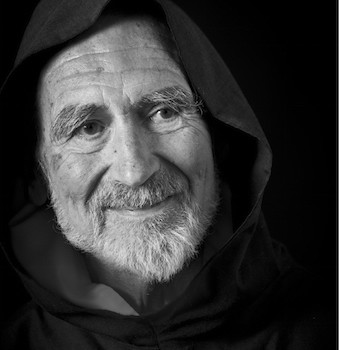
Steindl RastFrom Benedictine monk David Steindl-Rast in an Onbeing interview with Krista Tippett (January 2016):
I remember, the grace that Buddhists pray before a meal starts with the words, “Innumerable beings brought us this food. We should know how it comes to us.” And when you put that into practice and look at what’s there at your table, on your plate, there is no end to connectedness. In the end, for instance, most people don’t think of it, but in the end, we always eat earth. We eat earth. Not in an abstract way, in a very concrete way. This humus is what we eat, or crystals when we eat salt, it’s pretty obvious that comes out of the earth. That’s earth, directly.

When we eat vegetables, well, the vegetables were nourished by all the nutrients in the earth, and then now we eat them, or the fruits of these plants. If you eat meat or fish, then they were nourished by vegetables, and they were nourished by the earth. Always comes back to earth. But that is only one aspect. Most of it was grown, so people had to work on sowing it, and harvesting it, packaging it, transporting it. There you have already a couple of thousand people whom you will never see, never know by name, never meet, and yet without them, there wouldn’t be anything on your plate. There’s this wonderful cartoon where the family sits at Thanksgiving around the table and says, “Thank you, Jesus.” And then in a cloud comes a farm worker, whose name happens to be Jesus, like the Mexican farm workers.

Making a Difference

joyceBy Joyce Hollyday

In October 1983, two dozen peace activists gathered in Philadelphia as war raged in Nicaragua. U.S.-backed forces known as contras were carrying out a campaign of terror and mayhem against the civilian population. A woman from North Carolina, who had led a church delegation to the embattled country three months before, reported that while she and her colleagues were there the mortar attacks, kidnappings, and massacres had temporarily ceased. What to do? Continue reading “Making a Difference”

When Networking Goes Wrong: The Trouble With “Come Meet a Black Person”

jyarlandBy Jyarland Daniels, CEO and Founder of Harriet Speaks

I wish we lived in a world where I didn’t have to write this blog post. But, alas, when bad ideas arise, some people need an explanation for why the idea is bad and we should just throw the entire thing away. So, here goes… For 400 years – before and since Emancipation — among Black people, there have been differing ideas on how to get free; on how to escape the system of racism that exists as a web, touching all aspects of our existence from cradle to grave. There have been those who have advocated patience, hoping that the oppressors would change their ways. There have been those like Harriet Tubman who, while willing to work with white people who supported her cause, did not seek to change the minds of her captors. Tubman, and others like her, simply took their freedom and invited other enslaved persons who understood that their humanity was neither something to be given by another nor had to be earned, to join their efforts. Today, too, those differences remain. The latest example of how to get free can be found in a networking event just outside of Atlanta, Georgia, created by a Black person, inviting white people to, “Come Meet a Black Person.” Continue reading “When Networking Goes Wrong: The Trouble With “Come Meet a Black Person””