Eucharistic conventions: Why we practice these (somewhat) odd manners at the Lord’s Table

SehestedBy Ken Sehestedthe author/editor of prayerandpolitiks,org

When three of us began daydreaming about a starting a new congregation, during long hikes in the Blue Ridge Mountains in the first year of the new millennium, one of the things we immediately imagined was worship centered around communion, including placing the table in the center of our seating. Every Sunday—which is unusual in Protestant bodies. None of us were raised that way. This tangible ritual act—of re-membering in the midst of a dismembered world—is poignantly expressive of our theological vision. Continue reading “Eucharistic conventions: Why we practice these (somewhat) odd manners at the Lord’s Table”

Only a Love Ethic

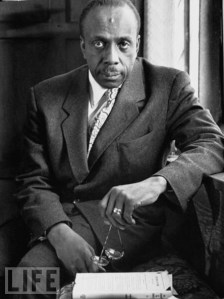
WinkAn excerpt from the late theologian Walter Wink’s “Homosexuality and the Bible,” written more than two decades ago:

The crux of the matter, it seems to me, is simply that the Bible has no sexual ethic. There is no Biblical sex ethic. Instead, it exhibits a variety of sexual mores, some of which changed over the thousand year span of biblical history. Mores are unreflective customs accepted by a given community. Many of the practices that the Bible prohibits, we allow, and many that it allows, we prohibit. The Bible knows only a love ethic, which is constantly being brought to bear on whatever sexual mores are dominant in any given country, or culture, or period.
Continue reading “Only a Love Ethic”

When it Rains

rainBy Jordan Leahy

When I was a kid, I was terrified of thunderstorms. Celestial rumblings and quaking ground elicited great anxiety until much later in life than I care to admit. When I saw the clouds approaching, I’d prepare a makeshift nest in the closest beneath the staircase. I’d take books or a card game and hide out until the storm passed.

In adulthood, I find such storms soothing, a relief from summer heat and time to be close with my family. Storms create a time for various activities of stillness and rest. When the clouds come into view, anticipation builds at the coming refreshment. Continue reading “When it Rains”

Wild Lectionary: Parting the Water or Crossing Over, The Trouble Remains

IMG_2162.JPGBy Edward Sloane
Proper 26 (31)
Joshua 3: 7-17

The movement of crossing-over offers a theologically rich metaphor, but one that is not without troubles. The Israelites crossed-over the Red Sea and the Jordan River to establish a Promised Land; Jesus crossed over from death in the resurrection; the colonization of indigenous communities and the exploitation of more-than-human communities are the result of crossing oceans and bioregions; enslaved black bodies in the United States travelled the Underground Railroad to cross over into free territories; migrants cross borders seeking refuge from political, economic, and climate instability. Crossing over suggests a happy ending—we have arrived. Leaving behind a troubling, or unsatisfying, past, we are on our way to something better, perhaps even salvation. Depending on who tells the story and how, it is easy to read such crossings in multiple ways.   Continue reading “Wild Lectionary: Parting the Water or Crossing Over, The Trouble Remains”

50/500: A Season of Protest and Remembering

PhilBy Ched Myers, originally posted yesterday on ChedMyers.org

RightFr. Phil Berrigan pouring blood on 1-A draft files at the Customs House, Baltimore, MD, October 27, 1967.

Today, October 31st, we prepare to embrace that great feast of remembering, the “Triduum of Saints”: All Hallow’s Eve, Saints and All Souls Day, or Dia de los Muertos (learn more about the Triduum by reading this blog or linking to this free 2012 BCM webinar).

As I have gotten older this season of the Saints has become my favorite time of year.   This morning Elaine and I sat and prayed at our table, pictures of parents and other missed loved ones spread out.  We both cried telling stories.  Tears always help. Continue reading “50/500: A Season of Protest and Remembering”

My spouse was one of the clergy standing before the white nationalists in Charlottesville

PASTORS+By Liza Neal

My spouse was one of the clergy standing in a line before the white nationalists in Charlottesville.  We both knew God is calling us to stand up to white supremacy.  We understood the risk.  Only one of us was going because we didn’t want our child to lose both parents.

That weekend I thought a lot about Peter’s wife.  She is barely mentioned.  In the synoptic gospels Peter’s mother-in-law has a fever, Jesus heals her, and she offers hospitality.  You can’t have a mother-in-law without a wife… Continue reading “My spouse was one of the clergy standing before the white nationalists in Charlottesville”

All of Us is Still Tired

ImaniHighlights from Imani Perry’s response in a forum entitled “The Logic of Misogyny.” Perry is currently the Hughes-Rogers Professor of African American Studies at Princeton University. Her comments were originally posted on the Boston Review website on July 11, 2016:

…dismantling patriarchy seems a virtually impossible task. Its current form is rooted in the Age of Exploration and the Enlightenment and supported the conquests, geopolitics, and philosophies of those eras. It was formative to the Western legal concepts of both personhood and property, as well as to the rise of the sovereign European state, the Atlantic slave trade, the practice of settler-colonialism, the mass murder of black and brown peoples, and the exploitation of those denied legal and political recognition. The patriarch—the conceptual ideal man and citizen—was and is defined and protected by his power over intimate associations, and that power remains supported by politics, law, capital, militarism, and police power… Continue reading “All of Us is Still Tired”

Register NOW: SOA Watch Border Encuentro

Encuentro

Click HERE to Register.

School of the Americas Watch is a nonviolent grassroots movement working to close the SOA / WHINSEC and similar centers that train state actors such as military, law enforcement and border patrol. We strive to expose, denounce, and end US militarization, oppressive US policies and other forms of state violence in the Americas.  We act in solidarity with organizations and movements working for justice and peace throughout the Americas.

Our demands:

  • An end to US economic, military and political intervention in Latin America
  • Demilitarization and divestment of the borders
  • An end to the racist systems of oppression that criminalize and kill migrants, refugees and communities of color
  • Respect, dignity, justice and the right to self-determination of communities
  • An end to Plan Mérida and the Alliance for Prosperity