 By
By Kill the crows
encircling your head
save for the one with the blackened mouth
–he will guide your soul later on.
Pluck the feathers;
swallow half,
quill and all,
and with the rest create a bed. Continue reading “How to Grieve”

Kill the crows
encircling your head
save for the one with the blackened mouth
–he will guide your soul later on.
Pluck the feathers;
swallow half,
quill and all,
and with the rest create a bed. Continue reading “How to Grieve”

Proper 28(33) A
Pentecost + 24
Matthew 25:14-30
By Ragan Sutterfield
I have been spending my mornings in the woods lately, a short hike before I begin to work on the tasks of the day. As fall finally arrives here in Arkansas the juncos have returned, twittering as they flash the white of their tails, and the long metallic notes of white-throated sparrows echo in the understory. Each step along the trails comes with a crunch, not only of the newly fallen leaves, but also of the acorns, cracking orange against the gray shale of the hillsides. Continue reading “Wild Lectionary: Look to the Acorns”
 By Tommy Airey
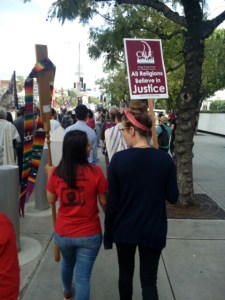
Like every good Evangelical, my adolescent faith was about giving all glory to the Lord. I sang praise songs to a “high and lifted up” Jesus and always concluded my prayers “in Jesus’ name” (I signed off my emails “Fool For Christ,” but that’s a story for another time). I was taught to utilize “apologetics” to defend the faith and prove that Jesus was, in fact, Divine. I revered C.S. Lewis whose Mere Christianity made a water-tight case for my beliefs. Lewis left readers three choices for who Jesus really was: a lunatic, a liar or the Lord Himself:
Either this man was, and is, the Son of God, or else a madman or something worse. You can shut him up for a fool, you can spit at him and kill him as a demon or you can fall at his feet and call him Lord and God, but let us not come with any patronizing nonsense about his being a great human teacher.
Lewis claimed that, when it came to the people who actually met Jesus, they responded in three ways: hatred, terror or adoration. There was no middle ground. Continue reading “It’s Time to Take Jesus Off the Pedestal”
 By Rose Marie Berger (23 September 2017)
A poem on the feast day of St. Adamnan,
ninth abbot of Iona
Today, planted scarpered kale
liberated by Grace. Winter comes
to risen beds. Leafy tough, stolen,
abundant delight! Rogation prayers
go in with roots. Ilhui’s garden blessing
Lingers below purple basil, bible leaf,
Mary’s milkweed (for 3 monarchs,
should they arrive). Ilhuicamina
Long-limbed, beautiful, copal skin,
trusting palms
soles to seal the deal. These child-plantings
uprooted, transported, here.
Now let soil hold you. Continue reading “Fall Planting”
 From author and legal analyst Paul Butler in a conversation with Michelle Alexander about his recent release Chokehold: Policing Black Men:
My Brother’s Keeper is a program for African-American boys and men, boys of color and men, Latinos and Native-American men as well. And, at this [Obama] White House ceremony, there were people you’d expect to be there, like, the major leaders of the civil rights organizations. And, some people who you might not expect, like, Mayor Bloomberg, Bill O’Reilly, a lot of people.
Continue reading “The Problem is the System Working the Way it is Supposed to”
 Photo by Clancy Dunigan, a founding member of the Reagan-era Bartimaeus Community in Berkeley, CA. Clancy lives on Whidbey Island in Washington state with his partner Marcia and hosts “Clancy’s Bar & Grill,” an award-winning blues radio show, every Thursday night on 90.7 KSER in Seattle. Dunigan recently explained his shot of the late Daniel Berrigan:
For me, a rare one, as he looked into the camera. Usually I found Dan looking away or with eyes cast down. The luck of the Irish we will call it. We had just finished listening to Dan’s take on Isaiah in a tent outside the Nev. Test Site, at a Pacific Life Community gig. Dan suggested we all take a walk into the desert, find a place to sit or stand and consider the Scripture, pray, and listen. This photo was taken after that, as folk returned to the tent.
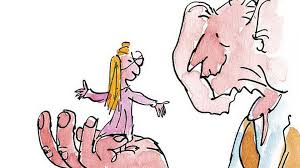 “Giants isn’t eating each other either, the BFG said. Nor is giants killing each other. Giants is not very lovely, but they is not killing each other. Nor is crockadowndillies killing other crockadowndillies. Nor is pussy-cats killing pussy-cats.
‘They kill mice,’ Sophie said.
‘Ah, but they is not killing their own kind,’ the BFG said. ‘Human beans is the only animals that is killing their own kind.’ Continue reading “I is not understanding human beans”

By Lydia Wylie-Kellermann
The rain is pouring down with periodic rumbles of thunder. It is cold and the sun has set, but we can tell that there is a need in Isaac’s heart to make this trek. We put on hats and shoes and give into the rain as we walk down the street and into the backyard of my dad’s house.
It’s too dark to see the loosened soil, but we bend down low and Isaac says, “This is where we buried Scatters.” Cedar, who is almost two, bends down too and after a minute looks up at Erinn and says “Meow” and points to the dirt. Erinn says, “Is this where Scatters is? Did he die?” Cedar responds, “Meow die.” Continue reading “Learning from Laughter and the Trees: Under the Apple Tree Again”
 Purchase Now!
Sales end November 14.
Lucy and Daniel Wylie-Eggert designed the cover for our Advent book and are also screen printing Christmas cards for us. They have the image of the owl over the moon and it reads below “to give light to those who sit in darkness and the shadow of death.” Continue reading “See our Christmas cards being made!”
 Proper 27(32)A
Pentecost + 23
I Thessalonians 4:13-18
Matthew 25: 1-13
Keep awake therefore, for you do not know the day or the hour. (Mt 25:13)
…so that you may not grieve as others do who have no hope. (1 Th 4:13)
By Andrew Hudson
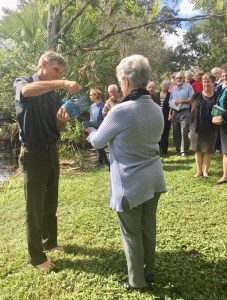
I’m an empty-nester, twice over. I sent my son off to college a couple years ago, and I’m still not through adjusting. And just recently, I had a similar experience, sending off a good, small Mennonite congregation to a new location at the end of my being their interim pastor. Continue reading “Wild Lectionary: Letting it flow down the creek”

