On Revolution and Equilibrium

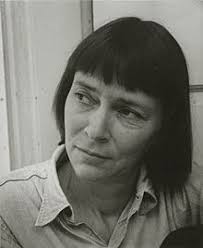
indexFeature by Barbara Deming, originally published in Liberation, February 1968

Do you want to remain pure? Is that it?” a black man asked me, during an argument about nonviolence. It is not possible to act at all and to remain pure; and that is not what I want, when I commit myself to the nonviolent discipline. I stand with all who say of present conditions that they do not allow men and women to be fully human and so they must be changed – all who not only say this but are ready to act.

When one is confronted with what Russell Johnson calls accurately “The violence of the status quo” – conditions which are damaging, even murderous, to very many who must live within them – it is degrading for all to allow such conditions to persist. And if the individuals who can find the courage to bring about change see no way in which it can be done without employing violence on their part – a very much lesser violence, they feel, than the violence to which they will put an end – I do not feel that I can judge them. Continue reading “On Revolution and Equilibrium”
Wild Lectionary: “Fire in the Earth: Burning but Flourishing”

imagesThirteenth Sunday after Pentecost
Proper 17 (22)

Exodus 3:1-15

By Rev. Matthew Syrdal

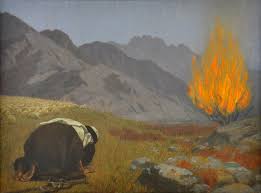
“There the angel of the Lord appeared to him in flames of fire from within a bush. Moses saw that though the bush was on fire it was not consumed… “Do not come any closer,” God said. “Take off your shoes, for the place you are standing is holy ground.”

And we know, when Moses was told,
in the way he was told,
“Take off your shoes!” He grew pale from that simple

reminder of fire in the dusty earth.
He never recovered
his complicated way of loving again

and was free to love in the same way
he felt the fire licking at his heels loved him.
As if the lion earth could roar
and take him in one movement…
-all poetry excerpts from David Whyte, Fire in the Earth

Continue reading “Wild Lectionary: “Fire in the Earth: Burning but Flourishing””

“Unity” That Is Predicated Upon My Exclusion

sarahBy Sarah Matsui, a re-post from The Mennonite

People pray to each other. The way I say “you” to someone else, / respectfully, intimately, desperately. The way someone says / “you” to me, hopefully, expectantly, intensely…
Huub Oosterhuis

Zach (not his real name) and I are still friends.

When I was living and working as a teacher in Philly, Zach remembered the challenges he had experienced during his one year teaching.

Without my asking, he cooked delicious dinners and invited me to a break from my usual peanut butter and jelly sandwiches and instant ramen. In retrospect, his were among the only nutritionally sound meals I ate during my first year of teaching. He also made a point to ask me how I was doing and how my students were doing, and he prayed for us. Continue reading ““Unity” That Is Predicated Upon My Exclusion”

Sermon: Power of Names

10576925_10203724502133713_5217887874462831456_n
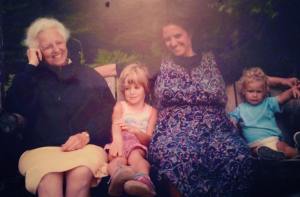
My Grandma Bea, me, my mom, and my sister Lucy

Preached by Lydia Wylie-Kellermann at the Day House Catholic Worker
August 27, 2017

Exodus 1:8-2:10
Matthew 16:13-20

As I read the opening piece of the text from Exodus, it feels like I am reading a script from the white men who marched on Charlottesville two weeks ago.

It begins with the Pharaoh naming his fear that the Israelites are becoming too numerous and powerful. He is scared they will out-number and over-take him. He orders that they be forced into labor and when that doesn’t work, he orders murder.

It echoes of the treacherous low-wage labor forced on undocumented folks living in constant fear.

It echoes of a prison industrial complex holding captive more black men today than were enslaved in the south. Continue reading “Sermon: Power of Names”

To Get There

Mike Smith
Photo: Michael Smith 

By Ric Hudgens

There was that moment
when all of us
wanted to give up
walk away
leave
without a forwarding number
until we remembered
the place we would run to
was the place
we’ve been working towards
that we only see
when all of us
dream together
so we turned around
climbing back down
into the mud
returning to work
building this bridge
that one day
some one
will be able to cross
to get there.

Naming

index“I think your mythology would call them fallen angels. War and hate are their business, and one of their chief weapons is un-Naming – making people not know who they are. If someone knows who he is, really knows, then he doesn’t need to hate. That’s why we still need Namers, because there are places throughout the universe like your planet Earth. When everyone is really and truly Named, then the Echthroi will be vanquished.”

― Madeleine L’Engle, A Wind in the Door

Salal + Cedar

IMG_3871A photo update from Laurel Dykstra, the priest of Salal + Cedar, a community of support and action located on Coast Salish territory to help Christians live out their vocation for environmental justice.

Unless someone like you cares a whole awful lot, Nothing is going to get better. It’s not.
The Lorax

On Friday August 18 youth and young adults from Sacred Earth Camp on Coast Salish Territory brought our prayers for the earth to the Kinder Morgan Westridge Tank Facility at the end of the Transmountain pipeline expansion project. We sang a water defenders song from Standing Rock,  read Dr. Seuss’ The Lorax, and attached an image of this the one who speaks for the trees to the front gates. Continue reading “Salal + Cedar”

Charlottesville: A Reading List

AlexanderA great list of resources from The New York Public Library’s Gwen Glazer, Librarian, Readers Services (see original post here): 

Events of the past week have left many of us struggling for understanding. In such times, it can help to turn to books and authors to help us see the world through a broader lens.

The Library always seeks to provide information, so we’ve assembled a list of books—on bigotry, white supremacy, racism, anti-Semitism, social justice, freedom of speech, and more—that can lend context to the events in Charlottesville and beyond.

Racism and Anti-Semitism in America

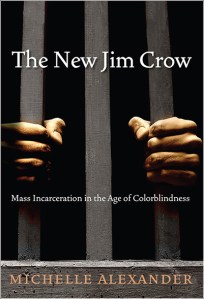
The New Jim Crow: Mass Incarceration in the Age of Colorblindness by Michelle Alexander

Stamped from the Beginning: The Definitive History of Racist Ideas in America by Ibram X. Kendi

Jackson, 1964: And Other Dispatches from Fifty Years of Reporting on Race in America by Calvin Trillin

The Blood of Emmett Till by Timothy Tyson

Between the World and Me by Ta-Nehisi Coates

Hitler’s American Model: The United States and the Making of Nazi Race Law by James Q. Whitman

The Lynching: The Epic Courtroom Battle That Brought Down the Klan by Laurence Leamer

The Nazis Next Door: How America Became a Safe Haven for Hitler’s Men by Eric Lichtblau Continue reading “Charlottesville: A Reading List”

After the Rallies, the Real Work

APTOPIX_Confederate_Monument_Protest_68213
Philadelphia March. Photo from the News and Observer

By Will O’Brien

The Wednesday following the violence in Charlottesville, I joined with thousands of people in Philadelphia, mostly persons of faith, to march in the streets and rally.  The energy was high, the anger was rife, and the sense of energy to change palpable.  As distressing as the events were that precipitated this march, it felt good to be there.

But it also stirred some long-standing concerns and questions of mine.  This was partly the result of recently picking up off the shelf my old copy of Will D. Campbell’s memoir Brother to a Dragonfly, a book that had a powerful impact on me when I first read it over thirty years ago.  Campbell was a Southern Baptist preacher from rural Tennessee who became an important leader in the civil rights movement.  As a white southern man, he was part of the Southern Christian Leadership Conference.  His radical understanding of the gospel and his own discernment of the racial crisis in his home region led him to the conviction that “Jesus died for the bigots as well,” and he took to a very controversial ministry among Ku Klux Klan members.  Ornery and wickedly funny, Campbell often cut through the pretensions and hypocrisies of many white liberal activists. Continue reading “After the Rallies, the Real Work”