Wild Lectionary: Kingdom Like a Seed

7007039354_a6903e0e32_b
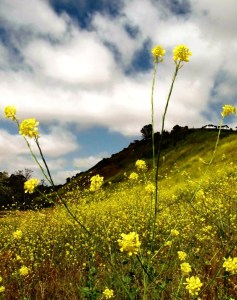
wild mustard (public domain)

Eighth Sunday After Pentecost
Proper 12(17)

Matthew 13:31-32

This week’s Wild Lectionary offers two different but complimentary takes on the seed parables.

The first is a host of resources –devotions, bible studies, children’s curricula, adult education material etc. prepared by A Rocha Canada for churches that are new to engaging with creation care. The free downloadable materials are focused on Good Seed Sunday, celebrated the Sunday after Earth Day, but are also relevant for the Season of Creation and this summer stretch of Year A in the Revised Common Lectionary where we visit the seed parables in Matthew.

The second offering is excerpts from an essay by Jim Perkinson: Continue reading “Wild Lectionary: Kingdom Like a Seed”

An Introduction to the Prophetic Imagination

LogoA message from Mark Van Steenwyk of Twin Cities-based The Center for Prophetic Imagination, who is offering two compelling courses this Fall, as well as “An Introduction to the Prophetic Imagination” weekends in August and September:

The Center for Prophetic Imagination is a member-based nonprofit. We offer education, arts, and activist initiatives to help people turn from the false promises of empire and embrace God’s vision for the world.

Will you join us in working to co-create a world where all walls of alienation are torn down and all people live justly with each other, with the land, and with the Spirit of Life?

By becoming a member, you will:

  • receive a 10% discount on all events and training we offer (workshops, conferences, retreats, and more)
  • receive a special quarterly newsletter with links to free resources.
  • have access to our fee-based webinars for free.
  • be invited to nominate/approve board members, approve our annual budget, and ratify any amendments to our bylaws.
  • feel warm feels for helping us do important work in the world.

Find out more here.

Peace and Resistance,


Mark Van Steenwyk
Executive Director 
The Center for Prophetic Imagination

Sermon: The Wheat and the Weeds: A Riddle of Love?

index
Photo by Jessica Rose

By Jim Perkinson, St. Peter’s Episcopal Church, Detroit, July 23, 2017

Such a rich lectionary offering this morning, I am hard put to choose among the Hebrew scripture, the Greek epistle, and the Aramean gospel.  I could easily focus on Jacob’s experience with a dreaming-stone, propping up his tired head on his way upstream from Isaac’s abode in Canaan, charged with not taking a wife from among the indigenous Canaanites, but going north and east to Aramean kin, from whence his ancestor Abraham had fled originally (Gen 28:10-19a).  The stone, likely a meteorite, births vision—Jacob seeing a ladder like a cosmic tree, granting movement between this world and the Spirit-World for angelic folk, the Powers in their proper role, and hears, speaking from the rock, the same great I AM that Moses will hear much further down the road speaking from a bush.  Continue reading “Sermon: The Wheat and the Weeds: A Riddle of Love?”

The Flesh

AORAn excerpt from Ambassadors of Reconciliation, Volume I by Elaine Enns and Ched Myers of Bartimaeus Cooperative Ministries:

Therefore, from now on we regard no one from a human point of view. Even though we once knew Christ from a human point of view, we know him no longer in that way.  Therefore, if anyone is in Christ, there is a new creation: everything old has passed away. See, everything has become new! (II Cor 5:16-17) [1]

The apostle urges disciples to view the world no longer “from a human point of view”—literally, “according to the flesh.”   The “flesh” (Gk sarx) does not refer to our bodies or our sexual passions, the widespread misunderstanding of Christian pietism. [2] Rather, it is one of Paul’s favorite metaphors for the deeply-rooted, socially-conditioned worldview we inherit from our upbringing. It is the sum total of personal and political constructs and conventions that define what it means to be a member of a given culture—in other words, the way most folk think and act. A key example of the perspective of the “flesh” that we raise throughout this project is the dominant assumption that the “moral” response to violation is punishment. To challenge this cultural conviction quickly engenders passionate and often irrational resistance that is both broad (i.e. the majority opinion) and deep (welling up from the core of individual psyches). This is the power of the “flesh” in Paul’s sense. Continue reading “The Flesh”

Decolonizing Psalms

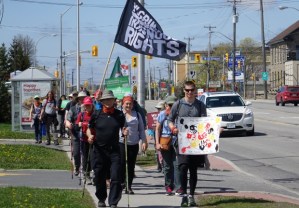
PilgrimageBy Kathy Moorhead Thiessen, Christian Peacemaker Teams (CPT) Delegate
Originally posted in the April-June 2017 CPT newsletter  

I co-led the Pilgrimage for Indigenous Rights on April 23-May 14, 2017. As I walked–kilometer after kilometer–I listened to music. One song, based on Psalm 23 struck my soul. I know that this psalm is often read at times when people need comfort. I thought about the role of Christianity in colonization of the indigenous peoples of Canada. I imagined that the young children forced into residential schools run by the churches had been forced to listen to the King James version of this psalm- in situations where they were not able to derive comfort. Everything presented was foreign and they were not given space to draw on what they knew to be good and right.
Continue reading “Decolonizing Psalms”

What is History?

drNow what is history? It is the centuries of systematic explorations of the riddle of death, with a view to overcoming death. That’s why people discover mathematical infinity and electromagnetic waves, that’s why they write symphonies. Now, you can’t advance in this direction without a certain faith. You can’t make such discoveries without spiritual equipment. And the basic elements of this equipment are in the Gospels. What are they? To begin with, love of one’s neighbor, which is the supreme form of vital energy. Once it fills the heart of man it has to overflow and spend itself. And then the two basic ideals of modern man—without them he is unthinkable—the idea of free personality and the idea of life as sacrifice.
― Boris PasternakDoctor Zhivago

We don’t have to soldier on; grief is part of Christian peacemaking.

Sarah MJ and Jonathan Brenneman
MJ Sharp in the middle with Sarah Thompson and CPTer Jonathan Brenneman

By Sarah Thompson and Tim Nafziger, Written for Sojourners Magazine.

3 July 2017, CPT International Reflection

Michael J. Sharp was a close friend. In the Democratic Republic of the Congo (DRC) he was a Mennonite witness, scholar and peacemaker. Over five years, first with Mennonite Central Committee and then with the United Nations (UN) group of experts, he cultivated relationships of trust and respect with people who were experiencing dreadful violence, exploitation because of government corruption, and the oppressive impact of generations of corporate-colonial resource extraction. His teamwork there included demobilizing armed groups, investigating human rights abuses, and reporting to the UN Security Council towards their goal of creating the conditions for peace in the Great Lakes region of Africa. Continue reading “We don’t have to soldier on; grief is part of Christian peacemaking.”

Wild Lectionary: Earthkeepers

IMG_1608
Nelson leads prayers on Burnaby Mountain in the path of the Kinder Morgan pipeline.

Seventh Sunday After Pentecost
Proper 11 (16)
Romans 8:12-25

By Nelson Lee

I am an engineer working to address climate change, writing from the Coast Salish Seas where the city of Vancouver, BC has been established. First son of a refugee from China and an immigrant from Germany, both fleeing war. Continue reading “Wild Lectionary: Earthkeepers”

Subverting the Script

Aireys, Early 20sBy Tommy Airey, co-editor RadicalDiscipleship.Net 

In the early 1980s, historian William Appleman Williams described the state of affairs in the United States in the title of his book Empire As a Way of Life.  For centuries, The Imperial Script has called for “manifest destiny,” imposing our political, social and economic policies on people all over the world—from the genocide of native Americans in “the new world,” to importing slaves from Africa, to imperialist wars with countries from Mexico to Iraq, stealing land, resources and cultures. The United States was, and continues to be, built on what Dr. Lily Mendoza calls “the undeniable debris of dead bodies, stolen wealth, and the enslavement of other beings, both human and non-human.” These were the secret steroids injected into my family’s “success” story. Continue reading “Subverting the Script”

Sermon: Creations Groans: In the snow, the seeds, and our breath

IMG_1319(1)By Lydia Wylie-Kellermann, co-editor of http://www.radicaldiscipleship.net
Day House, Detroit Catholic Worker
July 16, 2017

Isaiah 55:10-11, Psalm 65,
Romans 8:18-23, Matthew 13: 1-9

This week I noticed some large scratchy leafed plant pop up on our driveway. It winded its way out of a narrow patch of dirt between a rotting log and the spot where we prop our gate open when we are driving in and out. It has unmistakable orange flowers, each day it is multiplying in size. The seed must have planted itself in the small bit of soil after rotting there from neglect after celebrating the season when the veil is thin. It has always been my dream to have a huge pumpkin patch. So, for now, I am cherishing this unexpected gift. I have dragged more logs over to protect it and will give it whatever space it needs. I can’t open our gate all the way and I drive into the driveway in the most peculiar way. It feels like a little miracle that I get to tend and delight in each day. Continue reading “Sermon: Creations Groans: In the snow, the seeds, and our breath”