 Another gem from Hafiz, the 14th century Sufi poet:
The great religions are the ships,
Poets the life boats.
Every sane person I know
Has jumped overboard.
That is good for business,
Isn’t it, Hafiz?

Another gem from Hafiz, the 14th century Sufi poet:
The great religions are the ships,
Poets the life boats.
Every sane person I know
Has jumped overboard.
That is good for business,
Isn’t it, Hafiz?
 From the late theologian Walter Wink, in his book Just Jesus: My Struggle to Become Human (2014):
God is not just within us, but within everything. The universe is suffused with the divine. This is not pantheism, where everything is God, but panentheism where everything is in God and God is in everything. Spirit is at the heart of everything, even down to the smallest particle of spirit-matter. Hence all creations are potential revealers of God.
Turn off your radio. Put away your daily paper. Read one review of events a week and spend some time reading good books. They tell too of days of striving and of strife. They are of other centuries and also of our own. They make us realize that all times are perilous, that men live in a dangerous world, in peril constantly of losing or maiming soul and body. We get some sense of perspective reading such books. Renewed courage and faith and even joy to live.
Dorothy Day
 By Joanna Shenk, First Mennonite Church of San Francisco
Song of Solomon 2:8-13
Zechariah 9:9-12
I had a hard time getting out of bed yesterday morning. I was feeling the weight of a lot of things and wondered if it was futile and disingenuous to write a sermon that offered hope. I wasn’t feeling hopeful. I was feeling more like the title to the most recent Metallica album, “Hardwired… to Self-Destruct.” The bad guys keep winning. Vulnerable people are endlessly oppressed. And it seems like so many people don’t even have a moral consciousness to appeal to.
Sixth Sunday after Pentecost
Proper 10 (15)
Ps. 65:9-13; Is. 55:10-13; Mt. 13:1-9, 18-23
By Jason Wood
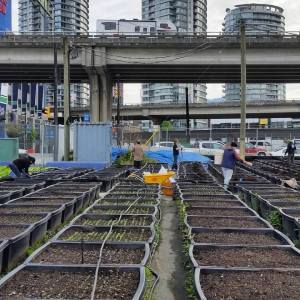
Seeds, seeds, seeds.
Three of six of the appointed texts for today talk about them. The Psalmist refers to seeds implicitly, praising YHWH as the source of life-giving rains, fertile fields, and abundant harvests. Isaiah meditates upon seeds as the inevitable byproduct of the rain watering the earth, assuring his audience that, in the same way, God’s word is fruitful and effective. And Matthew relates one of Jesus’ most well-known parables, one of broad-scattered seed, thwarted growth, and stunningly rich production from the few that fall on good soil. Continue reading “Wild Lectionary: The Good Seed”
An important report from National Catholic Reporter’s Brian Roewe on shareholder activism:
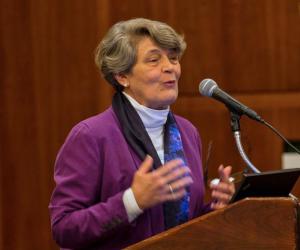
When ExxonMobil shareholders overwhelmingly voted in late May in favor of a resolution aimed at shedding light on the impacts of addressing climate change on the oil company’s long-term assets, Dominican Sr. Patricia Daly was among those beaming brightest.
“This was very sweet,” said the director emeritus of the Tri-State Coalition for Responsible Investment, which spans Connecticut, New Jersey and New York.
Through investment groups like the coalition, which comprises 40 Catholic institutions, and the larger Interfaith Center on Corporate Responsibility, she and other faith-based investors have been working for two decades to bring about change at Exxon in how it recognizes and responds to climate change.
At the annual ExxonMobil meeting in Dallas May 31, the shareholder resolution, co-filed by the New York Common Retirement Fund and the Church of England and joined by the Interfaith Center on Corporate Responsibility and 50 other institutions representing $5 trillion in managed assets, received 62.3 percent of the shareholders’ vote — the highest ever at Exxon for a climate-related measure.
The resolution, which Exxon opposed, seeks for the world’s largest energy company to produce an annual report of the long-term impacts on its oil and gas reserves from global climate policies aimed at restricting average temperature rise well below 2 degrees Celsius (3.6 degrees Fahrenheit) and as low as 1.5 degrees C — the primary goal of the Paris Agreement on climate change, which calls for drastic cuts in carbon emissions and a global shift toward a zero-carbon economy in order to meet the 2 C target and avert the worst climate impacts.
Read the rest of the article HERE.
 For the first time in a long-standing campaign to remove US nuclear weapons from Germany, a delegation of US peace activists will participate in protests at the Büchel Air Base, in west-central Germany, July 12 to 18, demanding the withdrawal of the last 20 US H-bombs still deployed there. Notable among the 11-person delegation are seven participants who have served a combined total of 36 years in US jails and prisons for protest actions taken against nuclear weapons programs and the war system. Continue reading “Press Release: US Peace Delegation: “Nuclear Weapons Out of Germany.””
 By Ched Myers, originally posted in the June 2017 BCM eNews
Note: Below are edited and excerpted comments from Ched’s keynote to the annual dinner of the Cal-Pac Chapter of the Methodist Federation for Social Action and Reconciling Ministries Network, at the University of Redlands, CA on June 17, 2017.
It’s a formidable task to come up with 15 minutes of inspiration and exhortation to a group like this, given that your vocations have long been forged around the work of inspiring and exhorting. So I’ll leave that task to one who inspired and exhorted all of us, and does so still: Dr. Martin Luther King Jr., the author of tonight’s thematic meme: “The fierce urgency of now.”
It is both relevant and poignant that this very phrase anchored two of Dr. King’s most famous public addresses, speeches that bracketed the second half of his public career as a civil rights leader. It first appeared in his most well-known exhortation to the nation–you know, that one in front of the Lincoln memorial on Aug 27, 1963. “We have also come to this hallowed spot to remind America of the fierce urgency of now,” intoned our greatest prophet. “Now is the time to make real the promises of democracy.”
Continue reading “The Fierce Urgency of Now”
 From Francis Weller’s The Wild Edge of Sorrow (2015):
…our lives are intricately commingled with one another, with animals, plants, watersheds, and soil. For the last several centuries, we have envisioned a split between our inner lives and the surrounding world. Psyche, however, is not confided to the deep interior of our lives; it overlaps with the wider world and perhaps, in these times, is most evident in the sorrows and suffering of the earth itself.
A book, too, can be a star, a living fire to lighten the darkness, leading out into the expanding universe.
 Radical Discipleship