
“Jesus knew what we numb ones must always learn again: (a) that weeping must be real because endings are real; and (b) that weeping permits newness. His weeping permits the kingdom to come. Such weeping is a radical criticism, a fearful dismantling because it means the end of all machismo; weeping is something kings rarely do without losing their thrones. Yet the loss of thrones is precisely what is called for in radical criticism.”
― Walter Brueggemann, Prophetic Imagination: Revised Edition
Pacem in terris: Easter, Earth Day, and Pentecost’s promise
 By Ken Sehested
Pacem, pacem, pacem in terris
Easter’s focus is always sharper when allied with Earth Day. We sing, properly, of being wayfaring strangers. “A wandering Aramean was my ancestor” (Deuteronomy 26:5) is among the oldest testimonies of fate and faith. An alternate translation—“A Syrian ready to perish was my ancestor”—brings added poignancy to the text
We are indeed strangers; but not foreigners. In common usage these two words seem similar. Biblically speaking, though, the theological difference could not be greater. Continue reading “Pacem in terris: Easter, Earth Day, and Pentecost’s promise”
Wild Lectionary: The Predator Within
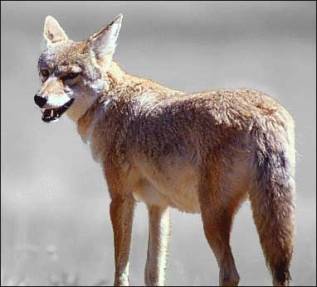 Easter 7
Discipline yourselves, keep alert. Like a roaring lion your adversary the devil prowls around, looking for someone to devour. –1 Peter 5:8
by Ric Hudgens
We must not domesticate our understanding of the wild. I am not referring to domesticating wild places into civilized spaces. I am noting our tendency to romanticize the wild in a way that removes its sharp edges. In the rewilding of our theologies we must deconstruct docetic expressions that remove the divine and human from nature. Also, we must keep the divine and human embedded in real nature – not a romanticized Disneyland nature where animals sing and dance or time lapse photography makes change appear sudden.
The natural world which is filled with the divine and the contains the human is also “nature red in tooth and claw,” as Hobbes wrote. There are predators. There are prey. Continue reading “Wild Lectionary: The Predator Within”
When She Died, We Buried All Those Words With Her
 A poem from Sherman Alexie (thanks to elder Clancy Dunigan for passing this along):
My mother was a dictionary.
She was one of the last fluent speakers of our tribal language.
She knew dozens of words that nobody else knew.
When she died, we buried all of those words with her.
My mother was a dictionary.
She knew words that had been spoken for thousands of years. Continue reading “When She Died, We Buried All Those Words With Her”
Radical Hospitality
By Wesley Morris
The Crisis We Face
 By Chris Hedges, from his most recent TruthDig column “Trump is the Symptom, not the Disease,” as always, keeping it real:
Forget the firing of James Comey. Forget the paralysis in Congress. Forget the idiocy of a press that covers our descent into tyranny as if it were a sports contest between corporate Republicans and corporate Democrats or a reality show starring our maniacal president and the idiots that surround him. Forget the noise. The crisis we face is not embodied in the public images of the politicians that run our dysfunctional government. The crisis we face is the result of a four-decade-long, slow-motion corporate coup that has rendered the citizen impotent, left us without any authentic democratic institutions and allowed corporate and military power to become omnipotent. This crisis has spawned a corrupt electoral system of legalized bribery and empowered those public figures that master the arts of entertainment and artifice. And if we do not overthrow the neoliberal, corporate forces that have destroyed our democracy we will continue to vomit up more monstrosities as dangerous as Donald Trump. Trump is the symptom, not the disease. Continue reading “The Crisis We Face”
More Deadly
 An excerpt from chapter one of Howard Zinn’s The People’s History of the United States (1980):
It is not that the historian can avoid emphasis of some facts and not of others. This is as natural to him as to the mapmaker, who, in order to produce a usable drawing for practical purposes, must first flatten and distort the shape of the earth, then choose out of the bewildering mass of geographic information those things needed for the purpose of this or that particular map.
My argument cannot be against selection, simplification, emphasis, which are inevitable for both cartographers and historians. But the map-maker’s distortion is a technical necessity for a common purpose shared by all people who need maps. The historian’s distortion is more than technical, it is ideological; it is released into a world of contending interests, where any chosen emphasis supports (whether the historian means to or not) some kind of interest, whether economic or political or racial or national or sexual. Continue reading “More Deadly”
Suspended
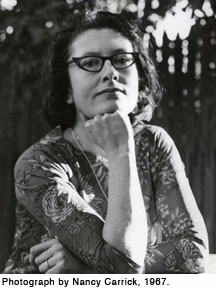 By Denise Levertov (1923–1997)
I had grasped God’s garment in the void
but my hand slipped
on the rich silk of it.
The ‘everlasting arms’ my sister liked to remember
must have upheld my leaden weight
from falling, even so,
for though I claw at empty air and feel
nothing, no embrace,
I have not plummetted.
Passed on by Journey with Jesus
You give
 By Talitha Fraser
you give
and you give
the emptying
is what fills you
you give
and you give
stretched and
outstretched and
enfolded
you give
and you give
and there is more
there is always more
Wild Lectionary: Wild Church
 Sixth Sunday of Easter
Acts 17: 22-31
The God who made the world and everything in it, he who is Lord of heaven and earth, does not live in shrines made by human hands, nor is he served by human hands, as though he needed anything, since he himself gives to all mortals life and breath and all things. Acts 17:24-25
Re-connecting people with an untamed God in our wild homes.
There is a movement happening. From isolation to connection. From detachment to immersion. From dualism to integration. Spiritual leaders from a wide range of denominations are beginning to question the wisdom and consequences of regarding “church” as a building where you gather away from the rest of the world for a couple hours on Sundays.
In Texas, New Hampshire, Ontario, Colorado, Virginia, California, Washington DC and British Columbia. We are a growing network of pastors and spiritual leaders, who have made bold moves to launch new expressions of church outside to re-acquaint, re-cover, and re-member our congregations as loving participants of a larger community. In this age of mass extinctions, we feel burdened by the love of Christ to invite people into direct relationship with some of the most vulnerable victims of our destructive culture: our land, our waters, the creatures with whom we share our homes.
And, there, people remember that they belong to a larger beloved community. Along the way, we have remembered that our Christian tradition of spiritual transformation has always been rooted in the actual local wilderness.
Join the Wild Church Network if you lead or want to lead your congregation out of buildings and into deeper relationship with God through nature in your community.
Wild Lectionary is curated by Laurel Dykstra, Priest in Charge of Salal + Cedar, Coast Salish Territory.
 Radical Discipleship