Hope

dessertBy Joyce Hollyday

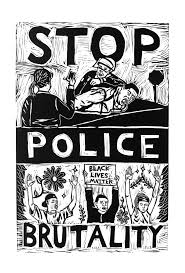
Once again…still…our eyes and hearts are riveted on tragedies afar and close at hand: terrorized families in flimsy boats on the other side of the globe fleeing desperately toward what they hope is safety; a tide of killings at home brought into sharp focus by young people demanding that black lives matter. We hunger and thirst for a world in which peace, dignity, and justice prevail.

When I’m tempted to despair, I remember the spring of 1991. It was a time that seemed hopeless to me. Three teenagers I knew were senselessly killed—one stabbed, two shot—on the deadly streets of the Washington, DC neighborhood where I lived. Hundreds of women and children died when U.S. forces bombed the Amariya shelter in Iraq on Ash Wednesday. Continue reading “Hope”

Organizing to Tackle Debt

Yes!The agreements that we call money and debt can be changed. To do so, however, will require a movement that contests the immutability of the current system and explores alternatives to it.
Charles Eisenstein

*Some highlights from Eisenstein’s recent Yes Magazine article entitled “Don’t Owe. Won’t Pay.” Everything You’ve Been Told About Debt Is Wrong. As always, we encourage readers to click on and soak in the whole text.
—————–
But what about the huge amount of debt that financed large-scale, centralized development projects? Neoliberal ideology says those are to the great benefit of a nation, but now it is becoming apparent that the main beneficiaries were corporations from the same nations that were doing the lending. Moreover, the bulk of this development is geared toward enabling the recipient to generate foreign exchange by opening up its petroleum, minerals, timber, or other resources to exploitation, or by converting subsistence agriculture to commodity agribusiness, or by making its labor force available to global capital. The foreign exchange generated is required to make loan payments, but the people don’t necessarily benefit. Might we not say, then, that most debt owed by the “developing” world is odious, born of colonial and imperial relationships? Continue reading “Organizing to Tackle Debt”

My Journey Towards Wholeness is Learning to Embrace the Discomfort

CileBy Lucile (Cile) Beatty- involved with both the Bay Area Solidarity Action Team working in solidarity with Black Lives Matters in Oakland, CA

How many people have had to endure discomfort when healing from a physical injury or illness? How many people have experience discomfort in their spiritual practice – perhaps watching the clock when mediating, or struggling with an unanswered prayer? I want to share with you how embracing discomfort around racism and white supremacy has been a necessary healing force in my life.

First, a little about me. I am an introvert who grew up in an alcoholic home. My father was a Dr. Jekyll and Mr. Hyde drunk. I learned from my mom how not to rock the boat in order to “keep the peace.” Continue reading “My Journey Towards Wholeness is Learning to Embrace the Discomfort”

Peakin’ Through The Shade

A watercolor from Brett Bell, a Bay Area artist:

brett bell piece

Wilderness is not a luxury but a necessity of the human spirit, and as vital to our lives as water and good bread. A civilization which destroys what little remains of the wild, the spare, the original, is cutting itself off from its origins and betraying the principle of civilization itself.
Edward Abbey, Desert Solitaire (1985)

A Different Kind of Movement

Tim DeChristopherCompelling quotes from Tim DeChristopher in Wen Stephenson’s recent piece on climate justice in The Nation:

Our job as a movement is no longer just about reducing emissions—we still have to do that, but we also have this new challenge of maintaining our humanity as we navigate this period of rapid and intense change. And with that challenge, with that job, we can’t avoid the spiritual aspect of what we’re doing. We can’t avoid talking about our most fundamental principles, and our most fundamental values, and the things that we want to hold on to the most. We can’t avoid talking about our larger worldview and our vision for the world.
———— Continue reading “A Different Kind of Movement”

Workshopping Historical “Response-Ability” among Settlers

Elaine 2010By Elaine Enns, Bartimaeus Cooperative Ministries. This piece was originally printed in Geez Magazine’s Decolonization Issue.

History, despite its wrenching pain,
cannot be unlived,
but if faced with courage,
need not be lived again.”
— Maya Angelou, “On the Pulse of the Morning,” 1993

Facing painful history is indeed wrenching. In North America, we Settler descendants often avoid hard conversations about past and present relationships with Indigenous people. In my ethnic community, Mennonites in Saskatchewan, I have been exploring our resistances to “response-ability” in doctoral research, through interviews, focus groups and workshops. This piece summarizes two —selective memory and distortions in our communal narrative—which obscure the whole story and the truth that alone can lead to reconciliation. Continue reading “Workshopping Historical “Response-Ability” among Settlers”

Learning from Laughter: The Pumpkin that Cried Tears

isaac pumpkinBy Lydia Wylie-Kellermann as part of her series on parenting- Learning from Laughter.

With the table covered in newspaper, the three of us began carving pumpkins. Isaac embraced the gunk helping to pull it out while the Halloween music played and the moon shown out the window. When it came time to cut the faces, I sat beside him and asked what he wanted. We drew it out together in marker. He told me he wanted square eyes and a triangle nose. Out of the blue he insisted that the pumpkin have a mustache. Then I asked about the mouth. Do you want a smile? “No. It’s a sad pumpkin.” I tried to draw a sad mouth. Then he said “Pumpkin crying.” He was asking for tears. I carved out some tears falling from the square eyes. He smiled in total delight and pride at his sad pumpkin. Continue reading “Learning from Laughter: The Pumpkin that Cried Tears”