Something to think about from Dr. Nicole LePera
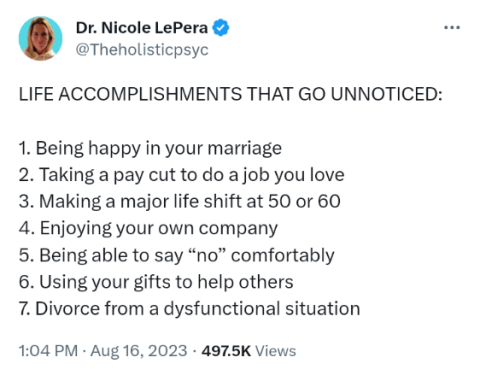

Something to think about from Dr. Nicole LePera

A few excerpts from Ken Sehested’s recent Prayer and Politiks newsletter.
The concurrence of two calendars brings together two significant historical episodes.
The Sunday morning terrorist bombing of 16th Street Baptist Church in Birmingham, Alabama, killed four children and injured or maimed many others, on 15 September 1963. Bombs targeting the Black community in that city were common, which gave rise to the nicknaming of the city as “Bombingham.” This one, however, was especially hideous.
Though the FBI concluded that known members of Ku Klux Klan were responsible, no one was brought to trial until 1977, when the ringleader, Robert Chambliss, was convicted in the murder of one of those children. Not until 2001 were the other culprits convicted.
Can you imagine the whipsaw emotions of Dr. Martin Luther King, Jr.? Eighteen days before he had been the singular figure in the largest demonstration (to that date) in US history, the 28 August March on Washington for Jobs and Freedom. His “I Have A Dream” speech is considered by many to be the most important speech of the 20th century.
And then he had to pivot to planning funeral services for these murdered children.
Sunset on Friday, 15 September, also happens to be the beginning of Rosh Hashanah, the opening act of the 10-day High Holy Days of Judaism, ending with Yom Kippur, the holiest day in the Jewish liturgical cycle.

This is the first question and answer from Black Agenda Report’s interview with Dylan Rodriguez, a professor at UC Riverside and the author of White Reconstruction: Domestic Warfare and the Logics of Genocide. When you’ve got time and energy, read the whole interview!
Roberto Sirvent: You were recently interviewed on the podcast Millennials are Killing Capitalism about counterinsurgency in various corporate and non-profit spaces. The conversation has helped many academics re-think their relationship to the university and the academy, a distinction you emphasized in an interview with BAR last year. Why do you think it’s so hard for academics to hear about their vocation’s predatory, counterinsurgent, and colonial structuring forces?
Dylan Rodriguez: I generally don’t care, or more honestly, i try not to care, about most academics’ feelings. I think academics don’t like being reminded (or maybe being told for the first time) that they are generally, at best, politically irrelevant. At worst, they are actively providing (diversity) cover and training on behalf of an occupying, extractive force—that is, the college and university—that’s a skip and a sneeze away from the actual machinery of violent global racial capitalism and empire. Academics get in their feelings when people suggest they are operating as apologists and, at times, disempowered operatives for an institutional/state liberalism that is central to the antiblack colonial empire war machine.
Continue reading “A Peculiar Combination of Insecurity and Political Flimsiness”
Check out the Dream Defenders, a Black woman led org of Black and Brown youth building power in order to advance a new vision for the state of Florida. Watch their brilliant session at the Socialism 2023 conference last weekend.
We are fighting for a world without prisons, policing, surveillance and punishment. We know that prisons aren’t about safety or accountability but about control and domination over large segments of the population, especially Black people, in order to make a profit. We are different from prison reformers because reformers often create situations where incarceration becomes even more entrenched in our society. Instead, we are fighting for solutions that will produce decarceration, fewer people behind bars and a future world without prisons.
In order to get us closer to this vision, we must begin to build community alternatives to dealing with harm and violence. Dream Defenders practices transformative justice, an abolitionist way of dealing with conflict and holding people accountable in opposition to the punitive nature of the prison system that treats people as disposable, locks them up and throws away the key.
Continue reading “The New World We Are Fighting For”This week, 61 community organizers working to block the building of Cop City in Georgia were charged with organized crime. The original Jesus movement was also considered by authorities a criminal enterprise. As “democracy” is diminished, we ask ourselves what our solidarity with the Stop Cop City movement might mean in both word and deed.
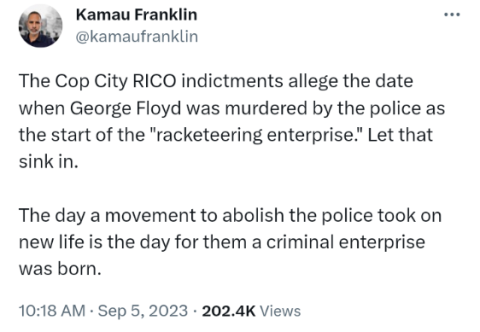

By Maki Ashe Van Steenwyk
I don’t think it is accurate to call myself a Christian at this point.
My operative theology and spirituality hasn’t changed suddenly or anything.
My relationship with Jesus is fundamentally unchanged.
But several things have made it clear that my relationship with Christianity has changed in such a way that I cannot see myself “in” it. Both in an abstract “universal church” level as well as in particular expressions and institutions that consider themselves Christian.
1) Such a vast majority of Christian communities excludes me at a core level. There isn’t a single denomination that has a thorough and unreserved inclusion of trans women in a consistent way. And though I can name specific congregations, organizations, and particular folks who embrace Christianity and celebrate my transness, I would have no problem being fully embraced in any of those communities as a non-Christian.
Continue reading “Why Would I Persist to Anchor Myself in Christianity?”
By Walter Brueggemann, re-posted from Labor Day 2020
Covenantal faith in the Bible refuses all dualisms and holds together matters of spirituality and economics. It is always a both/and, never an either/or. In the practice of the church, however, an accent on things spiritual has largely muted the accent on economics that is so prominent in the Bible. In more affluent churches, it is predictable that at times economics will be muted and spirituality made larger. In less affluent churches there is a temptation at times to disregard the heavy burden of economics in the Bible and present instead an extravagant vision of another world to the neglect of this one.
Given that recurring tilt that distorts the Bible, it is my estimate that church leadership now must redress this distortion by paying acute attention to economics in the Bible and in our society.
For many church leaders this will entail not only close, attentive study, but the learning of new interpretive categories and skills as well. Such a redress of energy and attention is not only evoked by our present social circumstance but required by the biblical testimony itself.
Continue reading “The Accent on Economics”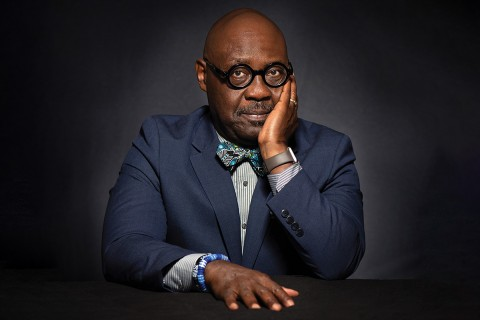
From Dr. Willie Jennings, professor of theology at Yale. This is from an interview he did with The Christian Century in 2021. He was asked what race has to do with theology (photo above from Mara Lavitt for Yale Divinity School).
The modern vision of race would not be possible without Christianity. This is a complicated statement, but I want people to think about this.
Inside the modern racial consciousness there is a Christian architecture, and also there is a racial architecture inside of modern Christian existence. There are three things we have to put on the table in order to understand how deeply race is tied to Christianity. The first brings us back to the very heart of Christianity, the very heart of the story that makes Christian life intelligible.
That story is simply this: through a particular people called Israel, God brought the redemption of the world. That people’s story becomes the means through which we understand who God is and what God has done. Christianity is inside Israel’s story. At a certain point in time, the people who began to believe that story were more than just the people of Israel, more than just Jews. And at some point in time, those new believers, the gentiles, got tired of being told that they were strangers brought into someone else’s story—that this was not their story. They began—very early and very clearly—to push Israel out from its own story. They narrated their Christian existence as if Israel were not crucial to it.
Continue reading “A Way of Perception”From the creative, satirical pen of Ken Sehested, the curator of prayerandpolitiks.org


By Tommy Airey
I’ve been working on a book project over the past few years. It has evolved into a series of shorter reflections focused on reconstructing a biblical spirituality committed to collective liberation for those of us who have been in a process of deconstructing fundamentalist, evangelical, conservative Catholic or denominational expressions of Christian Supremacy. This reconstruction project pivots on the Power of love, the only force that can fuel us to live for Something Else.
I believe that this Something Else is rooted in the radical act of repenting from the American Dream, the corporate-sponsored conventional wisdom that comes at the awful expense of this agonizing statistic: the US and Canada comprise 5% of the world’s population – and consume over 30% of the world’s resources. I am calling the North American context the 5/30 Window, a play on what my white Evangelical pastors referred to as “the 10/40 Window,” the African, Asian and Middle Eastern regions of “unreached” people who live between ten and forty degrees north latitude. I am flipping the script and saying that the souls of dark-skinned Buddhists, Hindus and Muslims who live on the other side of the world do not need to get saved. We do.
Continue reading “A Reading List for Repentance” Radical Discipleship