Another compelling prayer from Cole Arthur Riley, the curator of Black Liturgies.


Another compelling prayer from Cole Arthur Riley, the curator of Black Liturgies.

By Tommy Airey
I am someone who spends a lot more time casting a vision for what’s coming next than composting what’s already happened. It is both a gift – and a growth edge. I am learning that the more I slow down and process the particulars of my suburban past, the more I can subvert the sources that scripted my supremacy. One of those old sources was Gene, the father of one of my best friends. He was a passionate and playful pillar of the community. He was also a purveyor of patriarchy – and he had a profound impact on my early years.
Gene dismissed the perspectives of women with a warm smile and a witty joke. He made it clear that he believed that women were the weaker sex. Why? Because the bible says so. One time, when we were teenagers, Gene read us the passage from I Peter that says that wives must accept the authority of their husbands and that real women – biblical women – should stop obsessing over outward appearances, and instead embrace the lasting beauty of a meek and quiet spirit.
When I started studying the original languages of the bible in seminary, I learned that the word meek, in Greek, is praus, pronounced prah-ooce’. It is a divine strength soaked in gentleness, confidence, humility and open-heartedness. The irony is that Jesus used it to describe himself, not women. Jesus was a Palestinian Jewish rabbi who empowered people who were oppressed by professional religion and Roman culture. Jesus preached that God reigns not from the perches of the powerful, but from within the hearts of weary and burdened people.
The message of Jesus, according to Howard Thurman, focused on the urgency of a radical change in the inner attitude of his people. They had access to divine power and agency. It was rooted in how they responded whenever provoked by their oppressors. Thurman wrote that humility – not fear, hypocrisy or hatred – is the best defense against everything intended to humiliate. “Take my yoke upon you, and learn from me,” Jesus said, “for I am praus and humble in heart, and you will find rest for your souls.”
Continue reading “Meek Ain’t Weak”
From John (Fire) Lame Deer, Sioux Lakota (1903-1976). Thanks to Lorna Standingready for posting.
“Before our white brothers arrived to make us civilized men,
we didn’t have any kind of prison. Because of this, we had no delinquents.
Without a prison, there can be no delinquents.
We had no locks nor keys and therefore among us there were no thieves.
When someone was so poor that he couldn’t afford a horse, a tent or a blanket,
he would, in that case, receive it all as a gift.
We were too uncivilized to give great importance to private property.
We didn’t know any kind of money and consequently, the value of a human being
was not determined by his wealth.
We had no written laws laid down, no lawyers, no politicians,
therefore we were not able to cheat and swindle one another.
We were really in bad shape before the white men arrived and I don’t know
how to explain how we were able to manage without these fundamental things
that (so they tell us) are so necessary for a civilized society.”

It’s Black History Month, something we celebrate all year long at RadicalDiscipleship.net. This is from the conclusion of bell hooks’ classic essay “Killing Rage” (1995).
Rage can be consuming. It must be tempered by an engagement with a full range of emotional responses to black struggle for self-determination. In mid-life, I see in myself that same rage at injustice which surfaced in me more than twenty years ago as I read the Autobiography of Malcolm X and experienced the world around me anew. Many of my peers seem to feel no rage or believe it has no place. They see themselves as estranged from angry black youth. Sharing rage connects those of us who are older and more experienced with younger black and non-black folks who are seeking ways to be self-actualized, self-determined, who are eager to participate in anti-racist struggle. Renewed, organized black liberation struggle cannot happen if we remain unable to tap collective black rage. Progressive black activists must show how we take that rage and move it beyond fruitless scapegoating of any group, linking it instead to a passion for freedom and justice that illuminates, heals, and makes redemptive struggle possible.

From poet and activist Alexis Pauline Gumbs, re-posted from her website. Thanks to Kateri Boucher for the recommendation.
Last night the moon was a bowl again, almost half full out my airplane window. Slightly tilted so maybe moonlight, if it could spill would offer the contents of its light one drop at a time.
Last night, the moon in my airplane window and Tyre Nichols mother’s face on all the airport TV monitors. I can’t hear what she’s saying for all the amplified systemwide announcements, so I just look at her round face and wonder how she’s saying anything at all.
Audre Lorde published the poem “For Each of You” in 1973 for her children who she said were black “in the mouth of a dragon who defines them as nothing.” Like Tyre’s mom, RowVaughn Wells, Audre looked to the heavens. Here is Audre’s astronomical offering:
Remember our sun
is not the most noteworthy star
only the nearest
Audre’s clarification of what space means has trailed me since I was a teenager. I couldn’t grasp the meaning of this stanza until at least a decade after I read it. And then I shook my head. All this time I had believed the colonial education that taught me it was my brightness that mattered above all else. No. Audre clarifies while her children get death threats at their Staten Island grade school, it is where you are that matters. The sun is close enough to make all this photosynthetic life on Earth breathe.
to read more (and really you must), click this.

Bartimaeus Cooperative Ministries will, once again, be hosting its annual Bartimaeus Kinsler Institute (BKI) next month in Southern California. See below for details. See this for BKI Covid-19 protocols.
“Just Community”
Begin your 2023 Lenten journey with kindred spirits at the 2023 BKI
Registration closes Feb 3rd, 2023
February 20-23, 2023, in person at Camp Forest Home (Ojai), Oak View, California
See our Featured Resource People including Elders and Indigenous leaders
Why: We are mindful that political and personal landscapes have changed since we last convened in the
Ventura River Watershed… What hasn’t changed is our deep need for ekklesia—kindred spirits
committed to faith and justice who gather for discernment and reflection, support and solidarity,
nurture and remembering, courage and joy… [more]

By Rev. Jeanelle Nicolas Ablola, re-posted from Enfleshed
“We must be solidarious, meaning one with everybody, with the care of the planet, and we must be willing to accompany people’s movements for their rights, justice, peace. And so I put my education and my experience and my commitment to that service.” – Rev. Marta Benavides
I heard a podcast once about humpback whales saving a seal from an orca attack.* One of the whales swam belly up, and put the seal on its belly. When it seemed like the seal might slip off during their escape, the whale would raise a fin to guide the seal back onto its belly.* Humpback whales have been recorded saving other animals, like sunfish and seals, from orca attacks. And scientists can’t agree on why. Some speculate that they may be instinctually wired to interfere with orca attacks because, in doing so, they might save a humpback whale calf. So in their act of trying to help their own family or community get free, they inadvertently help others get free.
10 years ago, I met Rev. Marta Benavides through Churches Witnessing with Migrants (CWWM). In El Salvador, she journeyed alongside Archbishop Oscar Romero. When sharing her experiences and expertise, she would occasionally bring up this concept of being solidarious – “We must be ‘solidarious’ as one vs be ‘in solidarity’ with other’s interests.”*
Continue reading “May We Be Solidarious”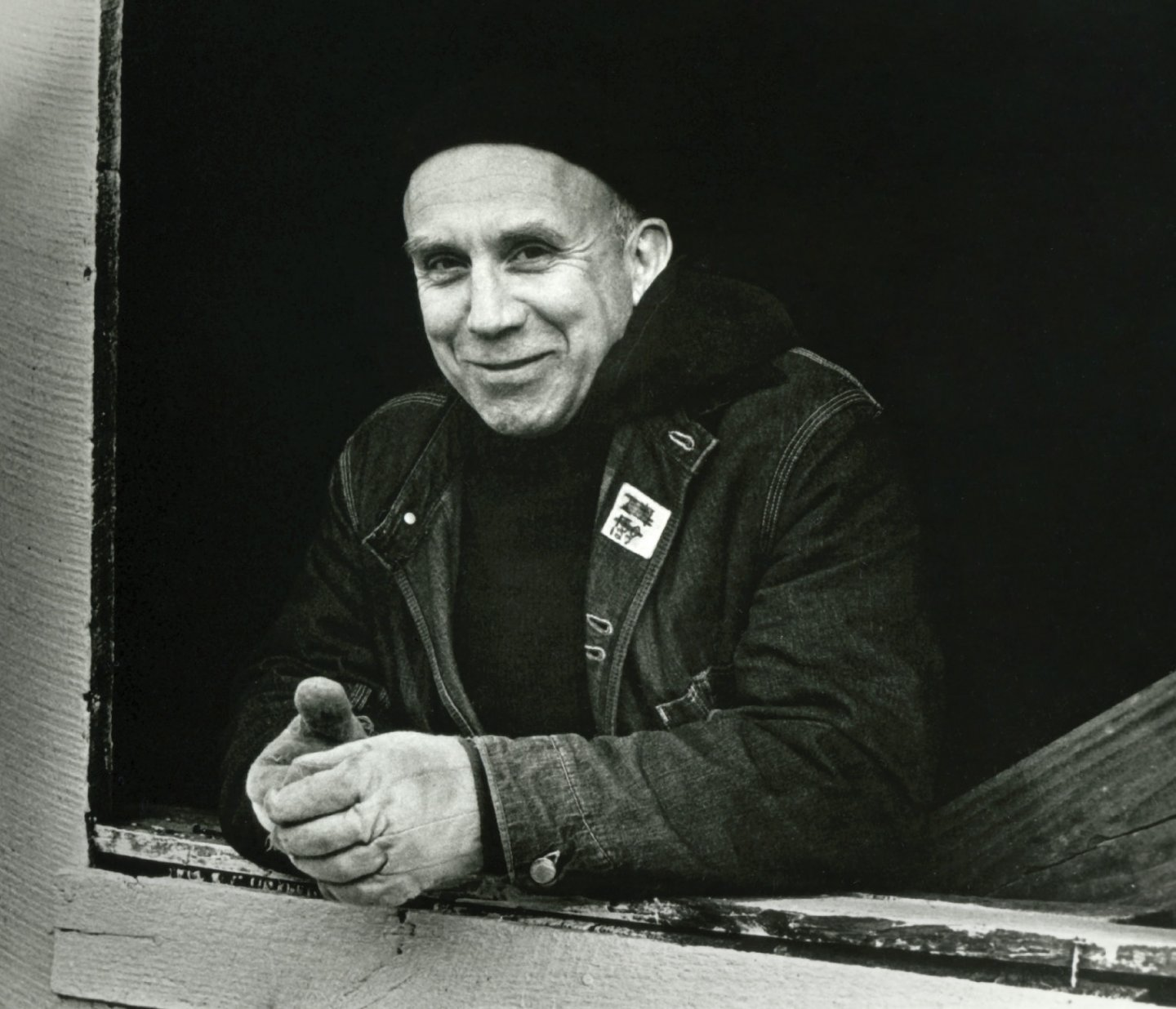
An excerpt from Thomas Merton’s Letter to a Young Activist. Thanks to Bill Boyle, a radical discipleship comrade in metro Detroit, for passing this along.
You are fed up with words, and I don’t blame you. I am nauseated by them sometimes. I am also, to tell the truth, nauseated with ideals and with causes. This sounds heresy, but I think you will understand what I mean. It is so easy to be engrossed with ideas and slogans and myths that in the end one is left holding the bag, empty, with no trace of meaning left in it. And then the temptation is to yell louder than ever in order to make the meaning be there again by magic. Going through this kind of reaction helps you to guard against this. Your system is complaining of too much verbalizing, and it is right.
You may have to face the fact that your work will be apparently worthless and even achieve no result at all, if not perhaps results opposite to what you expect. As you get used to this idea you start more and more to concentrate not on the results but the value, the rightness, the truth of the work itself. And there too a great deal has to be gone through, as gradually you struggle less and less for an idea and more and more for specific people. the range tends to narrow down, but it gets much more real. In the end, as you yourself mention in passing, It is the reality of personal relationships that saves everything.
.”

From Toni Morrison’s Beloved. This is the sermon that Baby Suggs gives one Saturday, sitting in the Clearing while the people waited among the trees. The Clearing was “a wide-open place cut deep in the woods nobody knew for what at the end of a path known only to deer and whoever cleared the land in the first place.”
——————————————————–
Here in this here place, we flesh; flesh that weeps, laughs,
flesh that dances on bare feet in grass. Love it. Love it hard.
Yonder they do not love your flesh. They despise it.
They don’t love your eyes; they’d just as soon pick em out.
No more do they love the skin on your back. Yonder they flay it.
And O my people they do not love your hands.
Continue reading “We Flesh”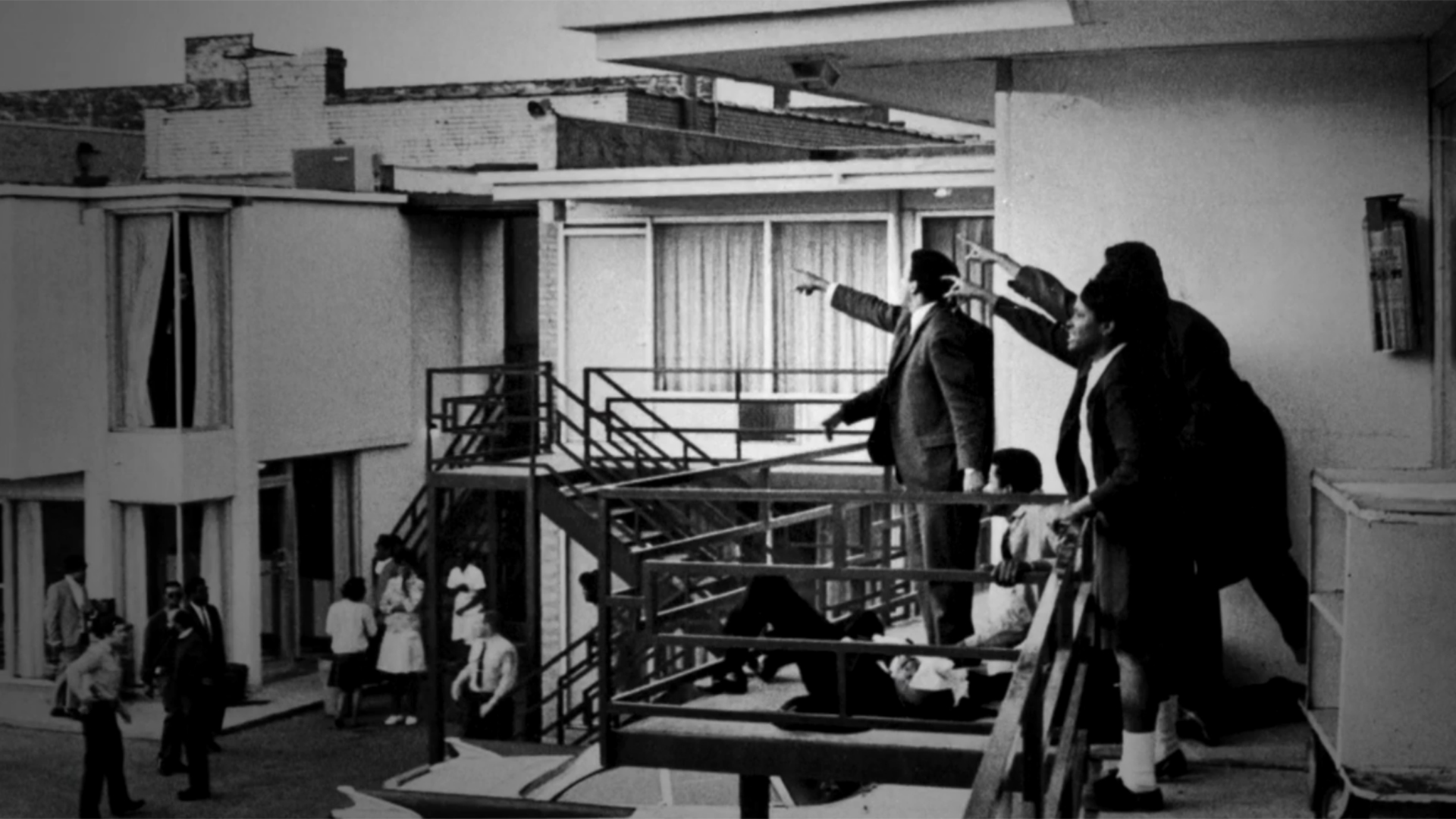
By Robert Jones, Jr., re-posted from his MLK Day substack newsletter. Subscribe here.
“The majority of white Americans consider themselves sincerely committed to justice for the Negro. They believe that American society is essentially hospitable to fair play and to steady growth toward a middle-class Utopia embodying racial harmony. But unfortunately this is a fantasy of self-deception and comfortable vanity.”
— Martin Luther King, Jr., Where Do We Go from Here: Chaos or Community? (1967)
Hello Family,
Today is Martin Luther King, Jr. Day. It is a day on which a particular kind of performance is expected of every Black American.
It is believed that we should join hands; sing sweet gospel songs; be respectable, conciliatory, and most importantly, civil representatives of the man assassinated by the very nation that turned him into a hollow holiday platitude. A man whose face they put on postage stamps and t-shirts to sell back to us at a premium.
For us, today is supposed to be a day of forgiving, certainly; but most of all: of forgetting.
Continue reading “A Wake” Radical Discipleship