Written against the backdrop of New Year’s Eve services, 1862, when African Americans gathered to await news of US President Abraham Lincoln’s promised Emancipation Proclamation. Inspired by Revelation 21:1-6a, lectionary text for the New Year’s Eve Watch Night service.
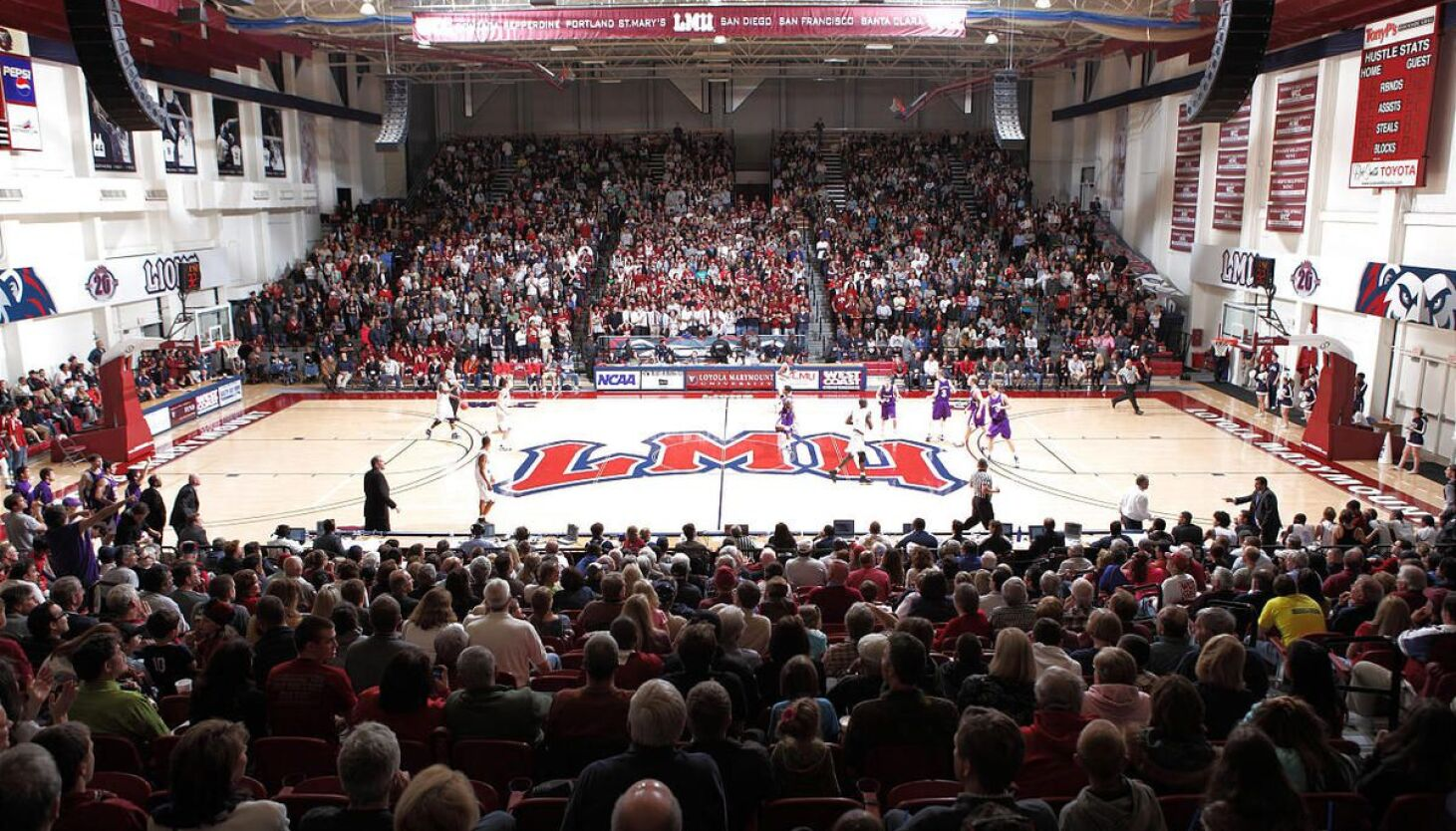
Thirty years ago this month, I packed up my car and left Loyola Marymount University. I was a freshman on a full-ride basketball scholarship. I drove home. Just fifty-five minutes south on the 405 freeway. Back to Orange County. I left LMU because I was miserable – and I was nineteen. I struggled to emotionally connect with our head coach who tried hard to be funny (but wasn’t) and whose favorite word was “horseshit” – always used as a descriptor for either our team or one of our players. Sometimes it was aimed at me. I did not have a clue how to metabolize what was going on inside of me. It’s just not what young men who change in locker rooms are equipped to do.
Our team – half-Black and half-white in the immediate aftermath of the L.A. uprising – bonded during preseason fitness conditioning. Coach made it clear that, before official practice started in October, everyone had to run a mile in under five minutes. Together. If anyone didn’t make it, everyone would have to wake up at 6am every morning and run it again. Together. Until everyone could do it. At the same time. We had guys who were 6’9” and weighed 240 lbs. We had other guys who never failed to miss the fraternity keg party. We all ran a sub-five-minute-mile on our first attempt. This is one of the reasons I believe in miracles.
An excerpt from Dr. Maulana Karenga’s annual Kwanzaa Message, published in the L.A. Sentinel (December 22, 2022).
Again, this year in this our season of celebration, we find humanity and the world are in severe and continuing crisis, including: the resurgent pandemic of COVID-19, constantly producing deadly variants; failed and predatory economies and expanding hunger, famine, homelessness and suffering; continuing conflicts and wars; massive displacement of peoples; unjust and irrational immigration policies; and continuing environmental degradation through plunder, pollution and depletion.
And all these oppressive practices and impositions are carried out by the rich and powerful, the obscenely armed and aggressive, who are irresponsibly and immorally unmindful and uncaring about the cost and consequences they savagely impose on humanity and the world and all in it, especially the most vulnerable among us.
Working at the intersections of Abolition, Black Spirituality, and Scholarship, Johari Jabir (Black Studies, Univ. of Illinois Chicago) taught the course, “Black Lives in Historic Context” at three sites concurrently; on campus as an undergraduate course, Covenant UCC in South Holland, Ill, and Stateville Penitentiary outside Chicago. Students at Stateville enrolled in the course through the Prison Neighborhood Arts Project (PNAP), of which Johari is an ongoing instructor. The course focused on themes of Slavery, Abolition Democracy, and Citizenship in the 19th Century. A concluding colloquium brought these three learning communities together in person, with PNAP students joining by zoom. “The Urgency of Abolition and Ethical Futures” was the writing and discussion prompt for the group. When PNAP students were finally able to sign on the greeting between these three populations was a kind of advent miracle, a flash of God’s light.
The event inaugurates something Johari has founded called, The Faith and Abolition Network, a radical ecumenical network of people in support of grassroots anti-prison activism. This is the context Johari crafted this poem on Mary’s Magnificat.
——————————–
I wish I had been there when Mary got the news Hark the herald the angels sing but Gabriel sang the blues
From Dr. Lily Mendoza, a professor and prophetic voice.
“Indigenous rituals during this time (of Winter Solstice) are about acknowledging the largeness of the Holy in Nature, a reminder—despite all our human struggling to survive—that Life is not primarily about us, but about the larger Community of Life whose maintenance demands ritual feeding and reciprocity, and whose food is beauty. Beauty in our way of walking, speaking, and relating with all our relations; eloquence and courtesy in our courting and asking for permission any time we take from Her, and lavishness of praise and exquisiteness, when, in tears and sorrow, we endeavor to compost our grief and suffering into gifts of beauty.”
An excerpt from Saidiya Hartman’s July 2020 interview with artforum.com.
“The possessive investment in whiteness can’t be rectified by learning ‘how to be more antiracist.’ It requires a radical divestment in the project of whiteness and a redistribution of wealth and resources. It requires abolition, the abolition of the carceral world, the abolition of capitalism. What is required is a remaking of the social order, and nothing short of that is going to make a difference.”
Sarah and Angelina Grimke are 19th century models of white people breaking rank with supremacy. This is an excerpt from Drew Gilpin Faust’s recent article in The Atlantic Magazine: The Grimke Sisters and The Indelible Stain of Slavery. The article is longish, but certainly deserves to be read in it’s entirety. It explores a new book that details tensions and complications with the Grimke legacy. Tensions and complications that white people breaking rank can learn from today.
Thirteen years apart, the two sisters came to share an abhorrence of the slave system on which their family’s wealth and position depended. Angelina was particularly repelled by the institution’s violence—the sound of painful cries from men, women, and even children being whipped; the lingering scars evident on the bodies of those who served her every day; the tales of the dread Charleston workhouse that, for a fee, would administer beatings and various forms of torture out of sight of one’s own household. Both Sarah and Angelina became deeply religious, rejecting the self-satisfied pieties of their inherited Episcopalian faith, but finding in Christian doctrine a foundation for their growing certainty about the “moral degradation” of southern society. In 1821, Sarah moved to Philadelphia and joined the Society of Friends; by the end of the decade, Angelina had joined her.
Philadelphia was a focal point of the growing antislavery movement, and the sisters were swept up in the ferment. Soon defying Quaker moderation on slavery just as they had defied their southern heritage, the Grimke sisters embraced William Lloyd Garrison and what was seen as the radicalism of abolition. In essays appearing in 1837 and 1838, Angelina and Sarah each set out the case for the liberation of women and enslaved people. They joined the Garrisonian lecture circuit, and Angelina developed a reputation as a sterling orator at a time when women were all but prohibited from the public stage. In 1838, Angelina married the abolitionist leader Theodore Dwight Weld in a racially integrated celebration that adhered to the free-produce movement, including no clothing or refreshments produced by enslaved labor. Weld and the sisters shared a household for most of the rest of their lives, and Sarah became a devoted caretaker of Angelina and Theodore’s three children. Their opposition not just to slavery but to racial inequality and segregation, as well as their support for women’s rights, placed them in the vanguard of reform and at odds with many other white abolitionists. With emancipation, they took up the cause of the freedpeople, which they pursued until they died, Sarah in 1873, Angelina in 1879.
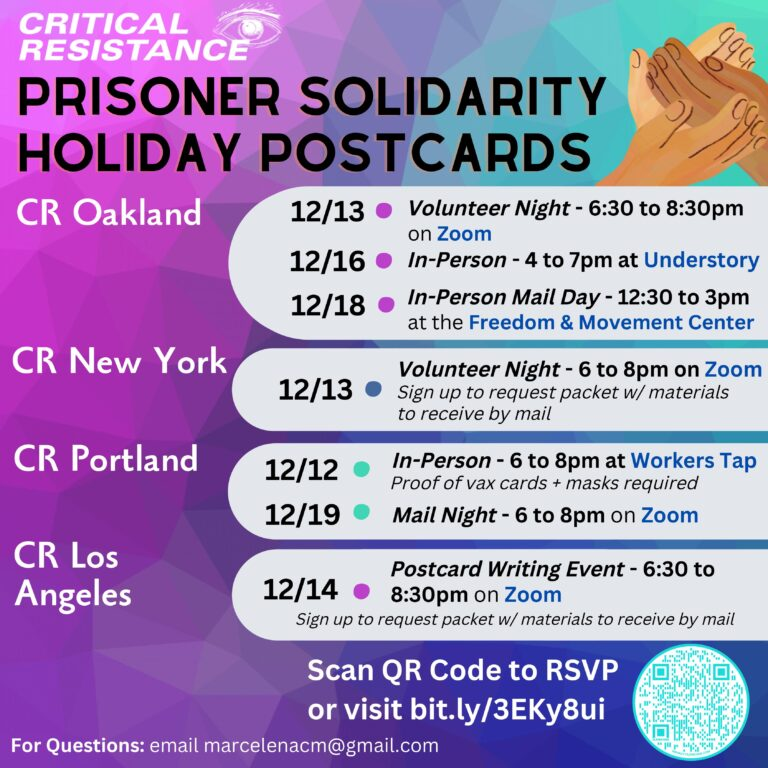
A great opportunity to support incarcerated people. From Critical Resistance, a national grassroots organization casting a vision to create genuinely healthy, stable communities that respond to harm without relying on imprisonment and punishment.
Each year, CR sends postcards to over 8,000 of our imprisoned comrades across the country as a way to send encouragement, strength, and solidarity to folks across prison walls and let them know we’re still out here fighting alongside them for PIC abolition. Please spread the word to support this lift FAR AND WIDE using the events flyer and RSVP Form!
Use the RSVP form to sign up for one of the many virtual or in-person events our chapters are hosting, and to request your postcard packet w/ instructions, stamps and all the materials you need to participate in-person or from home (postcard pickups and the option to receive your postcard packet by mail available).




 Radical Discipleship