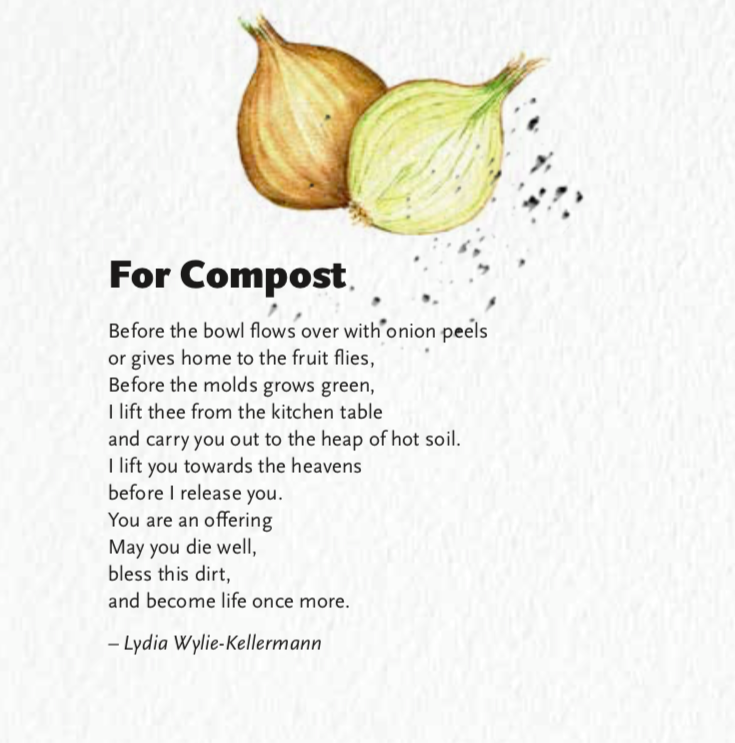
From Geez’s magazine’s Dirty Prayers: Pocket Prayers to Read in your Garden.

From Geez’s magazine’s Dirty Prayers: Pocket Prayers to Read in your Garden.

By Tommy Airey
“The possessive investment in whiteness can’t be rectified by learning ‘how to be more antiracist.’ It requires a radical divestment in the project of whiteness and a redistribution of wealth and resources. It requires abolition, the abolition of the carceral world, the abolition of capitalism. What is required is a remaking of the social order, and nothing short of that is going to make a difference.”—Saidiya Hartmann
Fifty years before George Floyd moved to Minneapolis, Rev. Dr. Martin Luther King, Jr. got arrested in Birmingham. Dr. King, whose national holiday we now celebrate every January, was one of the greatest Americans who ever lived. However, like love itself, Dr. King has been sanitized. White folks and middle-class people have molded him into a meek and mild Black man devoted to a watered-down dream of politeness and patriotism. The real MLK took his cues from a bold biblical brand of love that beckoned him to break rank from a cozy and counterfeit middle-class life built on injustice and oppression.
During his short life, Dr. King was arrested 19 times—the same number of trips that Harriet Tubman made back to the South after she escaped to freedom. While King was in that Birmingham jail cell, he wrote a long letter to white pastors on the margins of a newspaper and smuggled it out to get it published. It is one of the greatest documents ever produced in American history. In it, Dr. King articulated a profound spiritual conviction that serves as the basis for a biblical conspiracy—a life built on belovedness and belongingness.
Continue reading “Bound”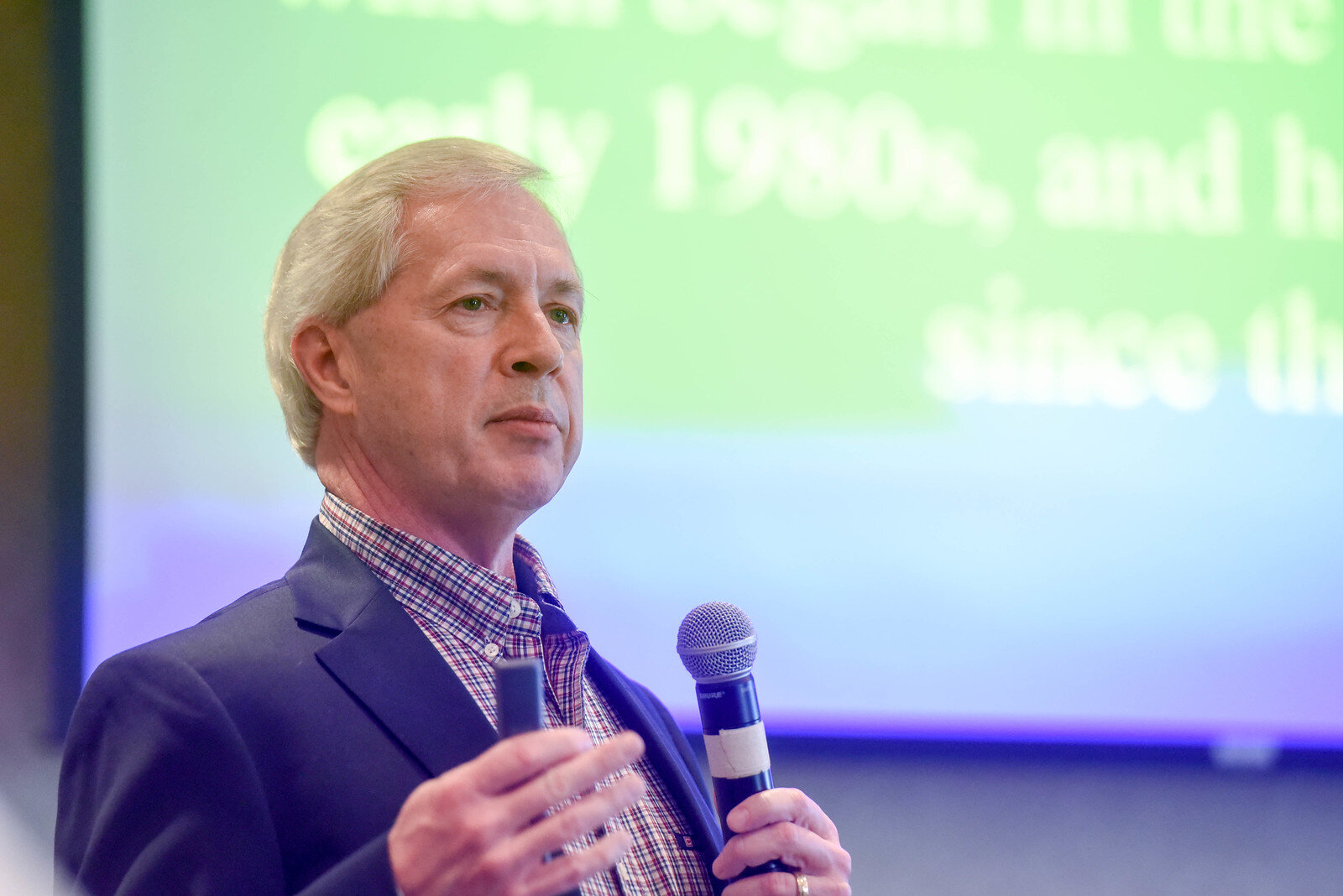
This excerpt is the conclusion of Bruce Rogers-Vaughn’s brilliant Bias Magazine essay “No Comfort for the Afflicted?,” a response to a piece published in The Christian Century written by Stanley Hauerwas and Will Willimon
In effect, this dialogue between two white men sets a low bar for the pastoral care that is so badly needed today. Hauerwas concludes: “If in a hundred years Christians are identified as people who do not kill their children or the elderly, we will have done well in our pastoral care.” Really? I can only assume that such a statement is intended to shock rather than be taken seriously. And when he adds: “Words like care, love, and compassion can be self-deceptive when not disciplined and driven by our theological commitments,” I have to wonder if behind the theological commitments to which he alludes lurks the image of a muscular Jesus who kicks asses and takes names. As historian Kristin Du Mez has documented, we have had enough of that Jesus already.
Finally, I question the location and timeliness of this anti-empathy diatribe, appearing as it does in the middle of a global pandemic, in the context of political chaos, in the shadow of a rejuvenated white supremacy and emboldened patriarchy, record-breaking economic inequality, and a withering level of empathy in our society—especially toward those we perceive as different or foreign. What we need is more pastoral care, not less; more empathy, not less. To an overwhelming degree, pain in our world has little or nothing to do with narcissistic self-indulgence, or wallowing in victimhood. The outliers who appear masochistically attached to their pain are not typically catered to or coddled, as Hauerwas and Willimon insinuate. Rather, they are easy targets for discipline, punishment, blame, and shame. Pain is not primarily a plea for attention. It is a cry for connection in the midst of alienation, for justice where there is none, for love where apathy and hate prevail.
Continue reading “No Comfort For the Afflicted?”
By Lynice Pinkard and Nichola Torbett. This article first appeared in Geez 62: Dismantling White Theology.
The two of us have kicked off countless antiracism and anti-oppression trainings by asserting, not half in jest, that “diversity trainings ruin well-meaning white people.”
But it’s not the trainings, really. It’s the whole moralistic ethos that focuses on getting everything right and avoiding what is wrong: Never use this word. Always use that word. Say “BIPOC,” not “people of colour.” Never cry in a mixed group. Intervene in instances of oppression, but remember that you are not a saviour. Speak up and stand up, but also, step back and yield the mic. These injunctures yield stiff, stilted white people who may successfully “perform” antiracism for limited periods of time but have little capacity for joy or genuine relationship across lines of difference.
Continue reading “We Need the Funk”
A sermon from Dr. Wil Gafney (right), October 17, 2021) on 2 Samuel 21:1-14; Psalm 58; Revelation 6:9-11; Luke 6:43-45
*Re-posted from Dr. Gafney’s website. Click here to watch or listen to the video.
Yesterday, we talked about the women’s stories in scripture that we do and do not hear taught and preached. Sometimes we don’t hear stories of women because their pieces are scattered like breadcrumbs throughout the scriptures and it takes a major archaeological excavation to gather all of those pieces together and far too many preachers say, “ain’t nobody got time for that.” Well, I got time today.
Let us pray: May the preached word draw you deeper into the written word and kindle in you the matchless love of the incarnate word. Amen.
Before the mothers of the Black Lives Matter movement, there was Rizpah. Before the mothers of women and men and children swinging in the southern breeze as strange fruit hanging from the poplar trees, there was Rizpah. Before the mothers of the Maafa, the African-Atlantic holocaust, there was Rizpah.
Continue reading “The Gospel According to Rizpah” By Ched Myers, for the 22nd Sunday of Pentecost (Mark 10:46-52), originally posted in October 2015
Right: A relief sculpture of the healing of Bartimaeus by artist/minister Charles McCollough, done in honor of our ministry at BCM (at right is the rich man and one of Jesus’ disciples).
————–
Note: This is an ongoing series of Ched’s brief comments on the Markan gospel readings from the Revised Common Lectionary during year B, 2015. This is a longer post because Sunday represents the feast day of “St. Bartimaeus,” whose story has accompanied Ched through his entire ministry (see second half of the post).
In this culminating episode of Mark’s “discipleship catechism,” there is one more polemical role reversal to shock our propriety, and one more blind man healed to give us hope (compare Mk 8:22-26). On the outskirts of Jericho, the final stop before arriving in Jerusalem, we encounter a beggar sitting “beside the Way” (10:46). Bartimaeus will provide a dramatic contrast to the previous two stories of “non-discipleship”—the rich man’s refusal and the disciples’ ambitions—and will symbolize for Mark the “true follower.” Continue reading “On the “Blind” Following the “Blind””

By Jim Perkinson, a sermon for Detroit Unitarian Universalist Church (9-26-21)
What Time Is It on the Clock of the World?: Climate Catastrophe Time
What Time Is It on the Clock of the World?: Voter Suppression Time
What Time Is It on the Clock of the World?: Collapse Health Care with Cavalier
COVID Response Time
What Time Is It on the Clock of the World?: Right Wing Authoritarianism Time
What Time Is It on the Clock of the World?: Billionaire On-the-Take Booty Time
What Time Is It on the Clock of the World?: Flee to Mars If You Are Elon Musk
Time
What Time Is It on the Clock of the World?: You Fill In the Blank—What Time Is
It For You!
This title question was a favorite litmus test query any time someone met with the late great Eastside Detroit activist Grace Lee Boggs over the last ten years of her extraordinary life. In vernacular counterpoint to Boggs’ more philosophical probe, garbage-art impresario Tyree Guyton of Heidelberg Project fame—also on the Eastside—festoons many of the trees of his bright throbbing block with clocks whose hands salute the hours every which way. Each asks outside the politesse of our typical interactions, what hour do you think it is—really?
Continue reading “What Time Is It on the Clock of the World?: Facing Apocalypse with Eloquence”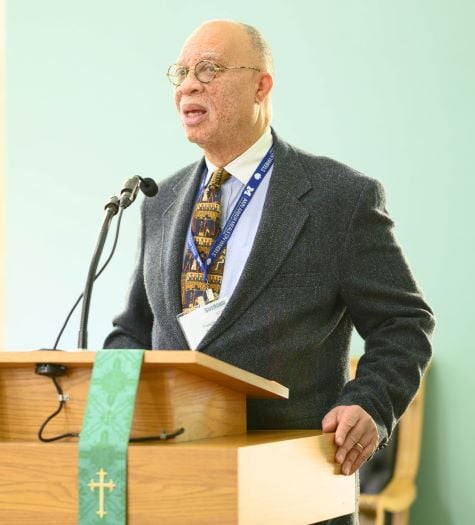
By Dwight L. Wilson, originally posted to Facebook on October 3, 2021
I have been a social activist since my first marches before Martin Luther King, Jr. was assassinated. In this week alone, I was involved in on-going projects in separate cities with police oversight, warrant resolution, and public health; in the county I worked on environmental protection; nationwide with responsible gun control.
Continue reading “The Spirits of the Lynched”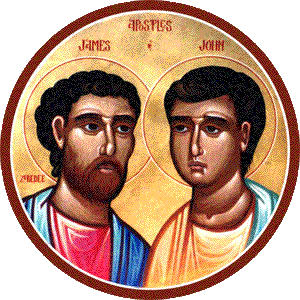 By Ched Myers, for the 21st Sunday in Pentecost (Mark 10:32-45), originally posted in 2015
Note: This is an ongoing series of Ched’s brief comments on the Markan gospel readings from the Revised Common Lectionary during year B, 2015.
The last cycle of the discipleship catechism begins, as did the previous story of the rich man, “on the Way.” Here the journey is finally revealed as headed to Jerusalem, the place of final confrontation with the Powers (10:32a). Jesus “goes before” the discipleship community, who are amazed and afraid (10:32b). This snapshot will be important to remember at the end of the story, where at the empty tomb we are told that Jesus “goes before” disciples who are both afraid and “ecstatic” (16:7f).
Continue reading “The Subversion of Hierarchical Power”

A sermon by Bill Wylie-Kellermann
Given at the Homecoming Service at North Central College, Naperville, IL commemorating 50 years since graduating in 1971.
“To a Young Activist” A Reading from the Letter of Thomas Merton to Jim Forest:
Do not depend on the hope of results. When you are doing the sort of work you have taken on, essentially an apostolic work, you may have to face the fact that your work will be apparently worthless and even achieve no result at all, if not perhaps results opposite to what you expect. As you get used to this idea, you start more and more to concentrate not on the results but on the value, the righteousness, the truth of the work itself. And there too a great deal has to be gone through, as gradually you struggle less and less for an idea and more and more for specific people. The range tends to narrow down, but it gets much more real. In the end, it is the reality of personal relationships that saves everything.
Gospel Reading: Luke 4: 16-21
When he came to Nazareth, where he had been brought up, he went to the synagogue on the sabbath day, as was his custom. He stood up to read, and the scroll of the prophet Isaiah was given to him. He unrolled the scroll and found the place where it was written:
‘The Spirit of the Lord is upon me,
to bring good news to the poor,
Sent me to proclaim release to the captives
and recovery of sight to the blind,
to let the oppressed go free,
to proclaim the year of the Lord’s favor.’
And he rolled up the scroll, gave it back to the attendant, and sat down. The eyes of all in the synagogue were fixed on him. Then he began to say to them, ‘Today this scripture has been fulfilled in your hearing.’
In the Name of the One who was, who is, and is to come, Let all of this be…
All of us, to one extent or another can identify with the Homecoming of Jesus to Nazareth – returning to where he began. He’s back to the shul where he learned Hebrew and its texts, back to his synagogue, from which, first as an infant, then as a young person, he made the pilgrimages to Jerusalem. On one occasion to sit with the rabbis and learn from them; or if Luke has it right to astound and teach them.
I’ll wager another pilgrimage in his student days: to the ruins of
Continue reading “All the time in the world” Radical Discipleship