Learning from the Laughter and the Trees: Tell me about Lent

By Lydia Wylie-Kellermann

I consider myself a lover of liturgical seasons. I might even go as far as to call myself a geek. I love the rhythm of it in my body. The way it coincides with the changing earthly seasons. The cries for justice and stillness and singing and baking. I love it all!

Yet, I have never understood Lent. I can get it with my head, but I don’t feel it in my body. I haven’t found traditions or practices that summon me deeper.

So, I began the season this year with the question “what do you love about Lent?” I threw it out in trusted circles and on social media. I didn’t have a lot of capacity to try much, but I could spend the season listening. I scratched down quotes in the margins of notebooks. I collected wisdom and words.

Continue reading “Learning from the Laughter and the Trees: Tell me about Lent”

These Intersections: On Writing Celebrant’s Flame: Daniel Berrigan in Memory and Reflection

By Bill Wylie-Kellermann

Society had developed and perfected a whole lexicon as ways of stigmatizing the wrong that threatened its wrongs. You know the phrases: to the poor – wrong side of the tracks; to a child in school – wrong question, wrong answer; to the people’s spectrum – wrong color; to the women – wrong sex; to the gays – wrong ecstasy.

  • Daniel Berrigan March 15, 1974, “All Honor to the Wrong People.”

In 1974 the War Resisters League Peace Award was given to Daniel Berrigan. The honor was conscious counternarrative, an audacious act of love and respect. Beat poet Allen Ginsberg was the formal presenter, reading, “To Daniel Berrigan, for his irritating vocation as a prophet in our times, angering us in our complacency, embracing us in our humanity. Leaping beyond his own limits, he has led us beyond ours.”

The year prior Berrigan had been invited to address the Association of Arab-American University Graduates in D.C. But then the October/Yom Kippur War broke. He kept the date, speaking as the bombs fell. Confessing his own inexpertise, and excoriating all sides of the war for violence (including our own U.S, and Christian “sides”), he nonetheless came down firm in outraged love for Israel’s betrayal of what he read as its own history and tradition – one akin to his own. He did not mince words. A firestorm broke. He was accused of being wrong in every way or other. Invitations were withdrawn, awards cancelled. Hence, WRL’s honor and his own words to embrace being wrong.

Continue reading “These Intersections: On Writing Celebrant’s Flame: Daniel Berrigan in Memory and Reflection”

Flags, Guns and Briefcases

By Tommy Airey

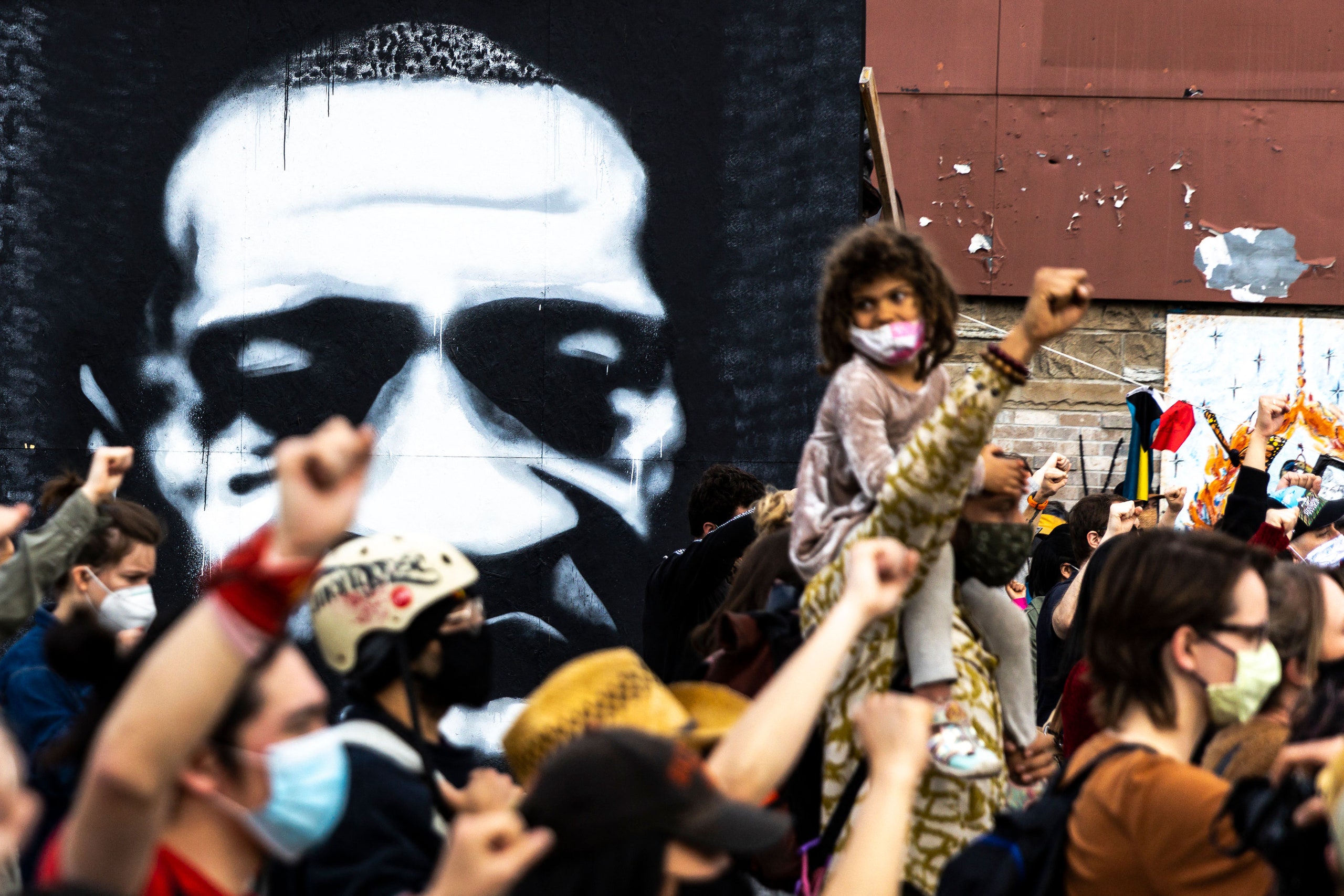
For the duration of the Derek Chauvin trial, Lindsay and I posted up just north of Panhe, an Acjachemen burial and ceremonial site in modern-day Southern California at the coastal border of Orange and San Diego counties. The Acjachemen people are not recognized by the federal government—despite archaeological proof that they lived sustainably on that land for more than 9,000 years before European Christians, with their flags and guns, invaded it and stole it and forcibly converted them to the cult of Jesus, the white conquistador.

To add insult to injury, the white Christians raped their women and infected them with their diseases. Panhe was the epicenter of a genocidal cocktail of disease centuries before the novel coronavirus came for a country trying to make itself great again in every colonial way possible. The people of Panhe were victims of a COVID-19 on steroids. As more than 90% of the Indigenous population of Turtle Island were killed off, white Christians spurned social distancing for profit-making.

Panhe is the crucified wound of a people still surviving, but totally unrecognized. In fact, its sacred quality is soaked in the surreal statistic that .0001% of those who call California home drive by Panhe thousands of times and never even know it exists. Some of the ancient Oak and Sycamore trees of Panhe remember a time when white people were not around. They are still standing despite the encroachment of a military base, nuclear power plant, state campground and Trestles, one of the most legendary surf beaches in the world.

Continue reading “Flags, Guns and Briefcases”

Breathing room

By Ken Sehested

As I pulled out of our driveway, the NPR radio host said that the jury in the Derek Chauvin murder trial had reached a verdict and would be announced shortly. I immediately felt my stomach tighten and swallowed an inhaled “oh no.”

Like most, I thought the evidence against him in the death of George Floyd was irreproachable. But history said otherwise, particularly given the massive loophole provided by the Supreme Court’s ruling granting “limited immunity” to law enforcement, for “breathing room to make reasonable but mistaken judgments about open legal questions.” https://www.theatlantic.com/ideas/archive/2021/03/the-supreme-courts-message-on-police-misconduct-is-changing/618193/

Each Tuesday I perform taxi service, getting my granddaughter to and from her gymnastics team workout. I was grateful the news didn’t break until after dropping her off. That came as I pulled into the grocery store parking lot on the way home, to pick up an item for dinner.

Entering the store, it seemed I was the only one who knew that a rare moment in US history had been announced. If I were more of an extrovert, I might have shouted out a few exclamation points.

Continue reading “Breathing room”

Part of a Long Line of Prophetic Perishing

An excerpt from Dr. James Perkinson’s 2001 essay “Theology and the City: Learning to Cry, Struggling to See.”

The Christian tradition that underwrites the theology elaborated here offers — as its primary icon of “how” and “where “God is present in the world and “who” God is in the world — an image of a human being hanging on an instrument of state torture, crying out to God, against God (Mark 15:34). That God is not ripped down miraculously from that piece of wood (Mark 15:29-30). That God does not make it into comfy old age. While still alive “in the flesh,” that God did not always have a full belly (Matt. 12:1-4), did not live in the posh quarters of the city (Luke 9:58), was not greeted with acclaim by the movers and shakers of his day (John 7:45-52), did not have a good retirement policy. “He” regularly angered the foundations like the Sanhedrin or the Herodian Temple Corporation that would otherwise have funded his ministry (Mark 3:11-6). He publicly blessed the welfare queens, hookers, day laborers and beggars, and other assorted “rabble” who had been downsized out of legitimate livelihoods (Luke 6:20-23). He publicly cursed the banquet-givers (Luke 6:24-26), and conference-goers, and upright, uptight stalwart citizens, who, as the pillars of their community, continuously expropriated land from the “people” by means of the debt-code in order to reemploy them as tenant farmers on their own lands (Matt. 20:1-16; see Herzog, 1994, 79-97). He loudly and loquaciously denounced the lifestyle supported by such exploitative practices and labeled “abomination” what the elites claimed as “God’s blessing” (Herzog, 1994, 53-73; 2000, 90-108; Myers, 1997, 125). He openly charged the scribal ideologues and their judicial patrons with privately wrestling widows’ last pennies away from them (Mark 12:38-44) even as they were publicly encouraging the sons to give their mothers’ estates away “to God” through the Temple apparatus called “corban” (that, in effect, transferred such endowments from the marginalized elderly to the Temple’s rapacious high-priestly high-livers) (Mark 7:5-13).

Continue reading “Part of a Long Line of Prophetic Perishing”

Do I Believe in the Resurrection?

By Lydia Wylie-Kellermann, Editorial from Geez magazine’s Signs of Dawn.

Many years ago now, when I was still a teenager, I fell upon my mother’s dead body and wept. I clung onto her when the life was gone, but the warmth still remained on her skin.

We carried her body downstairs and then into the living room. With the help of women in our neighbourhood, I washed her body. I ran my fingers along her surgery-scarred head, her eyes that had loved me so well, and her mouth that I would never again hear sing. Behind the blur of tears, I can still smell burning sage and hear Taizé chants playing on the CD player. She lay on dry ice there for two days and nights. We told stories. We prayed. We cried. We vigiled.

Several months later as we approached Easter, scripture shapeshifted before my weary eyes. My heart clung to the women as they carried spices and travelled toward Jesus’ tomb to anoint his body. Violated and brutalized on the cross, his body was now guarded by Roman soldiers. Yet, here came these women full of bravery, carrying grief and love, to honour his body and ritualize their mourning.

Continue reading “Do I Believe in the Resurrection?”

Tax Resistance 101

An excerpt from a recent interview with Howard Waitzkin on his fifty-year history of tax resistance. Waitzkin is a medical doctor, a professor focusing on social medicine, and an activist. He is the author of The Rinky-Dink Revolution.

There are two key things to remember: First there’s nothing illegal about saying to the IRS, “I conscientiously do not believe in paying taxes for war, and I’m not going to do it. Here’s what I earned as income. Here’s what I’m paying as income tax, which is half of my calculated income tax, as required. This money that I am paying as income tax is not for war but rather for the other half of taxes that I hope goes into the good things that are done for people by governments rather than killing people. I’m going to use the half that I’m not paying specifically to help people and communities in need through the alternative funds that are set up by tax resisters.” The IRS may try to disagree with you, but there’s nothing illegal as long as you file your income tax, and are honest about what you earn.

There are rare problems that people get into with the IRS in terms of legal assets being taken away like homes and cars. The last examples that we know of happened more than 20 years ago. But there are people, usually right-wing people, who because of libertarian views, refuse to file their income tax, or cheat on their income tax by giving inaccurate information. Those things can get you into trouble. Although obviously, given the ways that billionaires and big corporations get away with not paying taxes, this happens all the time also.

Continue reading “Tax Resistance 101”

Countering Myths

From The Souls of Poor Folk: Auditing America 50 Years After The Poor People’s Campaign Challenged Racism, Poverty, The War Economy/Militarism and Our National Morality (April 2018).

The Souls of Poor Folk is an assessment of the conditions today and trends of the past 50 years in the United States. In 1967 and 1968, Rev. Dr. Martin Luther King, Jr., alongside a multiracial coalition of grassroots leaders, religious leaders, and other public figures, began organizing with poor and marginalized communities across racial and geographic divides. Together, they aimed to confront the underlying structures that perpetuated misery in their midst. The move towards a Poor People’s Campaign was a challenge to the national morality: it was a movement to expose the injustice of the economic, political, and social systems in the U.S. during their time.


50 years later, The Souls of Poor Folk challenges us to take a look at how these conditions have changed since 1968. The stark findings draw from a wide variety of sources, including primary and secondary data as well as interviews with and testimonies by people who have been living through and responding to these changes on the ground. Their words offer deep insight for understanding these conditions and why these leaders feel compelled to call for a Poor People’s Campaign today.

Continue reading “Countering Myths”

Celebrant’s Flame: Daniel Berrigan in Memory and Reflection  

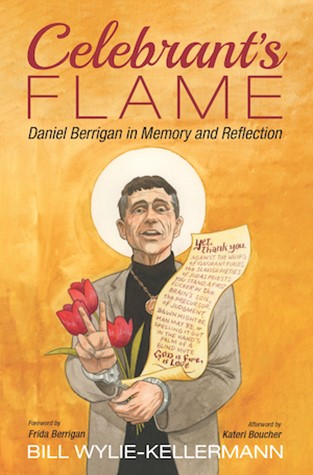
NEW from Bill Wylie-Kellermann and Cascade Books Celebrant’s Flame Daniel Berrigan in Memory and Reflection  

After two years in federal prison for his part in an anti-war protest, Jesuit priest Dan Berrigan agreed to teach a seminary class in the fall of 1972.   That’s where Bill Wylie-Kellermann, then a young ministry student at Union Theological Seminary, met Berrigan and where the story of Celebrant’s Flame, Kellermann’s new title from Cascade Books, begins.   Pre-Order Special Offer: For a limited time — now through May 1 — Celebrant’s Flame: Daniel Berrigan in Memory and Reflection is available for a 40% discount when you purchase with a coupon code. Learn more and request the coupon here.  

Through a series of essays and personal letters, Wylie-Kellermann explores the many identities of his teacher and friend, Dan Berrigan — from fugitive priest to prisoner-poet to confessor to evangelist of nonviolence to chaplain with the dying.   Celebrant’s Flame is a fond reflection on Wylie-Kellermann’s lifelong friendship with Berrigan and a fascinating, accessible retelling of Berrigan’s life and impact on the church and the world.   Well-researched (including a four-page bibliography), the book covers Berrigan’s journey from young seminarian during World War II, his participation in the civil rights movement, his opposition (and eventual arrest and imprisonment) to the war in Vietnam, his anti-nuclear activism, his life as a poet and scholar, and, at the end of his life, his ministry as a chaplain to New York City’s dying AIDs patients.  

In Celebrant’s Flame, Wylie-Kellermann shares reflections and personal letters from his own collection and from other friends of Berrigan. Included in this 174-page tribute are:  
– Reflections from author and scholar Eric Martin on the decades-long correspondence that Dan kept with his brother, Philip, and Dan’s insatiable hunger for learning
– A personal letter from Dan’s fellow inmate, John Bach, about the Great Books class Dan and Phil led at Danbury prison and the resulting hunger strike and underground newspaper
– Peace activist Kathy Kelly’s memories of hearing from other activists – as far away as in the deserts of Iraq – about how profoundly they had been influenced by Berrigan’s message and example
– Jim Reale’s recounting of how Berrigan’s deep commitment to friendship transformed Reale’s own life and vocation from day laborer to Plowshares activist to hospice nurse.

Plus Wylie-Kellermann’s reflections on his time as Dan’s student, in contemplation and conversation about death and dying, as co-conspirator in activism and ministry, and their connected lives of faith and justice-seeking   Celebrant’s Flame is an inviting read for anyone familiar with Berrigan’s ministry or for those just learning about this remarkable priest, poet, and prophet for the first time.

Written with Berrigan’s upcoming 100th birthday (May 9) in mind, these reflections help keep the flame of this beloved celebrant burning for a new movement generation arising among us. (This book is just one of several centennial celebrations: DePaul University’s inauguration of the Berrigan-McAlister Award for Christian nonviolence, and film director Susan Hagedorn’s premier of Berrigans: Devout and Dangerous.)  

What people are saying about Celebrant’s Flame:  

“Here we have one of the best Christian writers of our time reflecting on one of the best Christians of our time, or any time. Bill has a rare, gentle thoughtfulness and insight that helps us unpack the profound word and witness of Daniel Berrigan. I hope this book inspires many to study Dan’s life and writings anew and to deepen our own witness to peace and nonviolence, that we might become, like Daniel Berrigan, disciples, apostles, and prophets of the nonviolent Jesus to our broken world.”
— John Dear, editor of Daniel Berrigan: Essential Writings

“In these relentlessly compelling pages, Dan Berrigan keeps coming at us. We get Dan’s wisdom, courage, passion, honesty, good humor, faith, joy, and eloquent gracefulness. And besides all of that, we get the imagery and testimony of his wide circle of friends who shared his passionate vocation of justice. We get all of this because of the generous gifts of Bill Wylie-Kellermann, gifts of poetic cadence, good memory, strong imagination, a close friendship with Dan, and a passion for justice not unlike that of Berrigan himself. This deeply moving book consists of poems, memories, sermons, speeches, and testimonies that will keep Dan’s singular legacy alive for time to come. The book is a welcome gift to us. It is indeed compelling in ways that will both unnerve and give nerve to an attentive reader.”
— Walter Brueggemann, Columbia Theological Seminary

“Beneath all the lives of the saints there lives the mycelium of friendship. In Celebrant’s Flame, Wylie-Kellermann orates Daniel Berrigan’s sacred story. Yes, as Catholic priest, social prophet, and liturgical poet, but first and foremost as friend. Wylie-Kellermann’s intimate and wry turn of phrase allows their holy friendship to again do its alchemical work: transforming readers of the Word into its creative witnesses.”
— Rose Marie Berger, senior editor at Sojourners and author of Bending the Arch: Poems

Learn more and get 40% off your copy!

Conjuring Freedom

From Johari Jabir’s Conjuring Freedom: Music and Masculinity in the Civil War’s “Gospel Army” (2017).

Conjure is the black cultural practice of summoning spiritual power as an intentional means of transforming reality and involves a belief in an invisible magical power that can be used for healing and/or harm…

…For soldiers in black regiments during the Civil War, freedom was not simply found, it had to be forged. They found themselves forced to conjure freedom out of the materials made available to them as soldiers who had been slaves but were not yet citizens. In much the same way that the coping religion of the slaveocracy became transformed into the enabling religion of the slaves, the forms of soldiering and citizenship made available to former slaves that were designed to assimilate them into a masculinist hierarchical, exploitative, and racist society became something else in practice. These tools of domination became conjured into new forms of masculinity, solidarity, and social membership that promoted democratic and egalitarian change in society at large. Just as conjurers healed the slave body with a mixture of efficacious materials, newly free Africans in America attempted to heal the body politic and cure society’s ills through a tradition of organized protest with musical accompaniment that expressed alternate social visions of democracy.