Healing Trauma, Decolonizing Memory

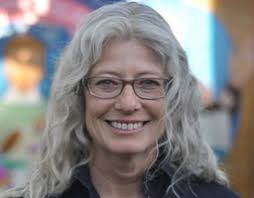
ElaineBy Elaine Enns (right), re-posted from Vision: A Journal for Church and Theology.

All four of my grandparents fled Ukraine and Russia in the 1920s, coming to Saskatchewan with some 22,000 other Mennonite immigrants.2 During the Russian Revolution and Civil War (1917–21), they and other German-speakers endured a continuous climate of violence, plundering, rape, and killing. As a child, I knew something unspeakable had happened to them. But my grandparents spoke only about the good times and the vast abundance and beauty of the land. In my senior year at a Mennonite high school in Saskatchewan, our drama teacher had us perform a reader’s theater rendition of Barbara Claassen Smucker’s novel Days of Terror. 3 Survivors of the Zerrissenheit (a German term loosely translated as “a time of being torn apart”) spoke with us about their experience. Seeds of a call to become a “remembearer” in my community were planted in me, which have grown for thirty years. Click here to keep reading.

What is Whiteness? A Provisional Articulation

Council on the WayBy Jim Perkinson

Note: this is a long working definition of Whiteness. Dr. Perkinson laid this down for a committee reflecting in the wake of The Council on the Way (right), an October 2019 gathering of white men envisioning and embodying a redemptive white male theology. The conversation over two days in Washington D.C. was conceived and coached by Ruby Sales, theologian and veteran of the Black Freedom Struggle.

What is whiteness? I would understand the paler shades of skin color that are typically referenced, when the term “whiteness” is used, as a kind of shorthand for a whole social system of infrastructure and expectation, as well as conscious/unconscious identification. It is a system that is rooted in European Christian colonialism taking land on this continent by force (either violent conquest or coercive legal imposition) from indigenous peoples and making much of that land yield “resources” by means of enslaved African peoples (as well as other coerced peoples of color, and to some degree even coerced lower and working class European heritage peoples). Continue reading “What is Whiteness? A Provisional Articulation”

The Gospel of Paranoia

Gun with flower
Photo by Marco Verch

By Jordan Leahy

On January 20th – the 34th observance and celebration of Dr. Martin Luther King, Jr. Day – approximately 22,000 people (mostly white men) rallied in Richmond, Virginia, to protest proposed legislation to address and decrease gun violence in the Commonwealth. Their numbers, and the accompanying threat of violence, was so great that many other annually held rallies were cancelled.

Content Warning: sexual assault imagery

The Gospel of Paranoia
Convenes them.
Foreboding presence
“Come and take it.”
They cling to
White supremacy
Disinformation
Their own exploitation.
All more indicative
Of what
Their respective childhoods lacked
Than of ideological coherence
Or historical literacy. Continue reading “The Gospel of Paranoia”

We Still Have a Race to Run

RubyFrom the front porch of Mother Ruby Sales. This is the sequel to yesterday’s clarion call to young people. This was originally posted to social media on February 2, 2020.

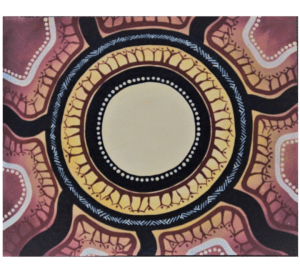
As remnants and elders we still
have a race to run and a role to play.
Heed the call.

Earlier this week I wrote a post to my younger friends reminding them of their responsibility as new generations of leaders. I reminded them that it is now up to them to use the fluency of their bodies and minds to push us beyond where previous generations took us. Now they are the ones under the light of historical scrutiny. I hope that they realize that the glare can both blind and clarify at the same time. Continue reading “We Still Have a Race to Run”

The Ball is in Your Court

RubyA two-part post from the front porch of Mother Ruby Sales. This is part I, originally posted to social media on January 31, 2020.

My young friends you have often stated that my generation should pass the baton of leadership. Well the ball is in your court as the Republicans take this nation down further into an abyss that chokes democracy to death.

I am listening to the roll call in the Senate, and it is clear that Republicans believe that Trump is above the law & they think that they are above your rebuke. Continue reading “The Ball is in Your Court”

Even Deeper Than What We Can See Right Now

MLP
PC: Valerie Jean (Detroit, MI)

From Monica Lewis-Patrick (right), executive director of We The People of Detroit, leaders in the struggle for clean and affordable water in Detroit and beyond. 

We didn’t call ourselves into this fight. We tell folks that we didn’t choose water. Water chose us. In the divinity of water, water was before everything else was. We see ourselves as called into this great layer of warrior women that are fighting for water all around the globe, from Cochabamba to the Arab Spring, from Ireland to the Navajo Nation, from all over these Great Lakes where we have what I call “bad revolutionary sisters” who have decided that not only will they drink, but that their children’s children’s children will drink. Our vision is even deeper than what we can see right now. It’s a transformative way of thinking.

Sermon: Saying Yes

Wrau-sea-of-galilee
Fishing in the Sea of Galilee. Image from the Library of Congress.

By Kateri Boucher, Homily at Day House Catholic Worker 1/26

Matthew 4: 18-22

As he walked by the Sea of Galilee, he saw two brothers, Simon, who is called Peter, and Andrew his brother, casting a net into the sea for they were fishermen. And he said to them, “Follow me, and I will make you fish for people.” Immediately they left their nets and followed him.

As he went from there, he saw two other brothers, James son of Zebedee and his brother John, in the boat with their father Zebedee, mending their nets, and he called them. Immediately they left the boat and their father, and followed him.

When taken at face value, this reading doesn’t seem to have much bearing on my life. I haven’t gone fishing in years. I’ve never been approached by a random man asking me to follow him and “catch other people.” And I’ve certainly never made a split-second decision to leave my daily life and family behind.

Continue reading “Sermon: Saying Yes”

Registrations for BKI2020 Close at Midnight (PST) on 29 Jan, 2020

BillabongBartimaeus Kinsler Institute 2020: Unsettling Histories | Decolonizing Discipleship | hukišunuškuy
Click HERE to register and for more info!

This year the BKI will follow up on the Bartimaeus Kinsler Institute 2019, when we listened to and learned from a range of Indigenous voices concerning land, law and language (note: you do not need to have participated to join us in 2020).  The 2020 BKI, as Rev. Art Cribbs puts it, “aims to help us toward 20/20 vision,” by:

Unsettling Histories: Cohorts will focus on the personal and political work required of settlers and immigrants, in order that we might more deeply:

  • understand how our narratives, communities and landscapes in North America are haunted by violence and injustice, past and present; and
  • heal the myriad layers of our colonization, and colonizing behaviors, inward and outward.

Continue reading “Registrations for BKI2020 Close at Midnight (PST) on 29 Jan, 2020”

If They Are Not Taking Notice

RankineFrom poet, playwright and Yale professor Claudia Rankine, the author of Citizen: An American Lyric, in an interview with The Guardian in December 2015:
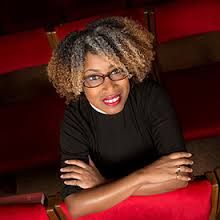
Racism is complicated. White people feel personally responsible for racism when they should understand the problem as systemic. It is interfering as much with their lives as with the lives of people of colour. And racism can lodge in them. It isn’t them yet it can become them if they are not taking notice.

Much More Complex

GafneyFrom Dr. Wil Gafney, the author of Womanist Midrash (2017), in her podcast interview with Peter Enns and Jared Byas:

If you take seriously that women have heard throughout the centuries that what is masculine in some context is more closely identified with God, that what is feminine is other, and we even go back into church fathers like Tertullian for whom women were the devil’s gateway. I mean, there’s a whole lot of theological work that’s heavily invested in God being male and exclusively male. In fact, there’s a text that says men are the image of God and women are the image of man or something. That sets up a whole world of church and theology that marginalizes women. Yet for people who come out of the community that I did–the black church–for whom it really matters, what does the Bible say? It matters that the biblical text says repeatedly that God’s gender identity is complex. Binary language is used because the Hebrew Bible has two options. Masculine and feminine. But God is presented in a much more complex way. And that matters when we’re talking about people and hierarchy, particularly when those earthly hierarchies are entrenched in gender which is then claimed to be based on God and the Bible.