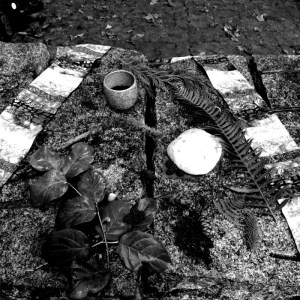
Salal + Cedar is a Wild Church community in the lower Fraser Watershed. Our Eucharistic prayer and our outdoor worship are active reminders that we do not practice our discipleship and celebrate our sacred meal in First Century Palestine nor on “England’s pleasant pastures” but among a little lifeboat of companions on the territory of the Coast Salish People at a time of global climate crisis.
Our Eucharistic prayer names the creatures – plants, animals, waterways, of our bioregion. Under our creative-commons-take on liturgy as the work of and for the people – you are welcome to borrow and adapt this prayer to your work and biome. In return please credit us, note that you have made changes, and make a financial contribution to Indigenous land defenders near you.Continue reading “Watershed Eucharist”→
Because of Columbus’s exaggerated report and promises, his second expedition was given seventeen ships and more than twelve hundred men. The aim was clear: slaves and gold. They went from island to island in the Caribbean, taking Indians as captives. But as word spread of the Europeans’ intent they found more and more empty villages. On Haiti, they found that the sailors left behind at Fort Navidad had been killed in a battle with the Indians, after they had roamed the island in gangs looking for gold, taking women and children as slaves for sex and labor. Continue reading “Let Us In the Name of the Holy Trinity…”→
*NOTE: this piece was originally posted to Radical Discipleship in October 2016.
The final leg of the journey to Jerusalem begins with this week’s gospel (Lk 17.11-19). Alert readers, though, will note that Jesus and the disciples have not gotten very far. At the very beginning, Luke tells us that “they entered a village of the Samaritans to make ready for him” (9.52). Now, eight chapters later, Luke says, “On the way to Jerusalem Jesus was going through the midst (Gk, dia meson, misleadingly translated by NRSV as “between”) of Samaria and Galilee.” Like the Israelites in the wilderness, they seem to be going in circles in the land north of Judea. Perhaps this is a sly reference to the disciples, like their Israelite ancestors, lacking the faith that the journey they are on will lead to the place of God’s abundant provision. Indeed, as we heard last week, the disciples had just demanded of Jesus, “Increase our faith!” (17.5). Continue reading “Have Mercy on Us!”→
He prostrated himself at Jesus’ feet and thanked him. And he was a Samaritan. (Luke 16.16)
The Pharisee, standing by himself, was praying thus, “God, I thank you that I am not like other people: thieves, rogues, adulterers, or even like this tax collector.” (Luke 18.11)
By Wes Howard-Brook and Sue Ferguson Johnson
Gratitude is a hot topic these days. Along with “mindfulness,” “self-care,” and other practices frequently promoted in books, apps and videos, gratitude has been “discovered” by people longing for relief from the anxieties and confusions of corporate capitalist culture and its desecration of life. But this week’s Gospel calls us to consider: for what, exactly, are we grateful?
By Will See. Published in Geez 54: Climate Justice
Listen to Will read his piece:
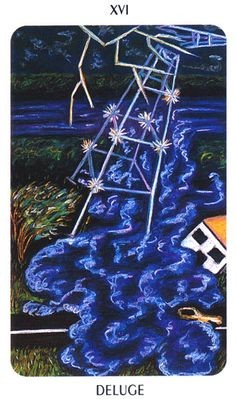
Sometimes I give tarot readings. Rarely, if ever, for others.
It’s a practice I do for myself occasionally when I want to ask a question of a Power beyond my limited conscious mind.
I have a deck that I like. The New Orleans Voodoo Tarot Deck by Louis Martinez. These images and the corresponding descriptions feel ancestral yet present, African and at the same time, diasporic. Continue reading “A New Afrikan Speaks on Climate”→
By Ken Sehested, originally published last month at Ethics Daily, a publication of the Baptist Center for Ethics
We need to recognize, and adjust in appropriate ways, to the
fact that we humans maintain a perverse fascination with
disaster. I’ll leave it to psychologists to explain why, precisely;
but this habit is easily illustrated: From “rubber-necking” on
the highway (slowing down to view the scene of a wreck), to
the media’s 24/7 coverage of hurricane news. We rarely recall
the car trips made without incident, or the sunny days that
predominate in the Bahamas’ and Outer Banks’ weather
patterns. Continue reading “Sacramental Operative in a Sullied World”→
The seed parables of the gospels are “heirloom” for modern readers. They come across time, hard with unpacked dynamism. As bare kernels, they sit unmoving before the eyes. But given the right nutrients from without, they may sprout with a surprising prolixity.
A while back, I listened to an On Being podcast with Krista Tippett interviewing Seane Corn. The guest, Seane, is a yogi and teacher for many, as well as the focus of a little envy on my side because of her amazing locks. In the podcast, named Yoga,Meditation in Action, she tells a personal story of a way she prays that I had not considered before: a fully embodied prayer, going through sun salutations, holding grateful and positive intentions for a loved one. In that moment, she granted me words for a feeling I had experienced many times, in many places and in many ways. Continue reading “Wild Lectionary: Is This Not Prayer?”→
In a letter to his discouraged friend Daniel Berrigan, Thomas Merton once wrote: “Do not be discouraged. The Holy Spirit is not asleep.”
It is easy to be discouraged by rampant injustices in our world today. Children in cages. Fascism on the rise. Environmental collapse looming. The list is long.
Where is the Spirit at work in this world? How do we act in ways that challenge injustice while being rooted in the presence of God? Continue reading “Contemplative Resistance”→


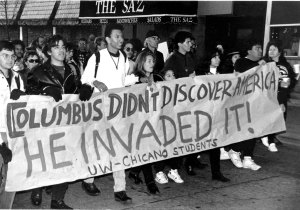 From the first chapter of Howard Zinn’s classic
  By Wes Howard-Brook and Sue Ferguson Johnson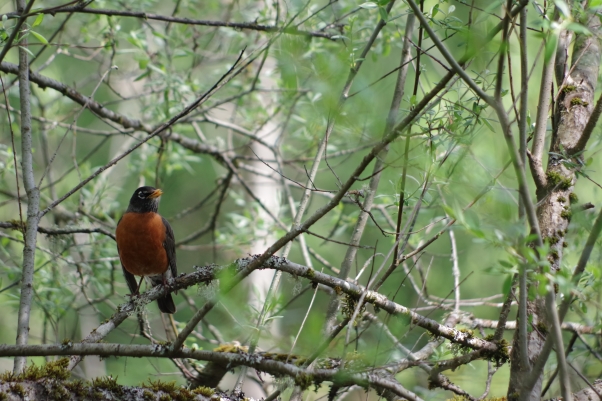
 By Ken Sehested, originally published last month at Ethics Daily, a publication of the Baptist Center for Ethics
 Proper 22(27) C
 On November 2-3, the
  Radical Discipleship