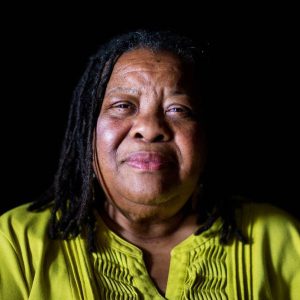
Biography as Theology from the Front Porch of Mother Ruby Sales (posted to Facebook August 28, 2019).
My story which is both a Black story and an American one. It is a story shaped by more than fifty years of watching and wading in the ebb and flow of White supremacy in America. It is the story of both a survivor and freedom fighter who has experienced the best and worst of America.
Our story
“They are bringing drugs and sending their criminals.”
An excerpt from Duke Divinity School’s interview with Dominique Gillard, the author of Rethinking Incarceration. This is his response to the question, “How did we get here? How did we get in this situation?”
I quote a criminologist in the book, Elliott Currie. She says, “Short of major wars, mass incarceration has been the most thoroughly implemented government social program of our time.”
That’s a powerful statement. But I think we got here a couple of ways.
Note: This is part of a series of weekly comments on the Lukan gospel readings from the Revised Common Lectionary during year C, 2016. This week’s gospel text is related to last week’s; see the background comments for last week here. Much of the post below is adapted from a sermon given at Downers Grove (IL) First United Methodist Church on 10/10/10.
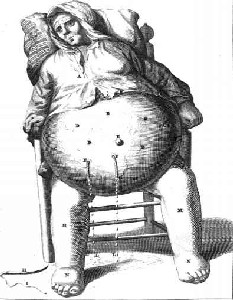
Luke 14:2-6 is unaccountably skipped over in the lectionary. Yet it is profoundly germane to last week’s reading, and moreover introduces the theme of the whole sequence through 14:24: namely, the issue of how social power and privilege is mirrored in meals, and what to do about it. So I strongly advocate re-instating this beginning episode as part of this Sunday’s gospel. Continue reading “Too Big—and Failing! Jesus’ Cure for Affluenza”→
Children learning about biodiversity and native plants at New Life Lutheran’s summer gardening camp. Photo by Greg McCord
Twelfth Sunday After Pentecost,
Proper 17 (22)
Luke 14:1, 7-14
By Carmen Retzlaff
14:11 For all who exalt themselves will be humbled, and those who humble themselves will be exalted.” — 14:13 But when you give a banquet, invite the poor, the crippled, the lame, and the blind. 14:14 And you will be blessed, because they cannot repay you, for you will be repaid at the resurrection of the righteous.”
In Central Texas, one of the signs that a local naturalist has slipped over the edge, into the rocky and nerdy social territory, is when they fall in love with native grasses. First they will just marvel at the indigenous bunch grasses. They’ll recognize a healthy grassland, where these compact plants take just the compact space they need, and allow for biodiversity, as opposed to invasive grasses, which blanket the earth and keep other things from growing. The grass-enamored naturalist will smile when they see patches of side oats grama or bushy bluestem, knowing how deep the roots extend into the clay and limestone, pulling precious rainwater into acquifers. They’ll be mesmerized by the sight of swaths of purple-tinged seep muhly. Continue reading “Wild Lectionary: Invitation to Humility – Invite Grasses”→
A cry broke the early morning silence and interrupted the royal daughter’s bath.
Already knee-deep in the river, she knew instantly that it was a Hebrew baby. On the opposite shore a mother, exhausted from the crossing, dragged her wet body out of the river and collapsed – arms now empty.
As an adopted child, I grew up mesmerized by Moses with only a cursory interest in his mothers. Sunday school lessons didn’t help, offering a sentimentalized characterization of these women – the one who let go and the other who saved the boy through adoption. But as I grew, so did my understanding of the mothers. I learned their story existed against a socio-political backdrop complete with hard edges and harder choices. Continue reading “Salted the Nile with her Tears”→
As it turns out, the real terrorists are white Christians. The Awful Grace of God details the ways and means of white pastors and their KKK-congregants who conspired to kill Dr. King in the 50’s and 60’s. This clandestine movement fused religious passion, reactionary politics and the spirituality of hatred. By 1967, the price on Dr. King’s head was $100,000. The news of this rapidly circulated through federal prisons, where King’s supposed killer James Earl Ray was about to escape. Of course, this strand is still alive and well, but as King himself noted time and time again, the greatest tragedy remains “not the strident clamor of the bad people, but the appalling silence of the good people.” The grandest conspiracy of all is the collective denial of white supremacy in all its insidious forms. Continue reading “Scaffolding This Appalling Silence”→
People often ask me how long it takes me to write a book. That’s a hard question to answer. With both of my books now, I spend years living the book before I sit down to write the book. I spent 10 years immersed in the Christian racial reconciliation movement, from 2006-2016. From the beginning, I was plagued by “Yes, but” moments, but that didn’t stop me from being all in. I loved being in spaces where diverse Christians had honest convo about race and racism. I had only experienced that previously in Black church spaces. Continue reading “Relationship is not the Answer to Racism”→
An excerpt from Clare Grady’s oral arguments earlier this month in Georgia. Clare is a member of the Kingsbay Plowshares 7.
At this point, I would like to take a moment to look at the word religion. I learned that it has its roots in the word re-ligament. I translate that as re align, or to be in right relationship. Before I finish my time, I would like to share a few paragraphs from my affidavit and my testimony from the evidentiary hearing. All of my testimony was about religion, was about seeking right relationship. I will begin with a passage I quoted from Mark’s gospel chapter 12. It was the Sunday Mass reading on November 9, 1958, the day that I was born. In many ways it has been a rudder in my faith journey, one that has informed my religious beliefs, choices and practices. Continue reading “Seeking Right Relationship”→
Note: This is part of a series of weekly comments on the Lukan gospel readings from the Revised Common Lectionary during year C, 2016.
This part of Luke’s gospel offers two symbolic stories about the healing of “political bodies” that signify pathology in the body politic: the “bent over” woman (13:10-17) and the “too big” man (14:1-6). Sadly, the second of these is (literally) skipped over by the lectionary. These intimately related healings bracket a series of Jesus’ sayings concerning the Kingdom as surprise and mystery (13:18-21), the “narrow Way” (13:22-30) and the cost of prophetic discipleship (13:31-35). Continue reading “Healing as Liberation from Crippling Debt”→
The word of the Lord came to me, saying,
“Before I formed you in the womb I knew you,
before you were born I set you apart;
I appointed you as a prophet to the nations.”
“Alas, Sovereign Lord,” I said, “I do not know how to speak; I am too young.” Continue reading “Wild Lectionary: Agency, Age, and Attentiveness to Power”→

 Biography as Theology from the Front Porch of Mother Ruby Sales (posted to Facebook August 28, 2019).
 An excerpt from Duke Divinity School’s
  By Ched Myers, on Luke 14:1-14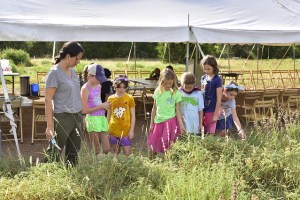


 From the
  An excerpt from Clare Grady’s oral arguments earlier this month in Georgia. Clare is a member of the
  By Ched Myers, on Luke 13:10-17
 Radical Discipleship