Because God is Kind of Blue

By Johari Jabir

a little Palestinian boy, walking to school in Gaza
encountered an Israeli soldier driving a U.S. – made tank
Looking up into the soldier’s eyes, the little boy said,
“Mr. American President, when you look at me, would you say
he could have been my son,
like President Obama said of Trayvon Martin

meanwhile, a little black girl,
in a studio apartment in north St. Louis
waiting for her father to pour milk into her bowl of captain crunch cereal,
turned her gaze toward the tv,
where images of fire and smoke rained down on gaza
“daddy,” she said,
“is god blue?”


Continue reading “Because God is Kind of Blue”

Priests – The Village Vanguard

By Johari Jabir

Honoring the nine martyred priests of Mexico

When I was just a boy in the king’s court, I overheard the king say to the merchants of death: “Kill the priests first. They are the village vanguard.” The fact that our king would betray his own came of no surprise to us, little boys in his harem whose small bodies he touched night after night. Yet, it was the priests who made sure our infinity remained untouchable.

Every evening ‘round midnight, in slow solemn procession, shamans, sages, and priests circled the edges of the village  sprinkling water crystals, wafting sweet incense, tossing kisses at the moon, and touching the tree leaves with their fingers, turning them into green lanterns. Out of all the sacred specialists, it was the priests who translated our collective moans and counted, one-by-one, the tears in god’s face.

Continue reading “Priests – The Village Vanguard”

Inside the Broken Heart of God

By Johari Jabir

1 year – Ukrainian Resistance
20 years – U.S. Invasion in Iraq

The old lady has sat in her little rocking chair since the first bomb hit her village
day after day she sits in her tiny chair
facing the window
watching the morning sun burn the clouds of war
an apparition in the shape of a black angel appears every morning

rickety tickety
she rocks back and forth, humming for God’s mercy
furiously knitting socks for the soldiers
the little rocking chair too, begs for mercy

Continue reading “Inside the Broken Heart of God”

My Forever King

By Johari Jabir

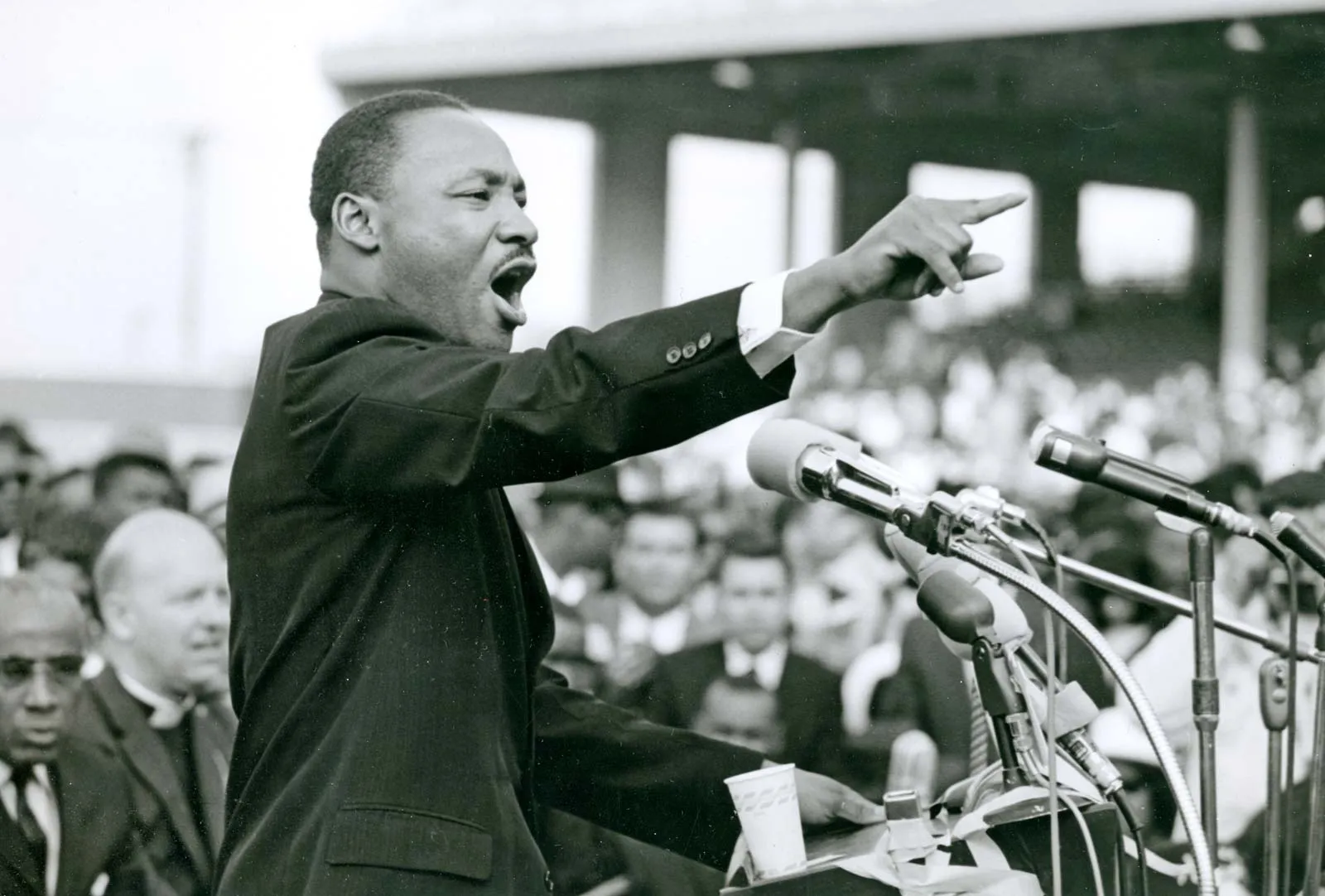
America had but one pastor
Rev. Dr. Martin Luther King Jr. was his name

My King,

The days leading up to the national observance of your birthday
seem to result in a passing season of melancholia
we have crossed so many lines
you warned us not to cross
we now live in the reality of that other side
of hate-filled violence and indifference
that feeds the victims to themselves

Continue reading “My Forever King”

A Dark Virgin’s Magnificat

Working at the intersections of Abolition, Black Spirituality, and Scholarship, Johari Jabir (Black Studies, Univ. of Illinois Chicago) taught the course, “Black Lives in Historic Context” at three sites concurrently; on campus as an undergraduate course, Covenant UCC in South Holland, Ill, and Stateville Penitentiary outside Chicago. Students at Stateville enrolled in the course through the Prison Neighborhood Arts Project (PNAP), of which Johari is an ongoing instructor. The course focused on themes of Slavery, Abolition Democracy, and Citizenship in the 19th Century. A concluding colloquium brought these three learning communities together in person, with PNAP students joining by zoom. “The Urgency of Abolition and Ethical Futures” was the writing and discussion prompt for the group. When PNAP students were finally able to sign on the greeting between these three populations was a kind of advent miracle, a flash of God’s light. 

The event inaugurates something Johari has founded called, The Faith and Abolition Network, a radical ecumenical network of people in support of grassroots anti-prison activism. This is the context Johari crafted this poem on Mary’s Magnificat. 

——————————–

I wish I had been there
when Mary got the news
Hark the herald the angels sing
but Gabriel sang the blues

Continue reading “A Dark Virgin’s Magnificat”

Five Books: Johari Jabir

In this Radical Discipleship exclusive series, we are asking radical Christian leaders one question.

What are the five books or authors that have seriously shaped your spiritual life?

This is how Johari Jabir answered.

Just Above My Head, James Baldwin

Beloved, Toni Morrison

Hammer and Hoe: Alabama Communist During the Great Depression, Robin D.G. Kelley 

The Communism of Love: An Inquiry into the Poverty Exchange Value, Richard G. Opalsky 

The Sabbath, Abraham Joshua Heschel 

Johari Jabir is an artist, scholar, and contemplative. A native of St. Louis, Missouri, Johari is director of music at St. George & St. Matthias Episcopal Church in Chicago, IL, and he teaches in the department of Black Studies at the University of Illinois Chicago. His first book, Conjuring Freedom: Music and Masculinity in the Gospel Army of the Civil War (Ohio State University Press, 2017), is a cultural history of the nation’s first Black regiment, the 1st South Carolina Volunteers.

Saved by Deathless Love

By Johari Jabir

Your ticket you must buy
No place for your soul to hide
You’ll be lost if you wait outside
You must be born again

“You Must Be Born Again,” As sung by Mahalia Jackson

But if one is to truly be born again
You would have to gouge out your eyes,
Cut out your tongue,
And grieve like a baby
That’s been snatched away

“Akel Dama” (Field of Blood), Me’Shell Ndegeocello

“The crisis consists precisely in the fact that the old is dying and the new cannot be born. In this interregnum a great variety of morbid symptoms appear.”
Antonio Gramsci, Prison Notebooks

The cornerstone of the Christian Church is founded on the premise that the suffering, death, burial, and resurrection of Jesus the Christ is the door to the abundant life. Yet, the institutional Church in the United States has done everything in its power to avoid dying to new life. Some of the most important turning points in American democracy have taken place in response to Black social movements. Born out of Black labor organizing, these social movements have, at times, aligned with strains of the Black church to move the country to a critical crossroads. At such moments of social transformation, a conservative political block within the White Christian Church has succeeded in mobilizing fear against faith.

Continue reading “Saved by Deathless Love”

Black Like Me: Gay, Free and Happy!

By Johari Jabir

In Memoriam: Carl Bean (May 26, 1944 – September 8, 2021)

It is an old story. Some ultra-talented Black singer leaves the church in order to pursue a career in a more lucrative career in secular music. Never mind the fact that the binary divisions between the sacred and secular have never really worked when it comes to Black music, Carl Bean is one of those many examples of Black gospel talent who may have momentarily left the building but took the spirit of the church with him. Born and raised in Baltimore, Maryland, Carl Bean grew up attending Providence Baptist Church where Rev. Marcus Garvey Good was pastor. In his autobiography, I Was Born This Way: A Gay Preacher’s Journey Through Gospel Music, Disco Stardom, and a Ministry in Christ, Bean describes his childhood church as a community of, “strivers, those looking to advance themselves in not only the intellectual and spiritual realm but the economic as well” (49). The music at Providence was very proper, but Bean was drawn to the more “rootsy” music played in his household and in the storefronts he visited. Bean’s own church preached acceptance, but the churches he visited were the first spaces he heard anti-gay theologies.

Continue reading “Black Like Me: Gay, Free and Happy!”

Now Let Us Sing!

By Johari Jabir, Juneteenth 2021, originally posted on University of Chicago Divinity School’s Sightings website (June 17, 2021)

Now let us sing
Sing til the power of the Lord come down
Lift up your heads, don’t be afraid
Now let us sing til the power of the Lord come down.
(Gospel Song)

June 19, 2021 marks the 156th anniversary of Juneteenth, the celebration enacted by formerly enslaved Africans who received official word of Emancipation on June 19, 1865 in Galveston, Texas.  Juneteenth combines June 19th, the empirical date of the announcement of emancipation with the “Day of Jubilee” from the Jewish Calendar. This significant reference to Jewish calendar has its roots in the ingenuity of enslaved Africans. Letting the soul journey into that sacred temporality where past, present, and future come together to form a Divine Diasporic sense of time, I connect this early history of how enslaved Africans drew inspiration from the children of Israel to the troubled but valuable Black/Jewish struggles of solidarity in the twentieth century.

Continue reading “Now Let Us Sing!”