The opening paragraphs of “Communities of Care and Concern” by Rev. Dr. Nick Peterson, an assistant professor of Homiletics and Worship at Christian Theological Seminary in Indy. As a practical theologian, Nick interrogates how intentional and unintentional practices shape Christian identities and configure worldviews. Click on The Political Theology Network here to read it in its entirety.
Oppression overwhelms. Its incessant dehumanizing and dishonoring practices work together to undermine human dignity and quench the spark of hope that dreams of otherwise possibilities. Surviving and overcoming oppression require what Mother Ruby Sales has coined “spiritual genius.” This genius represents a determined refusal to surrender one’s value and worth to the deformed imagination of the oppressor.
Sales describes this genius as conscience-making work, where the fundamental narratives that make life meaningful affirm self-love without requiring hatred of others. For Sales, spiritual genius requires intimacy with the Creator and the ability to never let hate take root in the heart.
“The worth of an individual does not lie in the measure of [their] intellect, [their] racial origin or [their] social position. Human worth lies in relatedness to God.”
The ultimate problem with oppression is its intention to profane – to render the oppressed beyond divine relationality – to violently desacralize the human subject.
By Rev. Dr. Nick Peterson, Professor of Homiletics and Worship at Christian Theological Seminary in Indianapolis. In his work, Nick explores how black faith engenders intramural care practices, which he calls “black-on-black care” – a transformative care that contends with and sometimes exceeds the constraints of antiblackness. Rev. Dr. Peterson offered this up to celebrate the 10-year anniversary of RadicalDiscipleship.net.
I traffic in primarily liberal Protestant circles where discipleship often gets a bad rap, largely due to its association with evangelical circles whose theologies frequently oppose liberation and inclusion. Still, I think it’s important not to abandon the idea or concept to its popular usage, but rather to recognize its potential to sow the seeds of God’s will on earth as it is in heaven.
We all know that Jesus called and chose his disciples—like any good rabbi, he wanted to select people who could carry forward his teachings and his orientation toward life and God’s purpose in the world. The thing is, Jesus didn’t seem particularly selective about whom he chose, or at least that’s how the gospels tell it. He was simply walking along and called men as he encountered them, and, across the board, they stopped what they were doing to follow him. These were not generally men trained in the specifics of Jewish law or religious practice. They were not of noble birth or high standing, with few exceptions. Still, Jesus chose to give the best of himself to a group of ordinary, everyday people.
Jesus calls disciples who will follow. And that’s the challenge, because following Jesus doesn’t necessarily make the path any clearer. The road of discipleship does not lead to easy living; in fact, it leads to a radical disposition. This disposition confronts suffering, pain, neglect, and oppression with truth, words of hope, and life itself. The discipline of discipleship is less about having the right answers or being a superb apologist, and more about being willing to witness pain that we’d rather not see—and remaining bold enough to believe and wait for God to show up in it.
The radical call of discipleship remains a daunting proposition because Jesus ultimately chose to show his greatest power by entering into death and waiting with it until even death surrendered to God’s purposes. The world we inhabit is death-dealing as well, because of the evil born of human hands. From our children killing each other at school and at play, to our dollars funding the bombing of children thousands of miles away—death has become a universal currency. And in the face of this, God calls a remnant, raises a witness in the world, to remind us that this is not how we are meant to live.
The ubiquity of violence and death can be so overwhelming that it may feel like our labor and waiting are meaningless. This feeling is amplified by the pressure to make a large impact, to equate witness with notoriety or platform. But God’s call has never been about winning on the world’s terms or even on our own terms. God does not call disciples to play and win the game of domination. God calls disciples to lavish love on the world until Love wins. God calls disciples to pour out mercy and grace on the neglected and the maligned, like water on thirsty ground. God calls disciples to a steadfastness that does not confuse urgency with anxiety or inclusion with passivity. The radical call of God is like the wind of the Spirit, moving where it will, connecting inspired breaths across time and space.
For the gift of the invitation to follow, we give thanks. For those whose footprints reveal new paths in this journey, we give thanks. Thank you, radical disciples, for nurturing this oasis in a dry land.
This is an excerpt from the beginning of Rev. Dr. Nick Peterson’s Pentecost Sunday sermon “I Got Issues” (preached to Mr. Carmel Christian Church in Indianapolis on May 19, 2024) on Luke 8:1-3, 42b-48. Watch the whole thing here (jump ahead to 58:53).
I got Issues, you got issues, they got issues, we all got issues.
I’m unsure when that phrase became popular, but its broad and continued use functions as a diagnostic. It is a confession that you have observed a problem. To confess that I have issues is to acknowledge that inside me, my head, my heart, and or my body, there is something askew, something that ain’t quite how it should be, that something is not in its ideal ordering, and the dis-order is mine to contend with. It is also the case that when we say you, or he, or she, got issues, we are again confessing that we have determined that somewhere in your corporeal schema, in your person or personality – something ain’t up to snuff, something is off kilter.
Whether its you or me, he, she, it, or they – to have issues is to confess that the math ain’t mathing, the sense ain’t sensing, the health ain’t healthing, and the mind ain’t minding. I got issues, you got issues, we all got issues. And while our issues are different, and our conditions particular to our life’s circumstances – it is a shared phenomenon to live knowing that we got problems – recognizing that there are some things in our lives that are not how they ought to be or how we want them to be and as issues they trouble us and flow out from us to the world around us.
In a new Radical Discipleship exclusive series, we are asking radical Christian leaders one question. What are the five books or authors that have seriously shaped your spiritual life? This is how Rev. Dr. Nick Peterson answered.
Belonging by bell hooks
Black Poets Lean South ed. by Nikki Finney
Parable of the Sower by Octavia Butler
How to Slowly Kill Yourself and Others in America by Kiese Laymon
The Overstory by Richard Powers
Rev. Dr. Nick Peterson is an AME pastor and professor at Emory University in Atlanta. He lives with his partner NaKisha, twin five-year-olds, his nieces, his mother-in-law Tutz and a couple precocious house cats.
Note: This is part of a series of short posts, in the lead-up to the election, from leaders reflecting on hope and/or resistance.
By Rev. Nick Peterson
Hope, for me, owes nothing to politics. The extent to which we think hope alongside and within the American political apparatus is discouraging at best and soul-killing at worst. At present, the religious right imagines American politics as theright site to enact a near-theocratic rule of law. Holding fast to an American exceptionalism established by the puritans, the right’s religious imagination appeals to a moral yesteryear that never was. Meanwhile, the left opts for a liberal humanism that, on the one hand, narrates inclusion and acceptance as an American God-given birthright. While on the other, liberals insist that the unceasing acts of anti-black violence are not reflections of who we are. On both sides, hope is a means to America.
Rev. Dr. Nick Peterson (right) says he was just shooting from the hip in these posts last week. We say he was shooting straight for our heart.
I mean if we want to talk about looting, let’s talk about the “stolen properties” that structure the entire existence of this horrible project. America is a testimony to the sanctity of white looting. #pentecost
Looting in 1607. That’s when the first “permanent” English settlement was established on the “James” river.
As RadicalDiscipleship.net approaches Her 5-year birthday this month, we will start posting more frequently from the archives. This classic is from the prophetic imagination of Nick Peterson, currently pursuing his PhD in Liturgics and Ethics at Emory University.
*Originally re-posted from social media in April 2016.
As a powerful but vain imagination, white supremacy attempts to imprison God to whiteness. In a white supremacist framework – God has a white sentence without parole. While confined, God must look white, talk white, think white, affirm white, bless white, and value, above all things, “his” own image made in whiteness. White supremacy attempts to hold the very God of the universe in chains – theological, liturgical, spiritual, creedal, geographical, social, emotional, and political. Continue reading “White Ain’t God”→
From the prophetic imagination of Nick Peterson, currently pursuing his PhD in Liturgics and Ethics at Emory University:
Do you find that your race or ethnicity prevents you from getting humane treatment in life? Well, this product is for you. This bracelet will instruct those who you encounter in the real world to treat you like you are white. In an age of colorblindness and implicit bias, nothing can communicate more clearly how you should be treated. When an officer pulls you over – treat me like I’m white. When you are being followed by a clerk in a nice store – treat me like I’m white. When you are in a restaurant and they don’t want to seat you or let you use the restroom – treat me like I’m white. When you go to the bank – treat me like I’m white. Basically, in any formal and mainstream circumstance, there is no better way to be treated. For less than $5, you have a wearable reminder to the world to – Treat You Like You’re White! Order Here!!
Day 3 of our Lenten Journey with Dr. King’s “Beyond Vietnam.”
I come to this platform tonight to make a passionate plea to my beloved nation. This speech is not addressed to Hanoi or to the National Liberation Front. It is not addressed to China or to Russia. Nor is it an attempt to overlook the ambiguity of the total situation and the need for a collective solution to the tragedy of Vietnam. Neither is it an attempt to make North Vietnam or the National Liberation Front paragons of virtue, nor to overlook the role they must play in the successful resolution of the problem. While they both may have justifiable reasons to be suspicious of the good faith of the United States, life and history give eloquent testimony to the fact that conflicts are never resolved without trustful give and take on both sides. Tonight, however, I wish not to speak with Hanoi and the National Liberation Front, but rather to my fellow Americans.
——————- By Rev. Nick Peterson (above right, with spouse NaKisha), a pastor and prophet pursuing a PhD in liturgics and ethics at Emory University in Atlanta
Fixed in the intellectual heritage of American pragmatism is the notion that every problem has a solution. From the earliest stages of our formal education we are presented with problems that can be solved if we take the time to understand them and apply the methods and rules we learned. Modern medicine and technology are all furthered by a desire to solve our problems and in so doing make our lives better. Continue reading “The Necessary Condition of Trust”→
A series of social media posts from Rev. Nick Peterson:
Last night me and a friend were talking inside the Chick fil A when they closed. We continued our conversation outside and after a while 3 male employees came out to tell us that we were not allowed to be in the parking lot after 10:30 pm. We did not know what time it was or that it was already past 10:30. We spent another few minutes wrapping up our conversation. In the intervening time the employees called the police on us. We of course did not know this when we pulled off and one of the young men who initially came to us bid us a good night as we were pulling out of the parking lot.
As we were waiting at the light, two police vehicles pulled in, drove past my white friend in his truck in front of me and when they locked eyes on me pulled a U turn and put there flashers on. My friend was able to make the right turn on Lincoln highway without any officer following him. He proceeded to park across the street and witness both officers round my car for the next 10 minutes. Continue reading “The Need For Whiteness to be Protected”→



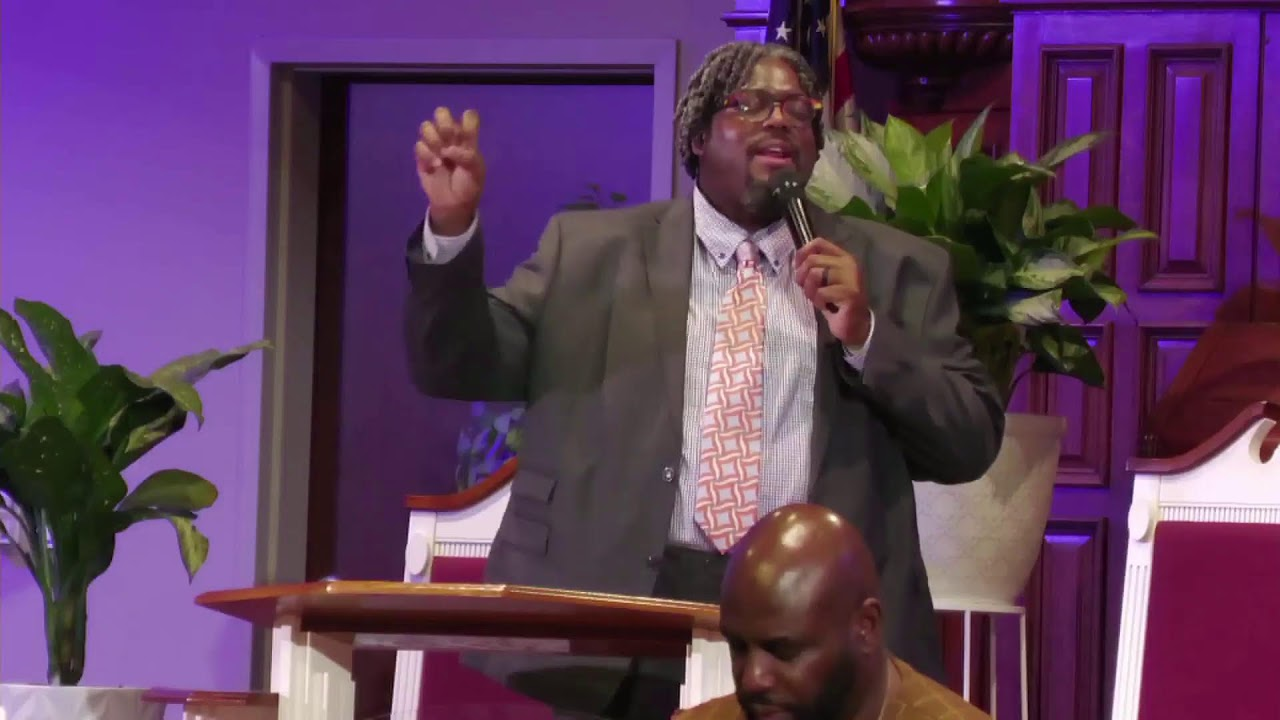


 Rev. Dr. Nick Peterson
 As RadicalDiscipleship.net approaches Her 5-year birthday this month, we will start posting more frequently from the archives. This classic is from the prophetic imagination of Nick Peterson, currently pursuing his PhD in Liturgics and Ethics at Emory University.
  From the prophetic imagination of Nick Peterson, currently pursuing his PhD in Liturgics and Ethics at Emory University:
 Day 3 of our Lenten Journey with Dr. King’s “Beyond Vietnam.”
 A series of social media posts from Rev. Nick Peterson:
 Radical Discipleship