Sabbath Economics

By Ched Myers (above, at the US/Mexico border), a commentary on Luke 12:13-21, reposted from the BCM July 2022 E-News

Note: The comments (and slides) below were crafted for the Los Angeles Catholic Worker community this month. The lectionary reading for the 8th Sunday in Pentecost (July 31st) features the unequivocal, doesn’t-mince-words Jesus offering a warning tale about persons and systems. Those of us who come from economic and social privilege should pay special attention to this passage. So we offer this piece (part of my new book project entitled Jesus against Plutocracy: Sabbath Economics in Luke’s Gospel)…

When we approach this text we need to acknowledge that economics is exceedingly difficult to talk about in most of our churches, more taboo than politics or sex. Jesuit theologian John Haughey summarized the dilemma. Yet no aspect of our individual and corporate lives is more determinative of our personal and political world than economics—and few subjects are more frequently addressed in our scriptures.

To read the rest, click here!

Chronofeminism

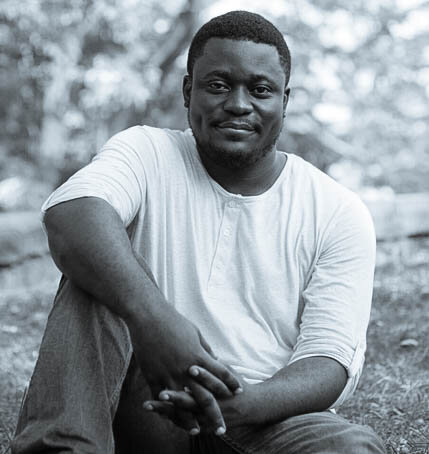
By Bayo Akomolafe, re-posted from Facebook (08.14.22)

I’m of the Yoruba people of West Nigeria and some parts of West Africa. We don’t think of time as an arrow of God flowing from a fixed past through the elusive present, and to an always fugitive future. That notion of time being a straight line is missing from our cosmology. Time is slushy. It’s not even cyclical. It’s slushy— it falls in on itself. It’s rhizomatic. And in this sense, the past is yet to come (to quote Karen Barad); the past is not yet done; the future has already happened. This notion of time is melty and trickly. Sugary and sticky. It is what allows us to face ancestry as a serious matter in civilizational endings. It’s the invitation for us to sit with the past—with the crack of time—and do other kinds of work there.

Continue reading “Chronofeminism”

Contagious

An excerpt from adrienne maree brown’s article in Yes! Magazine called “Murmurations: Love Looks Like Accountability.”

It’s intentional that we think about internal accountability as a solo practice. So much of being in relationship with another is about being able to have deep awareness of what it is we want and need in a given moment, and what we’re feeling—be it safety or vigilance. 

This can be immensely uncomfortable. We might be feeling some combination of vulnerable, insecure, scared, disrespected, angry, or other emotions that we aren’t always raised to hold with dignity. If we can’t be aware of—and responsible for—our own feelings, then anyone else we are relating to can easily become a site of our projections or unharnessed energy. We can have negative and harmful impacts we did not intend. 

Continue reading “Contagious”

A remembrance of Will D. Campbell on the anniversary of his birth, 18 July 1924

By Ken Sehested

I was a stranger in a strange land, having left behind a Baylor University football
scholarship for the alluring but intimidating environs of New York University’s
Greenwich Village campus in Manhattan. I was so over being who I was, so eager for,
if frightened by, what was to come. Odd that it was there, so far from home, that I
should encounter the iconoclastic voice of a fellow Baptist-flavored Southerner
whose testimony would come to profoundly impact the tenor of my own.
 
“Here’s somebody you should know about,” said Dr. Carse, my religion department
mentor, as he tossed an open copy of Newsweek magazine across his desk. The
upturned page contained a one-column profile of self-styled bootleg preacher, Rev.
Will Campbell.

Continue reading “A remembrance of Will D. Campbell on the anniversary of his birth, 18 July 1924”

Back It Up

By Tommy Airey

The year George Floyd and I were born, Paul Simon came out with a song called “American Tune.” Simon sung it to the melody of a Medieval Christian hymn. It hummed on the heavy, confusing mood of the country, caught up in the Watergate scandal and the bloody Vietnam conflict. It concludes with these verses.

We come on the ship they call The Mayflower.
We come on the ship that sailed the moon.
We come in the age’s most uncertain hours
And sing an American tune.

Last week, fifty years later, “American Tune” made an appearance at the Newport Folk Festival. But this time, it was sung by Rhiannon Giddens, a banjo-playing woman in her forties boasting Black, Native and white ancestry. Simon backed her up on acoustic and she tweaked the lyrics at the end.

We didn’t come here on the Mayflower.
We came on a ship on a blood red moon.
We come in the age’s most uncertain hour
And sing an American tune.

Continue reading “Back It Up”