By Tim Nafziger, co-founder of Young Anabaptist Radicals residing in Southern California’s Ventura River Watershed
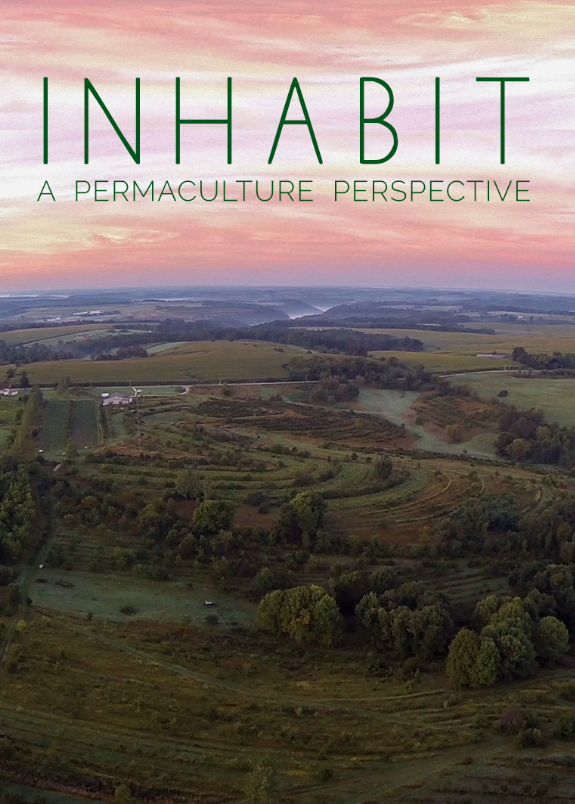
8 years ago, I showed “What a Way to Go” to my family. I hope they would, as the movie tag line says, come to grips “with Peak Oil, Climate Change, Mass Extinction, Population Overshoot and the demise of the American lifestyle.”
Halfway through the movie my sister walked out. It wasn’t so much that she was opposed to the message of the movie. She just couldn’t take how relentlessly depressing it was. Continue reading “Prophecy, Pedagogy and Permaculture”→
This April 17, 2015 photo shows a group of kayakers letting out a yell after successfully pulling up a protest sign as they practice for an upcoming demonstration against Arctic oil drilling, in Elliott Bay in Seattle. Seattle Mayor Ed Murray said Monday, May 4, 2015, the Port of Seattle can’t host Royal Dutch Shell’s offshore Arctic oil-drilling fleet unless it gets a new land-use permit. Shell has been hoping to base its fleet at the port’s Terminal 5, near where protesters plan a mass kayak protest later this month. (AP Photo/Elaine Thompson)Every day that we can stall them is a good day. John Sellers, co-founder of The Ruckus Society
This is a cross post from Kate Aronoff at Waging Nonviolence.
————-
Seattle has become a hub of anti-extraction activism. Protests began on May 14, when Royal Dutch Shell — bucking city residents and officials — docked its Polar Pioneer off the Emerald City coast. The towering 400-by-355-foot oil rig is en route to the Arctic, where it is scheduled to begin drilling operations this summer. The largest demonstration yet happened May 16, as hundreds of “kayak-tivists” swarmed Seattle’s Terminal 5, where the Polar Pioneer is docked. Since then, protests against the rig have been ongoing, and show few signs of letting up. Continue reading “Shell No! Kayaktivism in Seattle”→
By Michael Lauchlan, printed in Trumbull Ave, WSU Press
When the gas man came for your meter,
your oldest let him in. You jumped
from your chair and handed him the baby—
“Take her, too! How will I feed her
if I can’t warm the milk?” After he fled,
you were ashamed. You were nursing,
of course, and had never lied to a soul.
Five decades later you could still see him,
nearly as hungry as you, his wrench
in one hand and, from the other,
your quiet Ellie gaping up.
…the secret of the Great Stories is that they have no secrets. The Great Stories are the ones you have heard and want to hear again. The ones you can enter anywhere and inhabit comfortably. They don’t deceive you with thrills and trick endings. They don’t surprise you with the unforeseen. They are as familiar as the house you live in. Or the smell of your lover’s skin. You know how they end, yet you listen as though you don’t. In the way that although you know that one day you will die, you live as though you won’t. In the Great Stories you know who lives, who dies, who finds love, who doesn’t. And yet you want to know again.
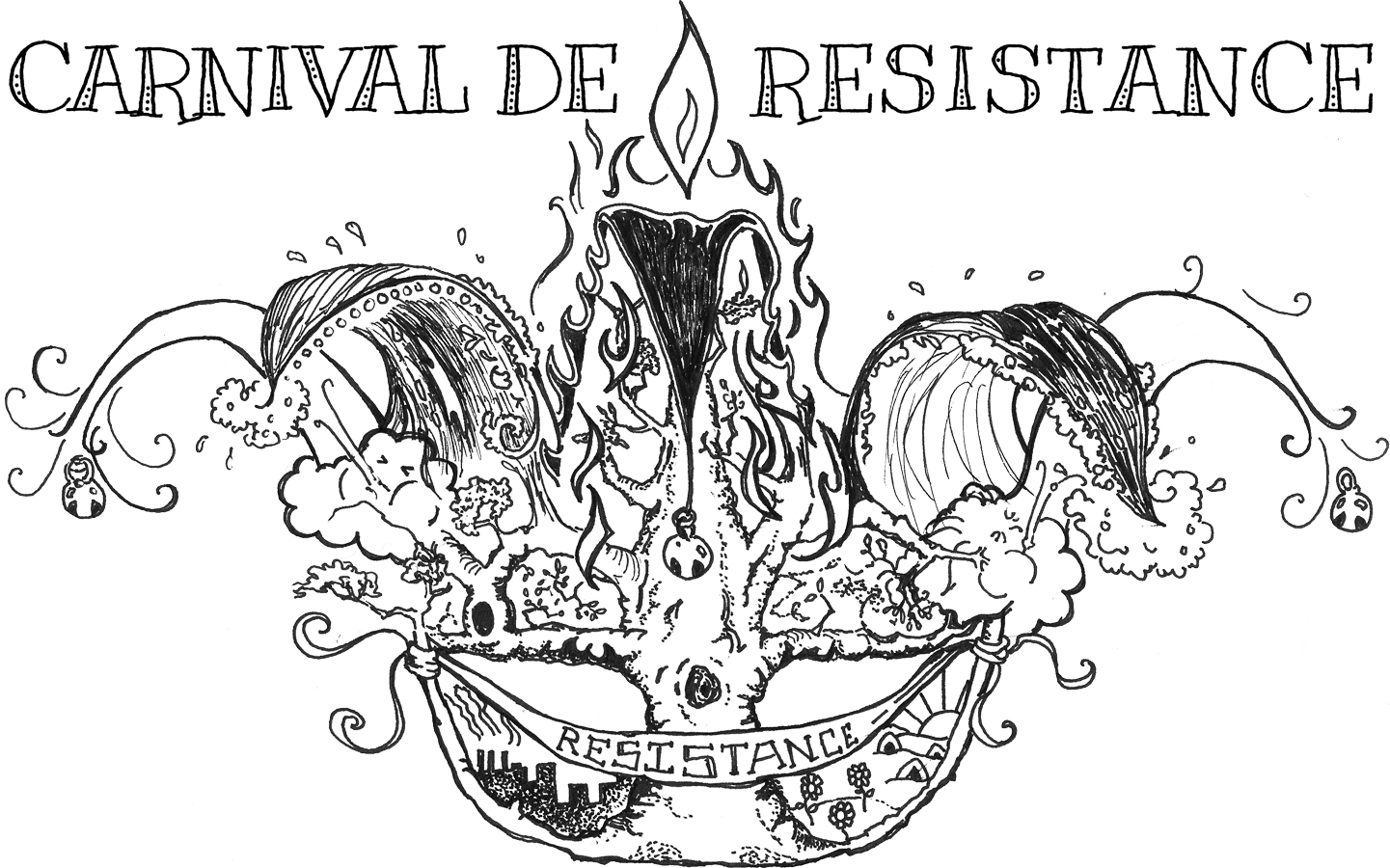
It was night, the circus tent was steamy, and I was in the middle of a twenty-eight-foot long whale puppet, swimming our way through the wide-eyed crowd. A bit earlier in tonight’s show, when a group of women were dancing ecstatically and waving blue veils to the beats of wild drums, I was invisible off-stage taking my turn on one of the stationary bikes that generated the electricity needed to power the amps. But right now it was my turn to be under the spotlight. Human-sized Raven and Dove had set the week’s tone with their prophetic theatre during the Air show last evening; the Fire show was coming tomorrow; right now, we were still deep in Water. Continue reading “Carnival de Resistance”→
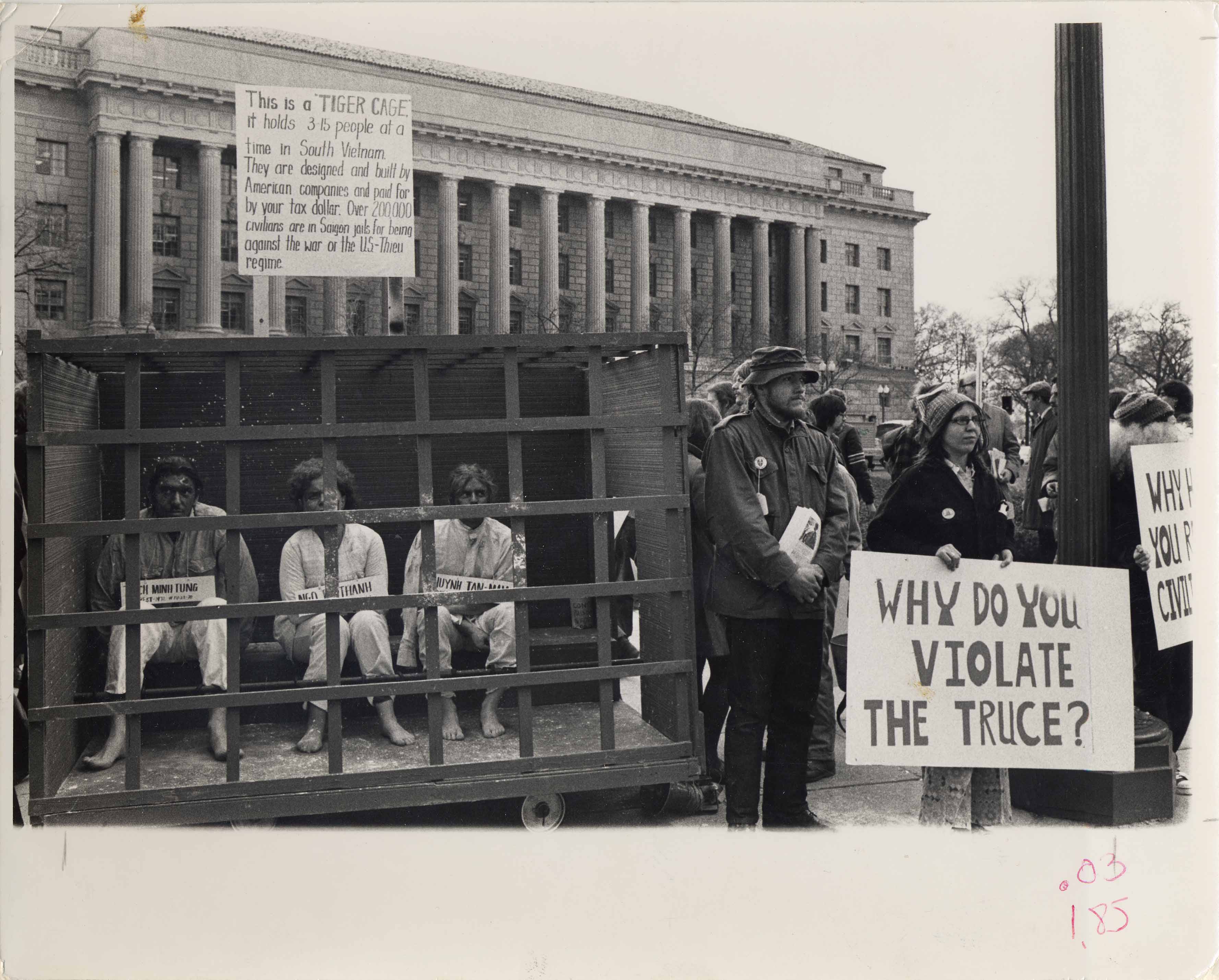
This poem was written by Daniel Berrigan during his imprisonment after the Catonsville Nine action, published by Fellowship Magazine & The Merton Center. It was, later, memorized by Rev. Bill Wylie-Kellermann during his participation in a protest of “tiger cages” used for torture by the U.S. military during the Vietnam War in the summer of 1973 (right). Wylie-Kellermann recited it from memory yesterday at St. Peter’s Episcopal Church in Detroit, to honor the Catonsville Nine activists.
Part 1.
Dear friends, your faces are a constriction of grief in the throat
your words weigh us like chains, your tears and blood
fall on our faces. Prison; Vietnam, prison; U.S.
prison is our fate, mothers bears in prison,
our tongues taste its gall, bars spring up
from dragons’ teeth, a paling, impaling us. Continue reading “A Letter to Vietnamese Prisoners”→

 By Tim Nafziger, co-founder of Young Anabaptist Radicals residing in Southern California’s Ventura River Watershed





 Radical Discipleship