Shoah

shoahFrom Ken Sehested of Prayer & Politiks:

Yom HaShoah (aka “Holocaust Remembrance Day,” more formally “Holocaust Martyrs’ and Heroes’ Remembrance Day”) is observed one week after the end of Passover, this year beginning at sundown on Wednesday 15 April, the date linked to the anniversary of the 1943 Warsaw Ghetto uprising. Increasingly, the word Shoah (“calamity”) is preferred because holocaust has historical roots in the Hebrew word olah, meaning “completely burnt offering to God,” with the implication that Jews and other “undesirables” murdered by the Nazis during World War II were a sacrifice to God…

Sehested included this powerful quote from Etty Hillesum, a Dutch Jew, Hillesum who died at age 29 in Auschwitz, the Nazi concentration camp, in 1943:

I have looked our destruction, our miserable end, straight in the eye and accepted it into my life, and my love of life has not been diminished. I am not bitter or rebellious, or in any way discouraged. . . . My life has been extended by death, by accepting destruction as part of life and no longer wasting my energies on fear of death or refusal to acknowledge its inevitability. It sounds paradoxical: by excluding death from our life we cannot live a full life, and by admitting death into our life we enlarge and enrich it.

70 Years Later: Dietrich Bonhoeffer

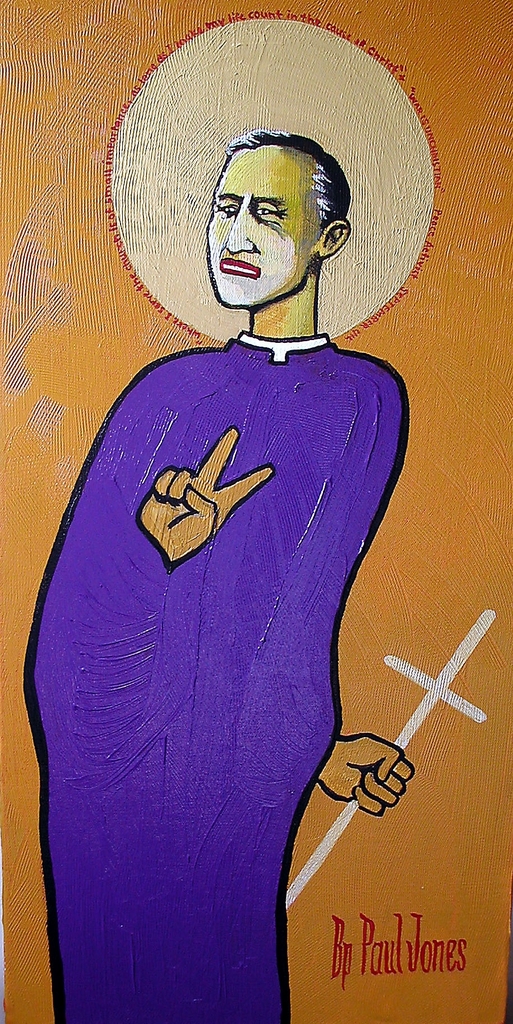
bonhoefferTomorrow is the 70th anniversary of the execution of German theologian and martyr Dietrich Bonhoeffer. During his short time in America, Bonhoeffer was a trailblazer in learning from his African-American brothers and sisters, as reported by James Cone in The Cross & The Lynching Tree (2011):

In contrast to [Reinhold] Niebuhr and other professors at Union Seminary, the German theologian Dietrich Bonhoeffer, during his year of study at Union (1930-31), showed an existential interest in blacks, befriending a black student named Franklin Fisher, attending and teaching Bible study and Sunday school, and even preaching at Abyssianian Baptist Church in Harlem. Bonhoeffer also read widely in African American history and literature, including Walter White’s Rope and Faggot on the history of lynching, read about the burning of Raymond Gunn in Maryville, Missouri (Jan 12, 1931) , in the Literary Digest, “the first lynching in 1931,” and expressed his outrage over the “infamous Scottsboro trial.” He also wrote about the “Negro Church,” the “black Christ” and “white Christ” in the writings of the black poet Countee Cullen, read Alain Locke and Langston Hughes, and regarded the spirituals” as the “most influential contribution made by the negro to American Christianity.” Some of Bonhoeffer’s white friends wondered whether he was becoming too involved in the Negro community.

The Feast of Bonhoeffer

RNS-DIETRICH-BONHOEFFERBy Bill Wylie-Kellermann
—————–
We have for once learnt to see the great events of world history from below, from the perspective of the outcast, the suspects, the maltreated, the power-less, the oppressed, the reviled – in short, from the perspective of those who suffer.
Dietrich Bonhoeffer, Christmas letter to friends and co-conspirators (1942)

Seventy years ago today, just weeks before the fall of Berlin in 1945, Dietrich Bonhoeffer was marched naked into the yard of Flossenberg Concentration Camp and hanged with piano wire for being an enemy of the Nazi state. He was 39.
Continue reading “The Feast of Bonhoeffer”

Bread

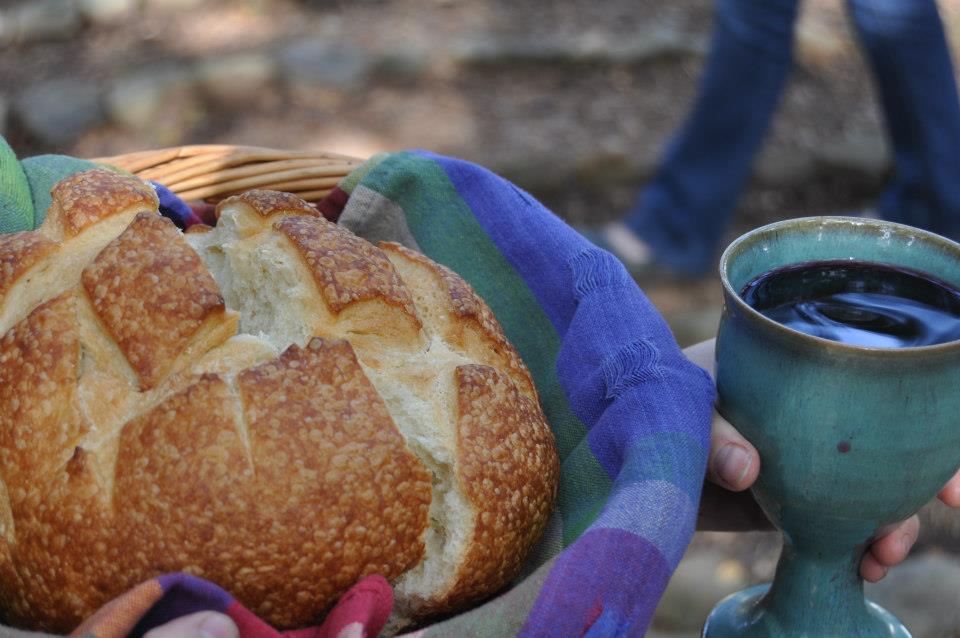
ww2“I never expected much of the bishops, in all history, popes and bishops and abbots seem to have been blind and power-loving and greedy. I never expected leadership from them. It is the saints that keep appearing all through history who keep things going. What I do expect is the bread of life and down through the ages there is that continuity.”

– Dorothy Day

Two Weekend Reads

res schoolsTo what extent might unresolved trauma be impacting our settler Mennonite capacity to feel empathy with other traumatized groups? If we, as a community, can recognize this impact and guard against the egoism of victimization, wouldn’t it stand to reason that our hearts would be more open to the pain being carried by our indigenous neighbours and our hands more ready to work at “restorative solidarity”?
Elaine Enns

We recommend a dark brew to accompany two challenging and inspirational readings coming from two Canadian women doing unique work with truth and reconciliation. First, Elaine Enns, working within the North American Mennonite tradition, prods white settlers towards a “restorative solidarity” with our indigenous neighbors. Writing in Canadian Mennonite Magazine, she zeroes in on empathy in an article entitled “Facing History With Courage:” Continue reading “Two Weekend Reads”

38 Years Later: Fannie Lou Hamer

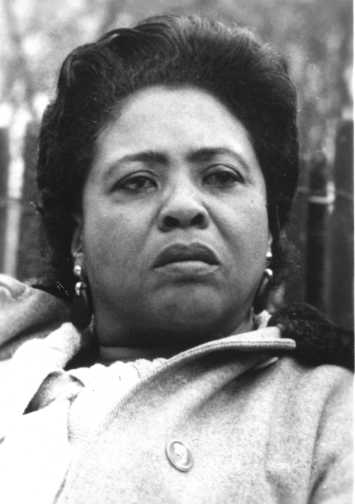
fannie louTwo quotes from Fannie Lou Hamer, a sharecropper for decades until she became inspired and uprooted by the Civil Rights Movement in 1962. Then, she spent more than a decade, like those first century followers of Jesus, “turning the world upside down” (Acts 17:6). She died of breast cancer on March 14, 1977:

Christianity is being concerned about your fellow man, not building a million-dollar church while people are starving right around the corner. Christ was a revolutionary person, out there where it was happening. That’s what God is all about, and that’s where I get my strength.

And, in case you were down about our abysmal numbers:

There is one thing you have got to learn about our movement. Three people are better than no people.

Radical Discipleship: Seven Communities

tim nafzigerBy Tim Nafziger, originally posted at Geez Magazine

Radical Discipleship: Seven communities that have shaped my journey as an Anabaptist

From February 16-20, 2015, I was immersed in the Between Seminary, Sanctuary, Streets and Soil: A Festival of Radical Discipleship. The gathering featured over 80 presenters from communities around the U.S. Their stories of radical discipleship inspired me to put together this primer of seven communities that I have visited and interacted with over the past decade. Each of them were represented at the Festival.

Read more here.

30 Years Later: William Stringfellow

StringfellowFrom William Stringfellow (April 26, 1928 – March 2, 1985), lawyer for the least of these and writer for the rest of us:

I believed then, as I do now, that I am called in the Word of God–as is everyone else–to the vocation of being human, nothing more and nothing less. I confessed then, as I do now, that to be a Christian means to be called to be an exemplary human being. And, to be a Christian categorically does not mean being religious. Indeed, all religious versions of the Gospel are profanities. Within the scope of the calling to be merely, but truly, human, any work, including that of any profession, can be rendered a sacrament of that vocation.