Always on the Verge of Being Mesmerized by Uncertainty

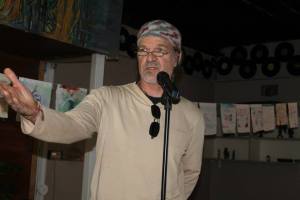
rose-and-vincentToday, we begin our Lenten journey together, daily meditating on the words of Dr. King’s “Beyond Vietnam” speech at Riverside Church in New York City on April 4, 1967.  

Mr. Chairman, ladies and gentlemen, I need not pause to say how very delighted I am to be here tonight, and how very delighted I am to see you expressing your concern about the issues that will be discussed tonight by turning out in such large numbers. I also want to say that I consider it a great honor to share this program with Dr. Bennett, Dr. Commager, and Rabbi Heschel, some of the most distinguished leaders and personalities of our nation. And of course it’s always good to come back to Riverside Church. Over the last eight years, I have had the privilege of preaching here almost every year in that period, and it’s always a rich and rewarding experience to come to this great church and this great pulpit.

 I come to this great magnificent house of worship tonight because my conscience leaves me no other choice. I join you in this meeting because I am in deepest agreement with the aims and work of the organization that brought us together, Clergy and Laymen Concerned About Vietnam. The recent statements of your executive committee are the sentiments of my own heart, and I found myself in full accord when I read its opening lines: “A time comes when silence is betrayal.” That time has come for us in relation to Vietnam.

The truth of these words is beyond doubt, but the mission to which they call us is a most difficult one. Even when pressed by the demands of inner truth, men do not easily assume the task of opposing their government’s policy, especially in time of war. Nor does the human spirit move without great difficulty against all the apathy of conformist thought within one’s own bosom and in the surrounding world. Moreover, when the issues at hand seem as perplexing as they often do in the case of this dreadful conflict, we are always on the verge of being mesmerized by uncertainty. But we must move on.
—————————
Highlights from Rose Berger’s April 2007 Sojourners Magazine interview with Vincent Harding (photo above: Rose with “Uncle Vincent”), the author of Dr. King’s “Beyond Vietnam” speech:

The Riverside speech (variously called “Beyond Vietnam” or “Breaking the Silence”) named the sickness eating the American soul as “the giant triplets of racism, extreme materialism, and militarism.” It was a watershed moment. Continue reading “Always on the Verge of Being Mesmerized by Uncertainty”

Sanctuary: To Stand and Suffer With

alexiaAn excerpt from the recent Christian Century interview with Alexia Salvatierra:

We sense that there are a lot of churches that can’t participate in the sanctuary movement because it is more radical than they are willing to be, including immigrant churches. We are creating something called the Matthew 25 Movement. It consists of individuals and congregations that pledge to protect and defend the vulnerable in the name of Jesus. This can mean a variety of things. There are churches that will pray and educate and give money. Others will participate in the creation of safe zones… Continue reading “Sanctuary: To Stand and Suffer With”

A Mass Movement

keeangaAn excerpt from Keeanga-Yamahtta Taylor’s “How to Build a Mass Movement,” originally posted at SocialistWorker.org.  Dr. Taylor is an assistant professor in Princeton University’s Center for African American Studies and the author of From #BlackLivesMatter to Black Liberation.

The issue for the Left is how we get from where we are today to where we want to be in terms of making our marches blacker, browner, and more working class. Simply complaining about it changes nothing.

There will no effective movement against Trump that doesn’t directly confront the issue of racism. It has to be front and center, and it seemed to me that the march organizers took that question seriously and made genuine efforts to shift shortcomings in their original approach. Continue reading “A Mass Movement”

Not Always Black & White

lynn-hurBy Lynn Hur, originally published in The Mennonite and on the ReconciliAsian blog
The classroom is silent, apart from the ticking of the clock and the shifting of a chair. My English teacher looks at us pensively as my classmates awkwardly look around, waiting for someone to speak up. We had been beginning to read To Kill a Mockingbird, and the inevitable subject of race had been brought up again. My friend tells the teacher that she cried watching the assigned documentary following the Scottsboro Trials, and how she couldn’t believe the injustice of it all. Heads nod in agreement. I respond, commenting that this isn’t just something that happened, but is happening today as well. My teacher nods once again, agreeing. I try to continue, but get cut off. “Moving on,” he says. “You guys can talk more about that in a history class. We don’t have time to get too deep into the details.” Continue reading “Not Always Black & White”

Sojourners in Our Midst

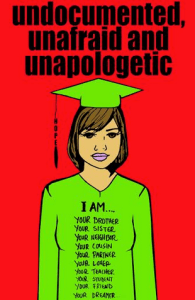
undocumented
Art by Julio Salgado

From the introduction to Ched Myers’ “A House For All Peoples?  A Bible Study on Welcoming the Outsider” (2006):

There have always been two Americas: that of rich and poor, of inclusion and exclusion. The America of inclusion found expression in the ideal of “liberty and justice for all,” and has been embodied whenever Indian treaties were honored, and in the embrace of civil rights, women’s suffrage, or child labor laws. The America of exclusion, on the other hand, was articulated in a Constitution that originally enfranchised only white landed males and has been realized in land grabs, Jim Crow segregation, Gilded Age economic stratification, and restrictive housing covenants.

These two visions of America continually compete for our hearts and minds, not least in our churches. On one side are the voices of Emma Lazarus in her poem “The New Colossus” (“Give me your tired, your poor…”), and Martin Luther King Jr. when he preached “I Have a Dream.” On the other side are those of George W. Bush’s imperial politics and James Dobson’s “Focus on the Family.” Click HERE to read the whole article.


Reclaiming Hope Through Remembering

meeksBy Catherine Meeks, originally published in the January 2017 edition of Hospitality, the newsletter of Atlanta’s Open Door Community
Without memory, our existence would be bar- ren and opaque, like a prison cell into which no light penetrates; like a tomb which rejects the living. … If anything can, it is memory that will save humanity. For me, hope without memory is like memory without hope.
Elie Wiesel, Nobel Lecture 1986

The Episcopal Diocese of Atlanta took a bold step forward on October 22, 2016, kicking off a three-year cycle of pilgrimages to Georgia martyrdom sites, more commonly known as lynching sites. These pilgrimages are being organized by the Beloved Com- munity: Commission for Dismantling Rac- ism, whose members believe that these sites need to be viewed as places where martyrs were made. And all of us, whites and people of color, who make up the generations of their descendants need to acknowledge these martyrs and mark the places where their lives were sacri ced so that we can make more progress in moving toward the day when this legacy of terror will be vanished forever and hope can have the opportunity to break fully into the dawn.  Click HERE to read the full piece (page 2 of Hospitality).

We Have Been Ambushed

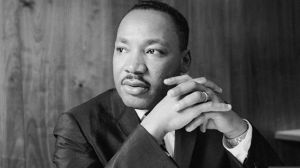
mlkFrom Michael Eric Dyson in his book I May Not Get There With You: The True Martin Luther King Jr:

At the heart of the conservative appropriation of King’s vision is the argument that King was an advocate of a color-blind society. Hence, any policy or position that promotes color consciousness runs counter to King’s philosophy…”I have a dream,” King eloquently yearned, “my four little children will one day live in a nation where they will not be judged by the color of their skin but by the content of their character.” Of the hundreds of thousands of words that King spoke, few others have had more impact than these thirty-four, uttered when he was thirty-four years old, couched in his most famous oration. Tragically, King’s American dream has been seized and distorted by a group of conservative citizens whose forebears and ideology have trampled King’s legacy. Continue reading “We Have Been Ambushed”

The Violence of White Silence: As Sick As Our Secrets

k-redBy Kim Redigan, high school teacher and activist, a reflection given at First Unitarian-Universalist Church, Detroit, Nov. 27, 2016
Twenty-eight years ago this very day, I made my way down a flight of church basement stairs – the longest walk I’ve ever taken – in order to save my life. Although I was confused and terrified, I knew that if I wanted to live I would have to embrace a new way of life that would require soul-shaking honesty, a focus on my own personal inventory and not the inventory of others, and a willingness to make real amends. In short, if I wanted to recover from the disease that had me in its grip, everything would have to change, beginning with my self-delusion and denial – a painful process that was devastating in its demands, but ultimately, liberating as I came to grips with a disease that left me soul sick and utterly out of touch with myself and others. Continue reading “The Violence of White Silence: As Sick As Our Secrets”

A New Boycott for a New Era

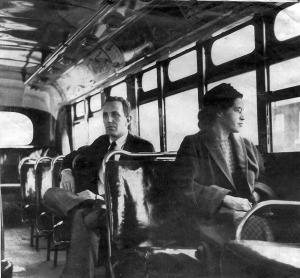
rosa-parksTomorrow, Shaun King and Injustice Boycott will be announcing specifics about an ongoing boycott of cities, states, businesses, and institutions which are either willfully indifferent to police brutality and racial injustice or are deliberately destructive partners with it.  Sign up to join the boycott and get more details HERE.

On this Dec. 5, the anniversary of when Dr. King and others began the 381-day Montgomery Bus Boycott in 1955, we are launching our own Montgomery Bus Boycott to show every city, state, institution and corporation in this country that meaningful, reasonable, achievable reforms on police brutality and injustice are not our long-term dreams. They are our immediate emergency priority… Continue reading “A New Boycott for a New Era”

Trumpeting More Whiteness

j-perkBy Dr. James Perkinson, Ecumenical Theological Seminary, Detroit, MI

So I am reading the left alt-press for insight on what just happened with the election of Donald Trump, and find myself yet one more time provoked at our white blindness. No less than Glenn Greenwald—whose typically razor-sharp analysis I have relied on so often in the past—quotes Nate Cohn to the effect that “Clinton suffered her biggest losses in the places where Obama was strongest among white voters. It’s not a simple racism story.” And offers further: “Matt Yglesias acknowledged that Obama’s high approval rating is inconsistent with depictions of the U.S. as a country ‘besotted with racism.’” How little we have learned for all of our supposed “learning.” Continue reading “Trumpeting More Whiteness”