
Love Must Win Out

weddingbelleisleIf anyone boasts, “I love God,” and goes right on hating his brother or sister, thinking nothing of it, he is a liar. If he won’t love the person he can see, how can he love the God he can’t see? The command we have from Christ is blunt: Loving God includes loving people. You’ve got to love both.
I John 4:20-21 (The Message Version)

A wedding homily preached by Tommy Airey for Eliisa & Peter Croce-Bojanic (right, September 18, 2016, on Belle Isle, Detroit, MI).
———————
God and people: you’ve got to love both. Sounds so simple. But the author of these sacred words from First John knew what an extreme challenge that this real, gritty, self-donating love presented. In fact, in the Gospel of John and all three letters that bear John’s name, there is only one ethical command provided for readers: to love. And because love is such a contested concept, because there are so many ideas floating around about what local and organic ingredients actually constitute love’s recipe, John holds up the cross of Jesus as the ultimate symbol: Continue reading “Love Must Win Out” →
Something Much Greater At Stake

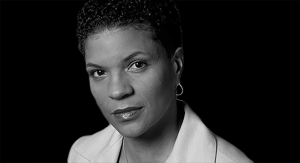
michelle-alexanderAn announcement from Michelle Alexander on social media (September 16, 2016):
I am taking a long break from social media, but tonight I want to thank the Heinz Foundation which offered me today a large monetary award (along with several amazing individuals). See https://medium.com/…/announcing-the-21st-heinz-awards-honor….

A Shift Towards Sustainable Community

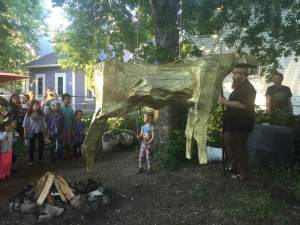
golden calfAn update from Mark Van Steenwyk, the co-founder of the Minneapolis Mennonite Worker:
I’ve gotten a few comments and messages expressing the assumption that The Mennonite Worker is closing, or has closed. That isn’t true (in one way), but it is true (in another way). Let me explain.

We launched the Mennonite Worker (originally called Missio Dei) in 2004. We started as an urban church with a strong commitment to living out the way of Jesus in a particular area of Minneapolis (mostly around the Cedar Riverside neighborhood). Within the first couple of years, we began a strong radical shift towards becoming an intentional community that lived more deeply into the sorts of radical practices Jesus calls us to embrace: hospitality, peacemaking, prayer, and simplicity. Continue reading “A Shift Towards Sustainable Community” →

Empire Baptized

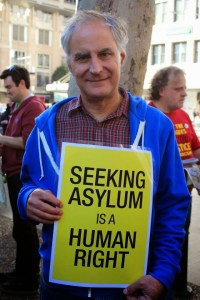
wesDuring our current lectionary cycle, we’ve been downright spoiled with the scholarship that Ched Myers, Wes Howard-Brook (right) and Sue Ferguson Johnson bring every Thursday with their weekly comments on the Gospel passage.  When Wes is not busy teaching at Seattle University, serving at the local soup kitchen, leading the weekly Bible Study in his home, participating in liturgical direct action, hiking up Tiger Mountain or making Sue a latte, he spends his free time researching church history for his next publication.  Last week, his Empire Baptized: How The Church Embraced What Jesus Rejected (Orbis) was released for public consumption.  We sat down for a long-distance dialogue about what to expect next.
RD.net: What were the circumstances in your own life that led to writing Empire Baptized?

WHB: Two major realities led to this book. First, in doing Come Out, My People!, the contrast between the New Testament’s clear message of embodied resistance to empire and historical Christianity’s embrace of empire jumped out at me. Second, in teaching undergrads who are often deeply and rightly suspicious of “Christianity” as well as older and often lifelong church people, I regularly experienced the shock people express when they discover that, for instance, Jesus not only wasn’t concerned with “how does my soul go to heaven,” but wouldn’t even have understood the question!

I had inherited the Yoderian narrative [Mennonite theologian John Howard Yoder] of “it was great for three centuries, but then along came Constantine,” but several things led me to question that story. For instance, that Constantine embraced “Christianity” did not explain such things as many churches’ obsessive focus on right “doctrine,” sexual ethics, and lack of regard for social injustice. I wanted to find out, at least for myself, what “really happened.”

Continue reading “Empire Baptized” →

Adventures in Recovering the Telos

CatonsvilleBy Tommy Airey

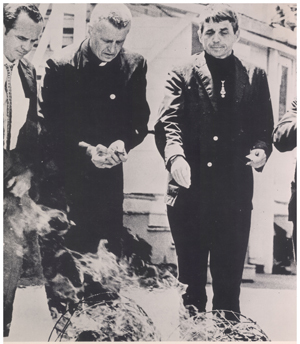
It was a cool Tuesday night in mid-June, four hours north of Detroit and forty-five days after the death of Daniel Berrigan. Rev. Bill Wylie-Kellermann gathered an intergenerational group from among original members and friends of the Detroit Peace Community–so named by members of Jonah House back in 1980 during a week of civil disobedience at the Pentagon. This night’s topic was the Catonsville Nine action of 1968, the mid-day, non-violent storming of the Catonsville, Maryland draft board: they took 378 draft files and set them on fire with homemade napalm in the parking lot and then waited in prayer and song for the police to show up. It sparked hundreds of similar actions all over North America. After Bill’s introduction and historical context, we read The Trial of the Catonsville Nine, a reworked transcript of the trial, put to poetry by Berrigan. I was struck by how coherently these nine spoke about the theological and spiritual motivations for their hit-and-stay action. They were all speaking the same compelling language. Continue reading “Adventures in Recovering the Telos” →

The Inevitable

KingBy Tommy Airey, a homily on Luke 12:49-56 (St. Peter’s Episcopal, Detroit, MI)

For all intents and purposes, in the Gospel this morning Jesus is sounding a whole lot like my high school basketball coach, unrelentingly lighting a fire under our asses, telling us that it’s not his job for us to like him, a rant filled with name calling and rhetorical questions. But this is more than a game: “You hypocrites!” Jesus scolds, “You know how to interpret the appearance of earth and sky, but why do you not know how to interpret the present time?” We know when the Perseids are going to light up the night in Michigan, but we struggle to respond to the signs chronicled by Dr. King: “when machines and computers, profit motives and property rights, are considered more important than people.” Continue reading “The Inevitable” →

Willful Blindness

FlintFrom economist and Wayne State University Law School professor Peter J. Hammer who recently submitted written testimony to the Michigan Civil Rights Commission as part of their hearings on the Flint Water Crisis titled, “The Flint Water Crisis, KWA and Strategic-Structural Racism.” Click here to download the report:
The problem is the often willful blindness of people in positions of privilege and authority (Knowledge-&-Power) to the needs, perspectives and interests of others, particularly when the “other” is from a community that differs from their own in terms of race or class or ethnicity. The problem is that the information and beliefs held by people in authority often reinforce that blindness and permit the unquestioned projection of policies and programs on others, even when it is clear that those policies are inappropriate or have harmful consequences. The problem is that vulnerable populations are often subject to exploitation that strategically manipulates the very vulnerability created by express racism, structural racism and unconscious bias, and yet this exploitation finds ready shelter in the very forces it exploits.

The Need For Whiteness to be Protected

Nick PA series of social media posts from Rev. Nick Peterson:
Last night me and a friend were talking inside the Chick fil A when they closed. We continued our conversation outside and after a while 3 male employees came out to tell us that we were not allowed to be in the parking lot after 10:30 pm. We did not know what time it was or that it was already past 10:30. We spent another few minutes wrapping up our conversation. In the intervening time the employees called the police on us. We of course did not know this when we pulled off and one of the young men who initially came to us bid us a good night as we were pulling out of the parking lot.

As we were waiting at the light, two police vehicles pulled in, drove past my white friend in his truck in front of me and when they locked eyes on me pulled a U turn and put there flashers on. My friend was able to make the right turn on Lincoln highway without any officer following him. He proceeded to park across the street and witness both officers round my car for the next 10 minutes. Continue reading “The Need For Whiteness to be Protected” →

Period of Struggle

liz“We are in a period of struggle with a movement spiritually deep and broadly connected – and a movement that knows it has to go deeper and broader yet. And we need to keep connecting across barriers of faith and ideology. Many of us understand that a deeper resistance is summoned of us. We are trying, praying, working to be strategic, to be faithful, to be human. And we know that we must keep at it: conspire the next steps, be in conversation, be in community, be in the streets, refuse taxes, refuse to fight, disrupt business as usual, prefer poetry to ideology, pray for victims before nations.

The powers of death and destruction appear to reign. But they are undone. In short, dear friends: Be not awed by the mayhem with which the powers of this world would bamboozle us. When you light a candle let it mean intransigent resistance. When you pray imagine a new world is possible. And then live it.”        -Elizabeth McAlister