What’s in a Name?

The opening paragraphs of Dina Gilio-Whitaker’s recent piece in Sierra Magazine “What’s in a Name? What It Means to Decolonize a Natural Feature.”

There are hundreds upon hundreds of them—by one count, more than 800. They are mountains, valleys, creeks, lakes, and other physical landmarks with one thing in common: They all have the word squaw in their name.

The exact derivation of squaw is unclear. Some etymologists say that it’s an Algonquin word for “woman”; others say that it’s a mistranslation of the Mohawk term for “vagina.” In any case, it’s inarguable that over the centuries the word became a misogynistic and racist slur directed at Indigenous women—a means of using language to demean. Yet the word is etched across the American landscape. There are at least 1,400 places across the United States whose official names contain a racial slur of some sort. By far the most common epithet is squaw (hereafter, I will use sq***).

Continue reading “What’s in a Name?”

THE CROSS OF CHRIST:  A Justification for Redemptive Violence Or a Call to Gospel Nonviolence?

Another compelling online offer from the Alternative Seminary in Philly. See details below for tomorrow’s gathering.

The cross can heal and hurt; it can be empowering and liberating but also enslaving and oppressive … I believe that the cross placed alongside the lynching tree can help us to see Jesus in America in a new light, and thereby empower people who claim to follow him to take a stand against white supremacy and every kind of injustice.” ― James H. Cone, The Cross and the Lynching Tree

We are witnessing how the Christian faith has been contorted to almost unrecognizable shape and put at the service of empire – even though the founder of the faith was executed by empire. The cross of Christ, perhaps the central image of Christian life and thought, has been frequently been used to promote the idea of “redemptive violence,” and has been directly or indirectly used to vindicate and even bless human violence.

Continue reading “THE CROSS OF CHRIST:  A Justification for Redemptive Violence Or a Call to Gospel Nonviolence?”

Time

An excerpt from The Overstory by Richard Powers.

“But people have no idea what time is. They think it’s a line, spinning out from three seconds behind them, then vanishing just as fast into the three seconds of fog just ahead. They can’t see that time is one spreading ring wrapped around another, outward and outward until the thinnest skin of Now depends for its being on the enormous mass of everything that has already died.”

Courting and Romancing and Widows and Dams

Jim Perkinson, among water warriors in Detroit

By James W. Perkinson

The clear untouched pool accepts me into its emerald depths like a big drop of water . . . I dive down again and again, feel the water-fingers softly caressing my hot face, tracing my underarms, my neck and breasts—nipples raised hard against the cold . . . and though the water is not going anywhere, it seems to move against me still, even as I lie immobile on its surface.  I flip and turn, purring to the sensual caress.  I have dipped into a private treasure and am wrapped in the arms of the True Gods (Lee, 132, description of Glen Canyon pothole only fifteen feet wide, whose smooth sloping sides refuse her efforts to climb out wet and nearly kill her over the next hour).

I begin in the unlikely place of a quote from raconteur Katie Lee—author, musicologist, folk singer, storyteller, Hollywood actress, song writer, filmmaker, photographer, poet, and river runner (in the words of her bio, Lee, 273).  She is not indigenous.  But she is a “grit” person, as Terry Turner Tempest offers in the Foreword—a woman “not afraid to laugh and tease, cajole, and flirt, cuss, rant, howl, sing and cry.”  “Katie Lee,” says she, is “the desert’s lover, her voice is a torch in the wilderness” (Lee, ix).   I begin here, away from the subject, because that is where I begin, where most of us today begin, in this land of the less-than-free, home of the most-often-cowardly.   We who are not indigenous, not native, pretend to own the land, but we are not of the land.  Rather than belong to it, we belong mostly nowhere, counting strip malls and car interiors and I-Phone screens our domiciles of greatest comfort. 

Continue reading “Courting and Romancing and Widows and Dams”

Ecstasy and Agony

By Ken Sehested

Lent is when the ecstasy and the agony of life collide.

Monday, 28 February, was the next-to-last-day of Mardi Gras, celebrated in the US along the Gulf Coast, New Orleans being its epicenter.

As the sun was going down in New Orleans, the eve of “Fat Tuesday,” the party hardying prior to the abstinence of Ash Wednesday, a man in California killed his three daughters and the woman supervising the girls’ visit with her father, part of the terms dictated since his divorce. Then killed himself. In a church sanctuary.

Continue reading “Ecstasy and Agony”

A Stunning Experience of Grace

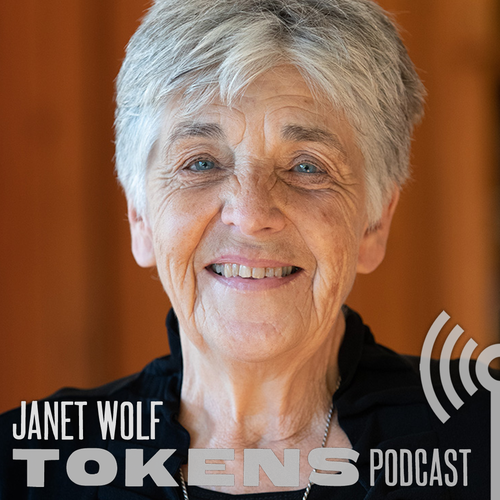
The introduction to Lee Camp’s latest podcast interview with Janet Wolf. Listen HERE.

“I did not go to divinity school to become a pastor,” says Janet Wolf. “I thought clergy were probably the problem and not the solution. I went to figure out how people could read the Bible and not do justice.”

And yet, at the age of 40, after the end of a struggle with the Boards of Ordained Ministry, she found herself ordained in the Methodist Church and sent to pastor four congregations in Lawrence County, Tennessee.

This was no easy task: she was the first female Methodist pastor the county had ever known.

Continue reading “A Stunning Experience of Grace”

Divine Dialysis: A 7-Minute Sermon

By Tommy Airey, re-posted from Easy Yolk

To the leader. A Psalm of David, when the prophet Nathan came to him, after he had gone in to Bathsheba.

Have mercy on me, O God,
according to your steadfast love;

The sacrifice acceptable to God is a broken spirit; a broken and contrite heart, O God, you will not despise.—excerpts from Psalm 51

This week, I read Psalm 51 in the wake of dear friends sharing the details of a sexual assault they experienced. My response was rage. I struggled to tap into tears. I was just so angry. At the perpetrator for what he did. At the police for what they did not do. Lindsay asked me if our friends’ story was triggering my own trauma. I wasn’t sure. I needed to go away to reflect—and sit with this Psalm, attributed to David who was called “a man after God’s own heart.” He was also a sexual predator.

Continue reading this post here.

On the Way to Knowing Love

An excerpt from All About Love: New Visions (2001) by bell hooks.

How different things might be if, rather than saying “I think I’m in love,” we were saying “I’ve connected with someone in a way that makes me think I’m on the way to knowing love.” Or if instead of saying “I am in love” we say “I am loving” or “I will love.” Our patterns around romantic love are unlikely to change if we do not change our language.

That’s All You Can Do, Brother

Last week on CNN.

DON LEMON: I’m not excusing what they did at all, but aren’t these people and even the Ahmaud Arbery, the hate crimes trial, aren’t these people in many ways, in a big way caught up or coopted in a system even now that is refusing to even teach people about race, to talk about race, to call people who try to bring light to it race-baiting? Do you understand what I’m saying? Who don’t want to confront the issue even to bring it to a positive place? Aren’t they caught up by that, they’re victims of that system?

CORNEL WEST: Yeah, in some sense we’re all wrestling with it. But keep in mind the attempt to do away with critical race theory means what? 1619 Project number one “The New York Times” bestseller week after week after week after week. So we can use the various kinds of ways to be narrow to continually broaden, deepen, universalize our vision and our efforts. It’s just we should never, ever get so discouraged that we think all we do is just react to all these vicious acts. No. We are taking off with vision, with power, with courage, with compassion regardless. Now, if we end up — if it ends up that America’s just over and it dissolves and it’s disintegrated because of hatred and the greed completely took over, we can say we went down swinging. We held on with integrity. That’s all you can do, brother.

Grief Doesn’t Fade

An excerpt from Jesmyn Ward’s memoir Men We Reaped.

I found the adage about time healing all wounds to be false: grief doesn’t fade. Grief scabs over like scars and pulls into new, painful configurations as it knits. It hurts in new ways. We are never free from grief. We are never free from the feeling that we have failed. We are never free from self-loathing. We are never free from the feeling that something is wrong with us, not with the world that made this mess.